An ecommerce development vendor does more than build what you ask for. They quietly set the limits of what your business can do later — even after you finish your collaboration. Their choices influence:
how fast you can make technical changes
the long-term stability of integrations
how much effort your everyday work requires
Your choice of vendor matters because the decisions they make (or that you jointly make) during development have implications long after the project ends, but at some point you may deal with this alone after the partnership ends — and you definitely want everything to be right. Architecture, integrations, delivery practices — all of these shape what your team will work with in the future. A poor vendor fit often reveals itself through slow changes in the development process, increases in the cost and effort required for maintenance, or workarounds that become part of daily operations.
This article looks at how to approach vendor selection with this in mind. To help you make a smart choice, we will:
Outline practical criteria for early evaluation
Explain how to reduce risk when shortlisting partners
Review a group of leading agencies for ecommerce development based on concrete metrics rather than marketing claims
The goal is to help you choose a vendor that supports your online business in a stable and predictable way.
Why you shouldn’t hand your ecommerce development project to just any vendor from a list of the best ecommerce development companies
Ecommerce development is not a one-time technical task. Decisions made during development remain embedded in the architecture long after the initial launch, influencing costs, flexibility, and internal efficiency.
When you select a vendor in a rush or base your decision on surface-level criteria, problems tend to appear gradually. Early on, your ecommerce project may look successful, but underlying issues often surface as the business scales, integrates new systems, or adjusts its operating model. At that point, correcting mistakes becomes significantly more expensive and disruptive.
Common consequences of choosing the wrong development partner include:
Architectural limitations that restrict future growth or require complex workarounds
Fragile integrations that break under change or require constant maintenance
Unclear ownership when issues arise after launch
Rising costs caused by technical debt and repeated rework
Internal friction between business and technical teams due to issues with handover or poor documentation
Another risk lies in misaligned expectations. Vendors that promise fast delivery, minimal effort, or guaranteed outcomes often underestimate the complexity of real eсommerce operations. Once requirements begin to change, the gap becomes hard to ignore: timelines slip, the scope grows, and collaboration starts to suffer.
This is why careful vendor evaluation at the research stage is essential. The objective is not simply to find a team that can execute tasks but to identify a partner that understands how technology decisions affect the broader business. Taking time to assess fit, experience, and work approach helps reduce uncertainty and creates a more stable foundation for long-term development and cooperation.
The next section is dedicated to vendor evaluation criteria that will help you navigate the whole vendor selection process with greater certainty.
CLARIFY WHAT YOUR ECOMMERCE BUSINESS ACTUALLY NEEDS BEFORE CHOOSING A VENDOR
Dinarys can help you review your current setup, priorities, and constraints to identify what type of ecommerce team your business could benefit from most and the scope of work your platform actually needs.
Choosing an ecommerce development partner: How to evaluate available vendors and pick top ecommerce development companies
Choosing an ecommerce development partner usually starts long before the first call or proposal. At this stage, businesses are still researching the market, reviewing potential vendors, and trying to understand who is worth considering. The challenge is that most companies look similar on the surface, especially when you rely only on websites, case studies, and publicly available materials (press-releases, social media posts, etc.).
The criteria in this section are designed to help you make sense of that early research phase. They focus on practical signals you can observe before entering formal discussions, from how a company positions itself to how it communicates complexity and responsibility. Together, these criteria help you narrow down your list to vendors that are likely to be a good long-term fit, saving time and reducing the risk of costly misalignment later on.
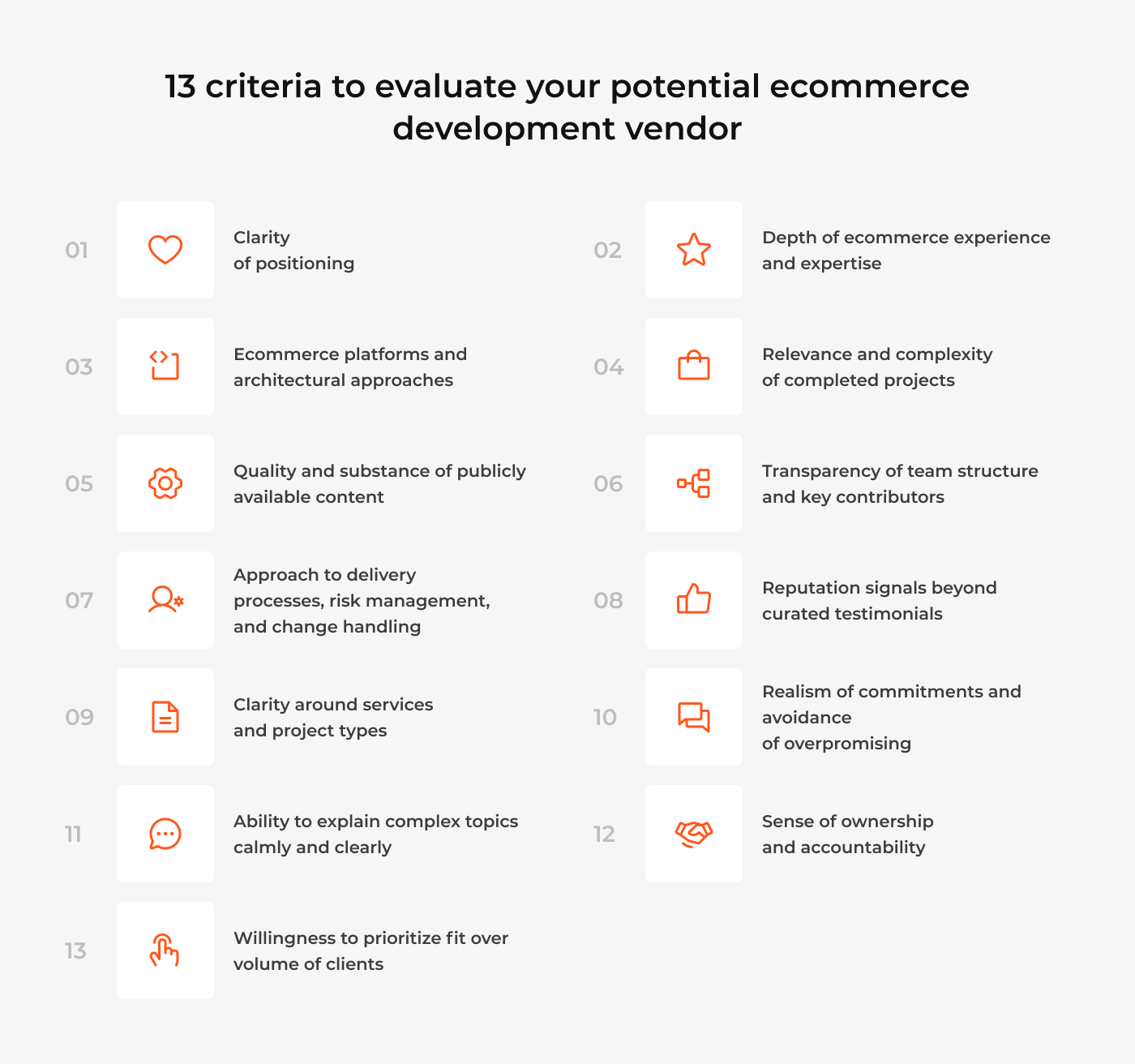
Here are 13 criteria to evaluate your potential vendor by:
#1: Clarity of positioning by business type, industry, and operating model
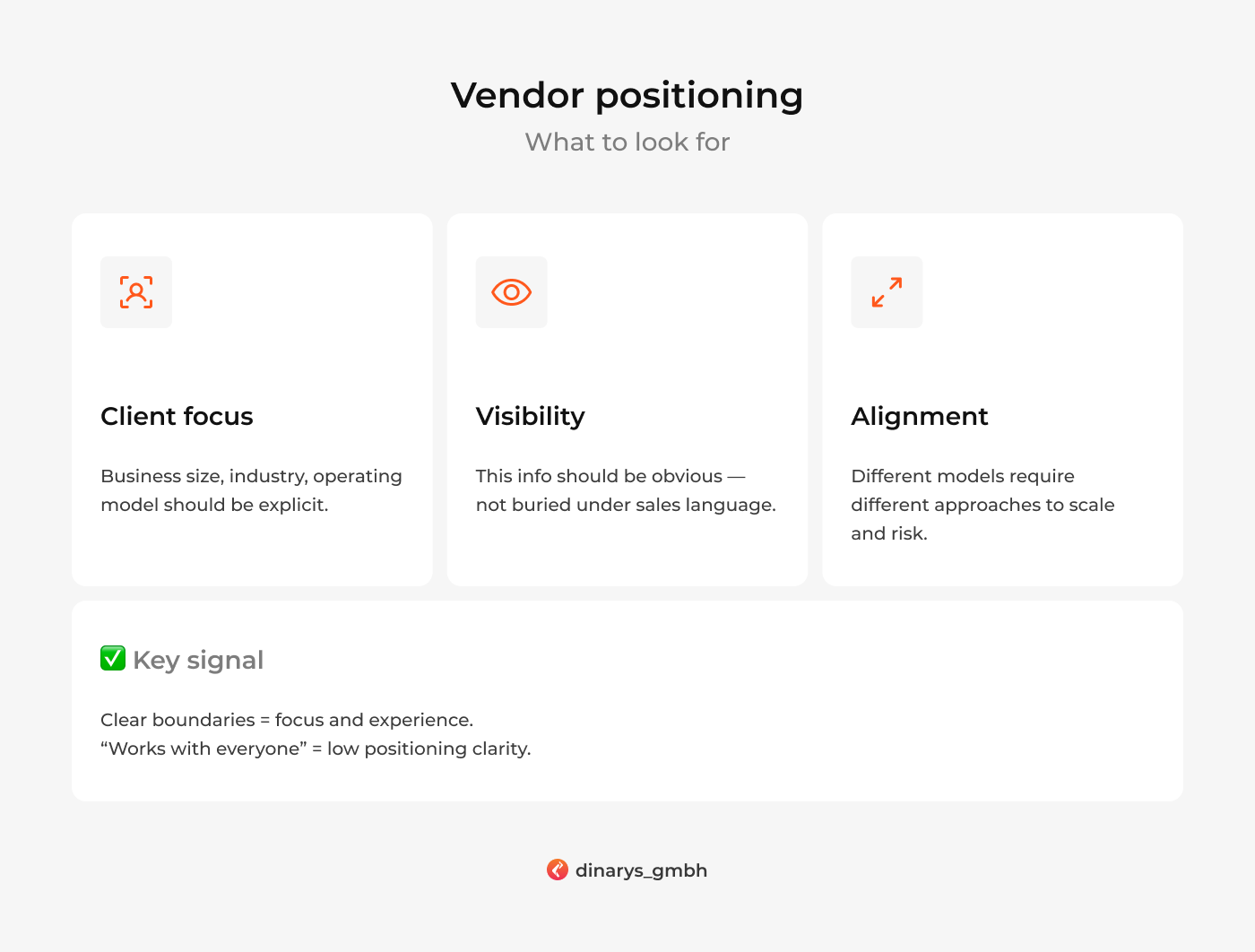
At the research stage, one of the first things to assess is how well vendors differentiate themselves. Top ecommerce web development companies usually make it easy to understand:
the types of businesses they support
the industries they’re familiar with
the operating models they’re accustomed to
This information should be visible without digging through sales language or generic service descriptions.
Clear positioning helps you quickly determine relevance. Vendors that regularly work with enterprise retailers will approach scale, governance, and risk differently than those focused on early-stage brands. The same applies to business models such as B2C, B2B, marketplaces, or subscription-based commerce. When a company openly communicates these boundaries, it shows focus and experience rather than limitation.
If a vendor claims to work equally well with businesses of all sizes, in all industries, and with any model of cooperation, that is usually a sign of weak positioning. At this stage, you’re not looking for broad claims but for alignment. The more precisely a company describes their typical clients and projects, the easier it becomes to assess whether further evaluation is worth your time.
#2: Depth of ecommerce experience and practical expertise
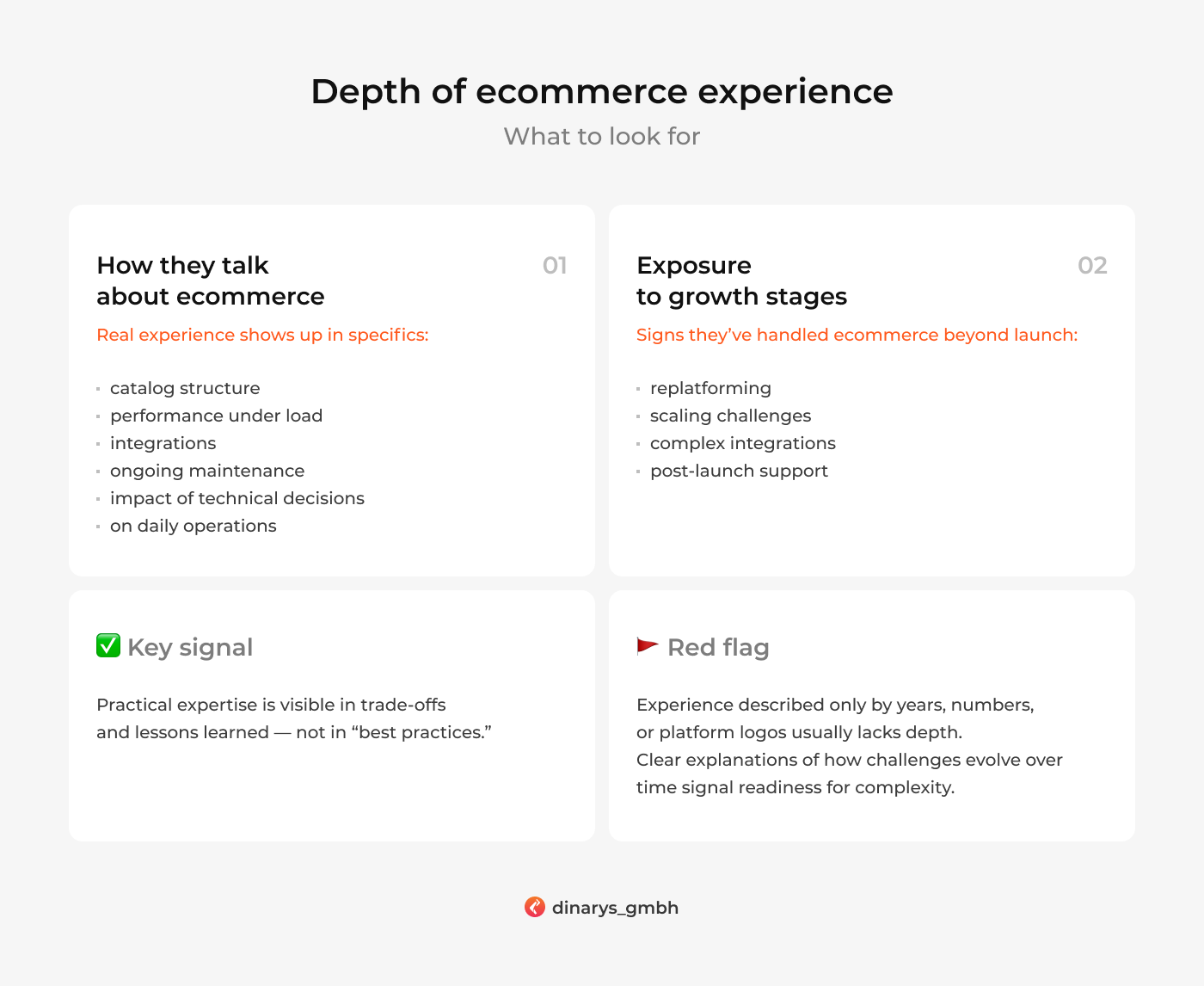
Depth of experience becomes visible in how a vendor talks or writes about ecommerce, not just in how long they’ve been on the market. Companies with practical expertise tend to focus on real operational challenges:
catalog structure
performance under load
integrations
ongoing maintenance
impact of technical decisions on daily business operations
At the research stage, look for signs that a vendor has worked through different stages of ecommerce maturity. This may include references to:
replatforming
scaling issues
complex integrations
supporting businesses after launch
Practical expertise is demonstrated through descriptions of project details and trade-offs, not through broad statements about best practices.
❗ Be cautious with vendors whose experience is described only in numbers or platform logos. Years of experience and project counts matter less than the ability to explain what was learned along the way. A company that can clearly articulate how ecommerce challenges are evolving over time can likely handle the growth in complexity when your business reaches the next stage.
#3: Ecommerce platforms and architectural approaches
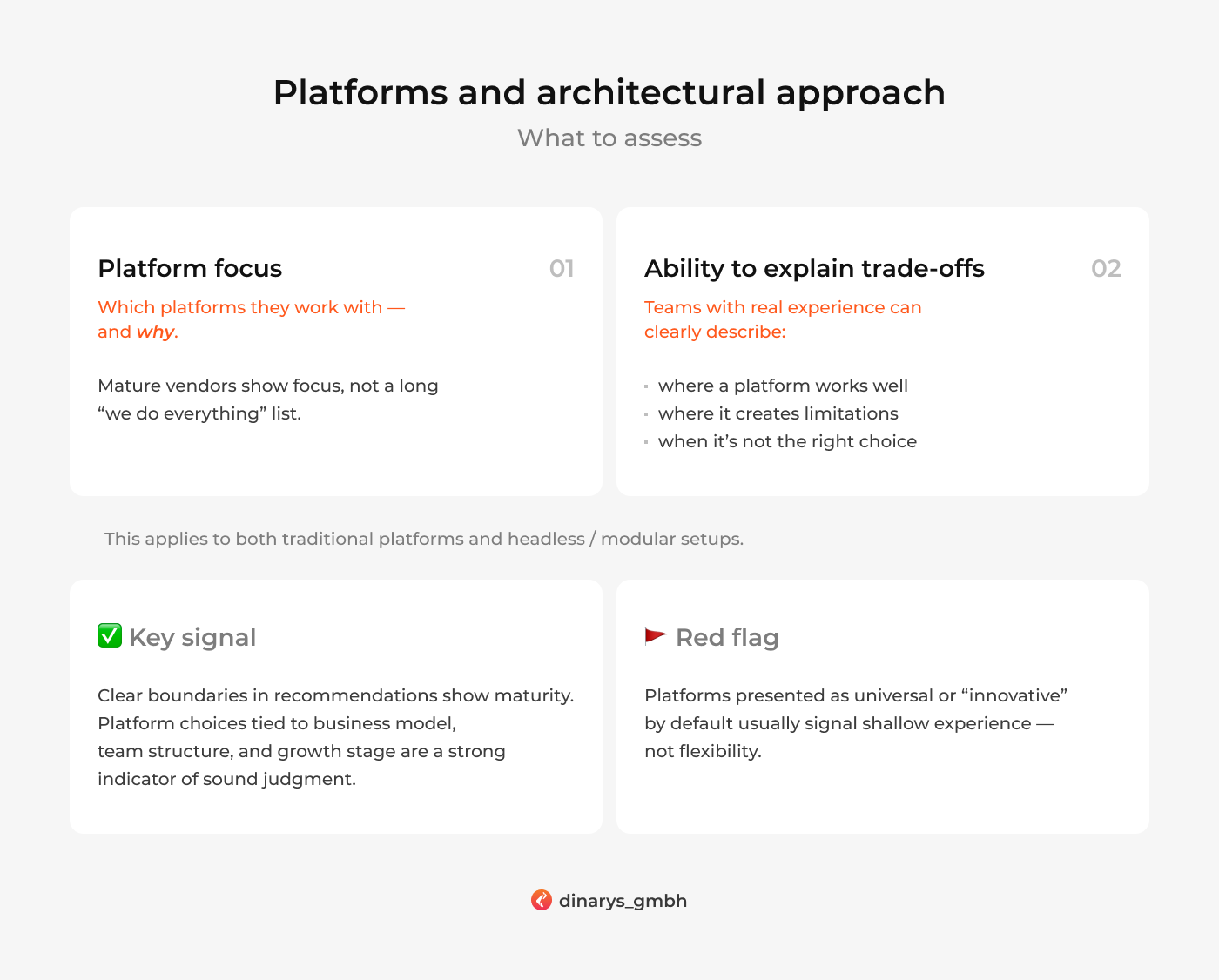
At the pre-evaluation stage, it’s important to understand not only which ecommerce platforms a vendor works with but also the reasoning behind those choices. Mature companies usually have a clear platform focus supported by practical experience rather than a long list of tools they claim to support equally well.
Pay attention to how a vendor explains the differences between platforms and architectural approaches. Teams with real experience can clearly describe:
where a platform performs well
where it creates limitations
in which situations it may be the wrong choice
This applies equally to traditional platforms and more flexible setups such as headless or modular architectures.
A useful signal at this stage is the presence of clear boundaries. Vendors who openly explain why they recommend certain platforms for specific business models, team structures, or growth stages tend to make more grounded decisions later on. When platform choices are presented as universal, innovative solutions without context, it usually points to shallow experience — not versatility.
#4: Relevance and complexity of completed projects
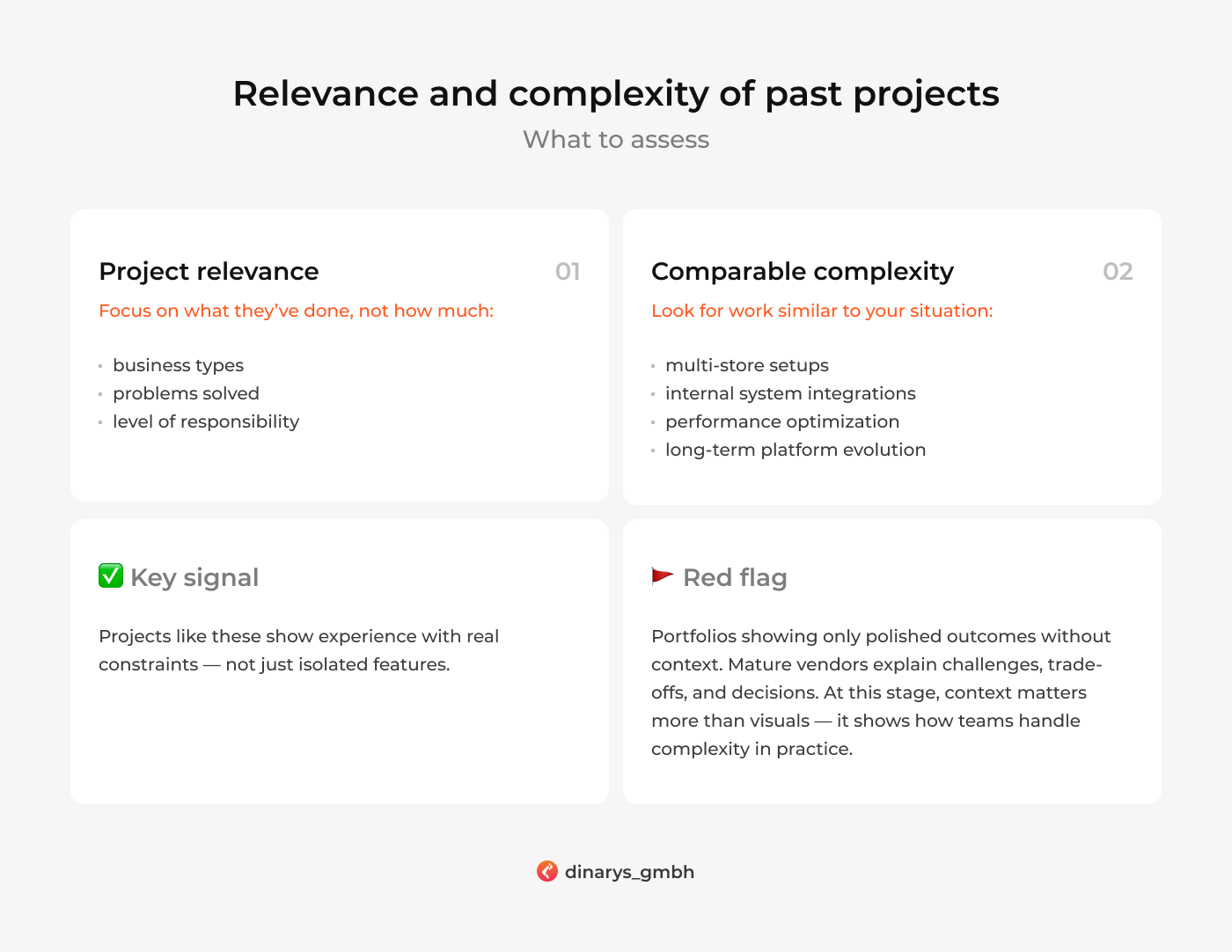
When reviewing past work, the key question is not how many projects a vendor has completed but how relevant and complex those projects were. Case studies should help you understand:
types of businesses a vendor has worked with
problems they’ve solved
level of responsibility involved
Look for projects that reflect situations similar to yours in terms of scale, operating model, and technical complexity. This may include:
multi-store setups
integrations with internal systems
performance optimization
long-term platform evolution
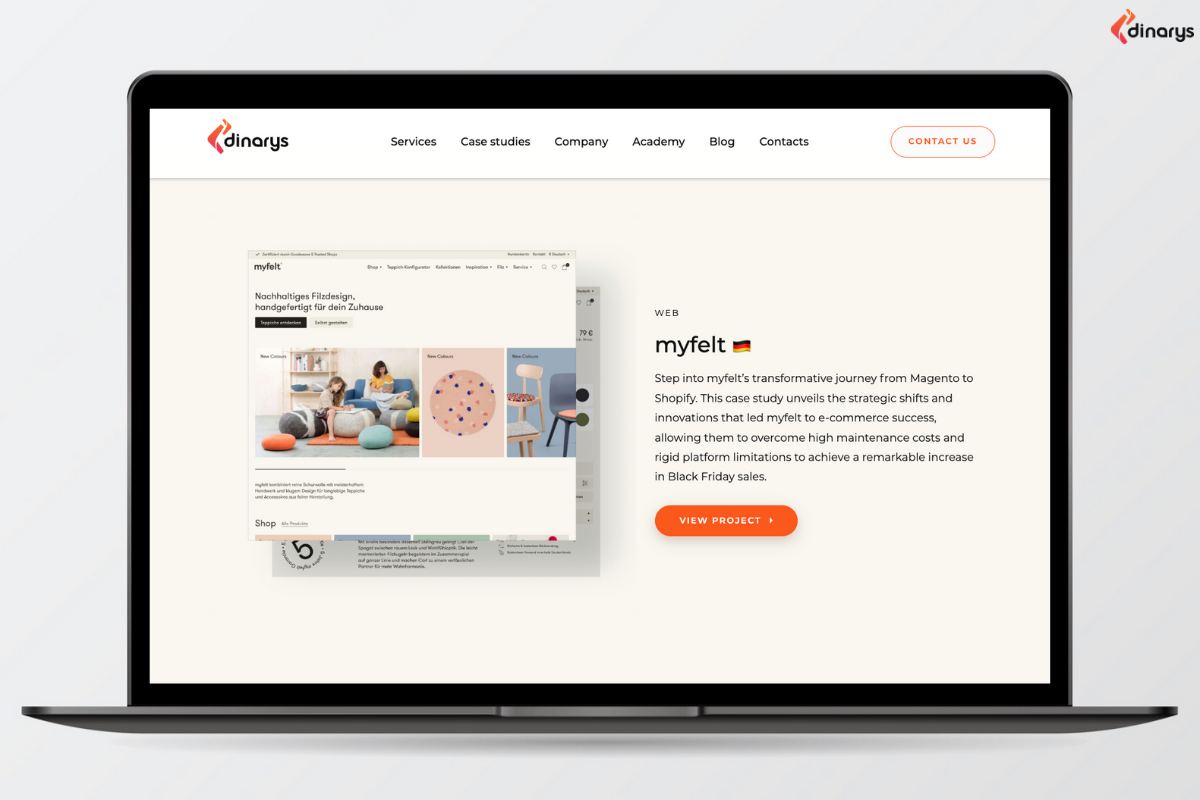
The presence of such work suggests that the team has experience handling real constraints, not just building isolated features. You can easily find case studies on a vendor’s website. For example:
❗ Be cautious of portfolios that only focus on picture-perfect outcomes without context. Mature vendors usually explain the challenges behind a project and the decisions made along the way. At this stage, context matters more than visual results, as it indicates how the team approaches the complexity of tailored solutions and problem-solving in practice.
#5: Quality and substance of publicly available content
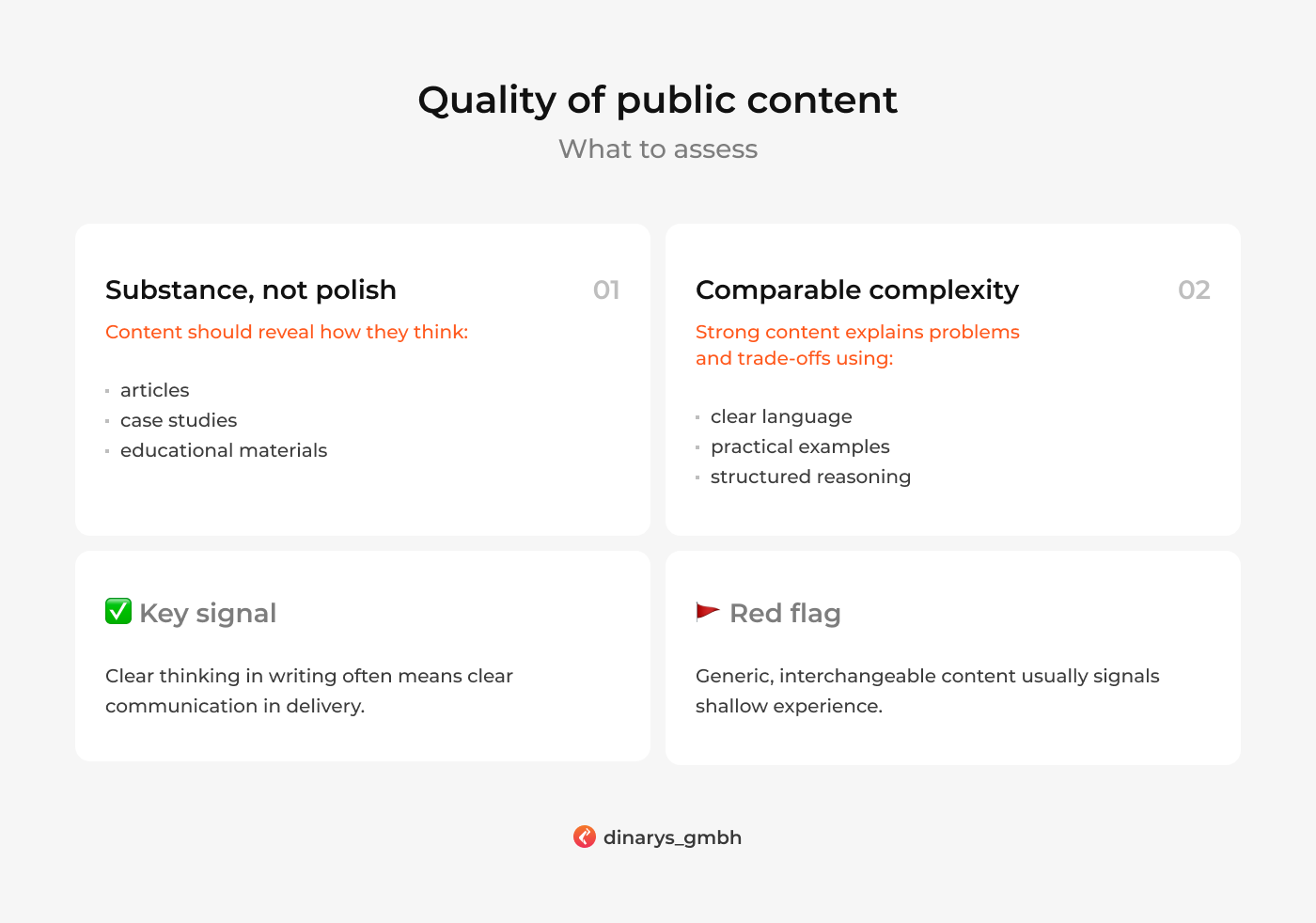
Publicly available content (website copy, articles, case studies, educational materials) is often one of the clearest indicators of how a vendor thinks and communicates. The goal is not to assess marketing polish but to understand whether the content reflects real experience.
Meaningful content focuses on explaining problems, trade-offs, and decision-making instead of directly promoting services. Look for:
clear language
practical examples
a structured approach to complex topics
When a vendor can articulate their thinking in writing, it often means they will communicate clearly during delivery.
❗ Be cautious of content that relies heavily on generic statements or surface-level descriptions. If the copy sounds like it could be published by any vendor, it likely offers limited insight. At this stage, well-considered content helps you distinguish between companies that execute tasks and those that understand the broader context of ecommerce work.
#6: Transparency of team structure and key contributors
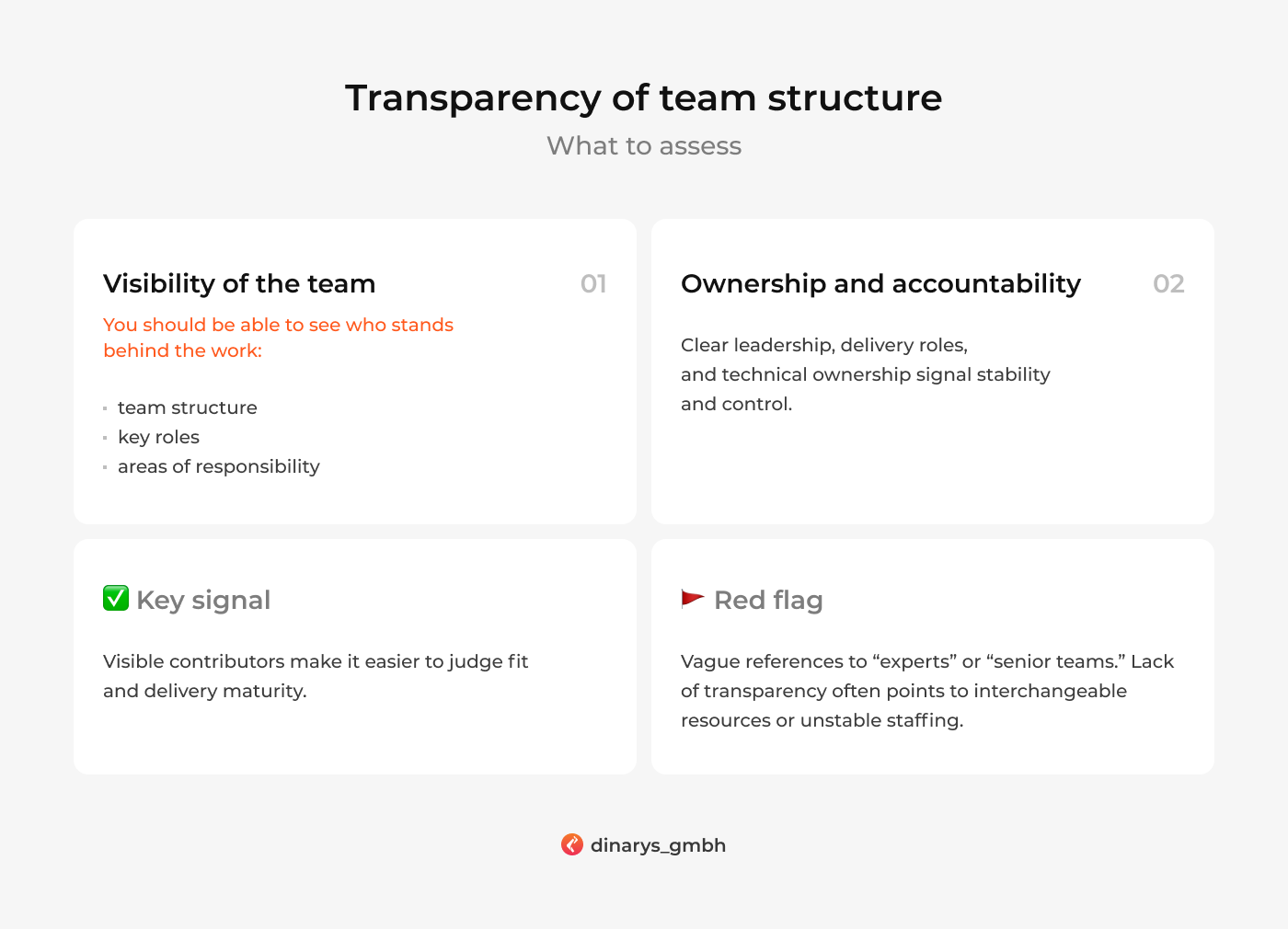
Before contacting a potential vendor, it’s useful to know who stands behind their work. Transparent e-commerce development companies usually provide at least a basic view of their team structure, key roles, and areas of responsibility. This helps clients set realistic expectations about how projects are staffed and managed.
Look for signals that go beyond generic references to “experts” or “senior teams.” Clear information about leadership, delivery roles, and technical ownership suggests internal structure and accountability. When key contributors are visible, it also becomes easier to assess whether the vendor’s experience aligns with the complexity of your needs.
A lack of transparency at this stage can indicate frequent team changes or heavy reliance on interchangeable resources. While not all details need to be public, a vendor that openly shows how their teams are organized is more likely to provide continuity and clarity once cooperation begins.
#7: Approach to delivery processes, risk management, and change handling
Even before formal discussions begin, a vendor’s approach to delivery and risk can often be assessed from how they describe their work:
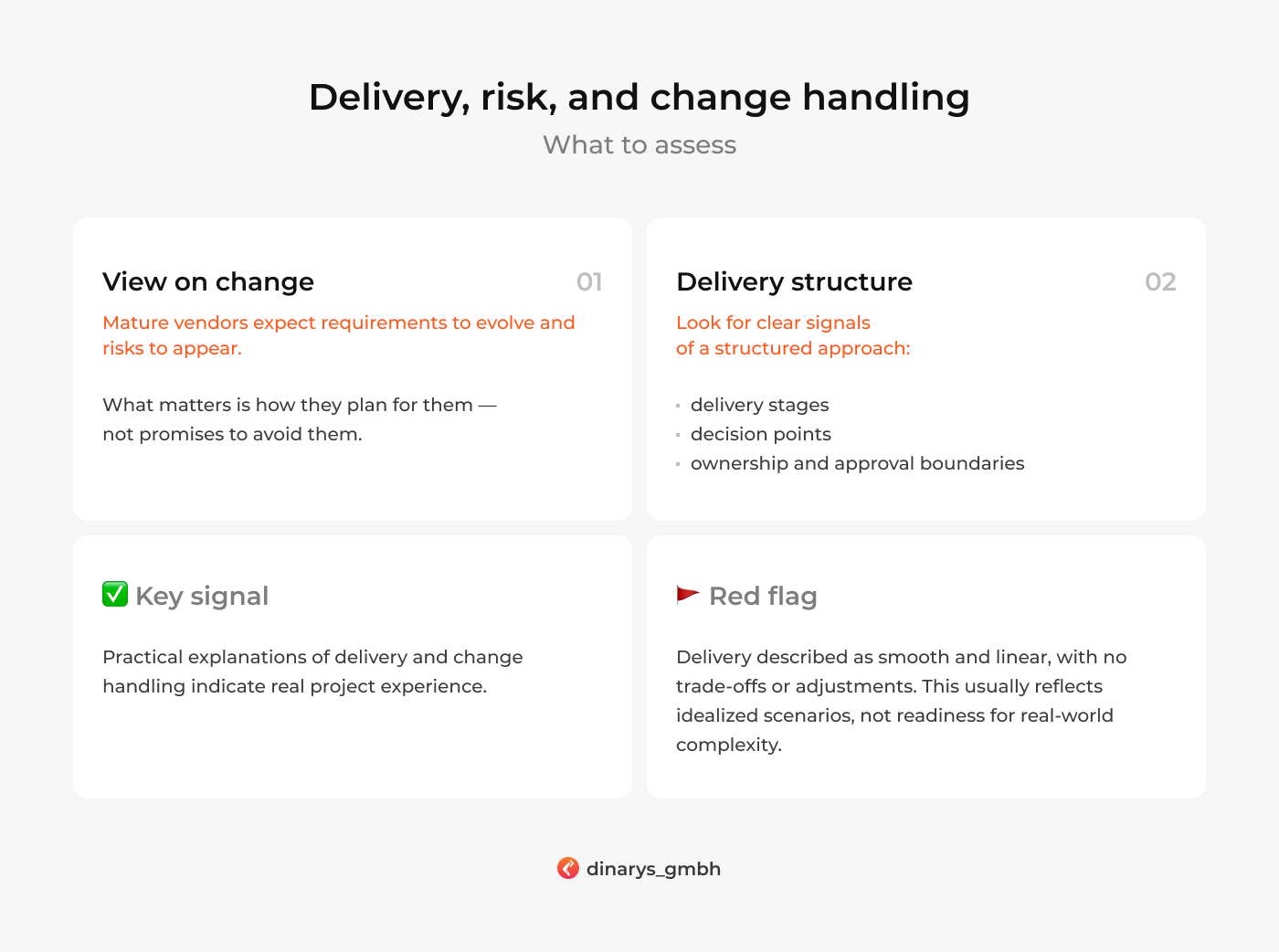
Mature ecommerce website development companies acknowledge that projects evolve over time, requirements change, and issues may arise unexpectedly. In this case, what matters is not promises to avoid risks but how the vendor anticipates risks and manages them when they arise.
Look for indicators that the vendor has a structured way of working — clear stages, taking responsibility for making decisions when the development process ‘requires’ this, and boundaries of responsibility. These indicators may appear on a vendor’s website in descriptions of delivery phases, governance models, or how changes are assessed and approved. Companies with real delivery experience tend to explain these processes in a practical, straightforward way.
Be cautious of vendors who present delivery as a smooth, linear path without mentioning trade-offs or adjustments. Transparency regarding change handling and risk mitigation is a strong sign of maturity and rich experience. It suggests the team is prepared for real-world complexity and not just ideal project scenarios (that are rarely realistic).
Testimonials can be helpful, but they rarely tell the full story. It’s worth looking beyond carefully selected quotes to understand how a vendor is perceived more broadly. Reputation is better reflected in consistency than praise.
Look for external signals that support the company’s claims, such as long-term client relationships, repeat engagements, or references to ongoing work rather than one-off projects. Mentions across different channels, steady positioning over time, or recognition through partnerships can also indicate stability and trust.
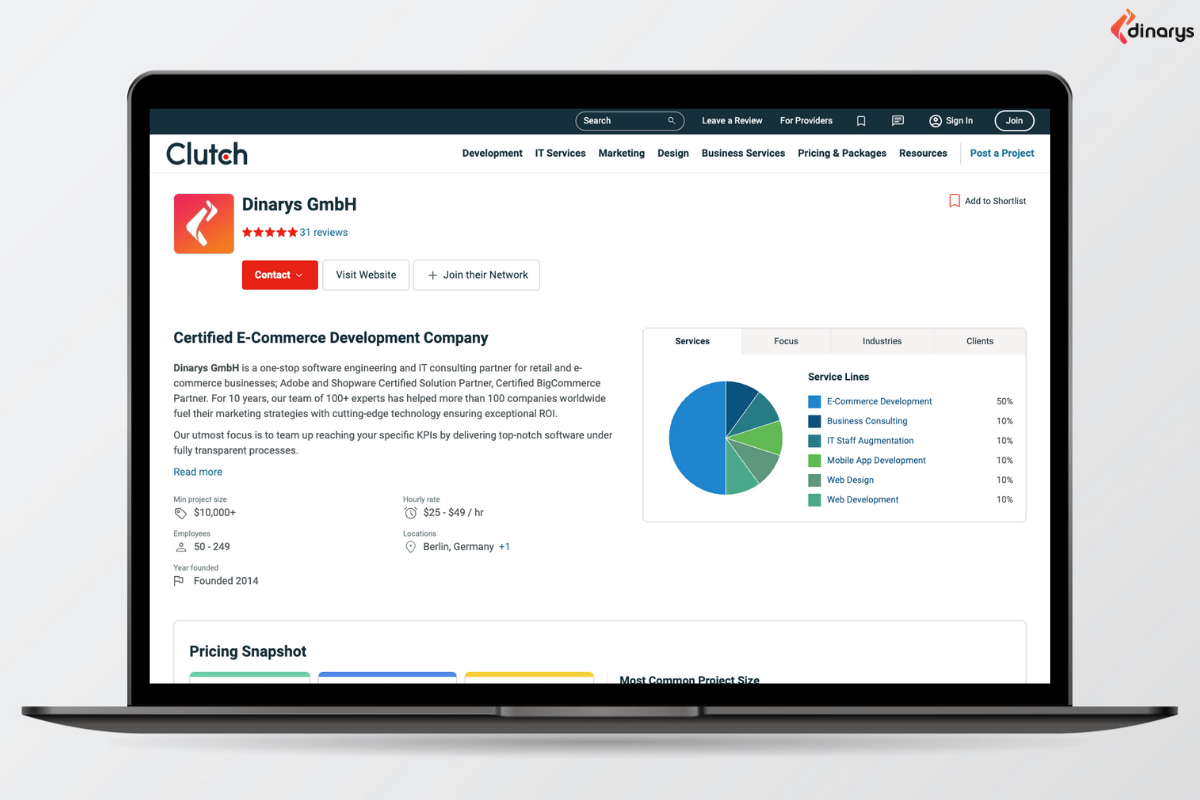
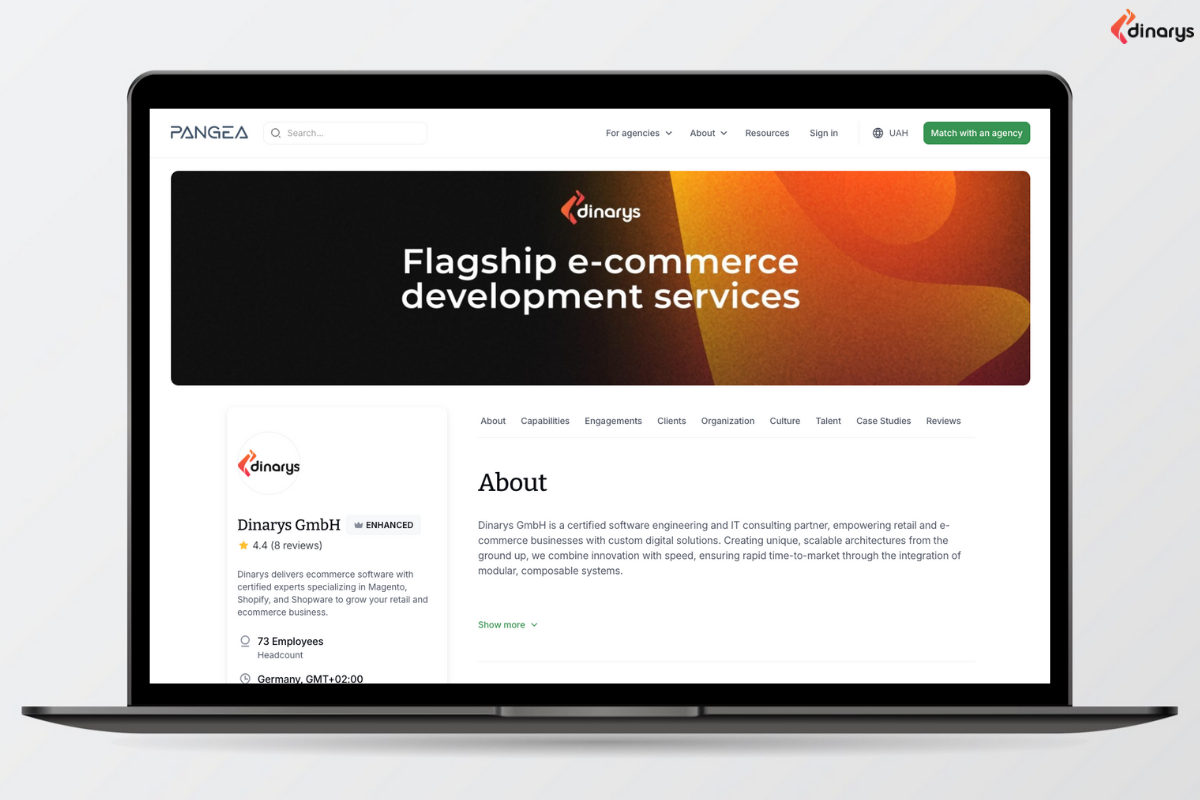
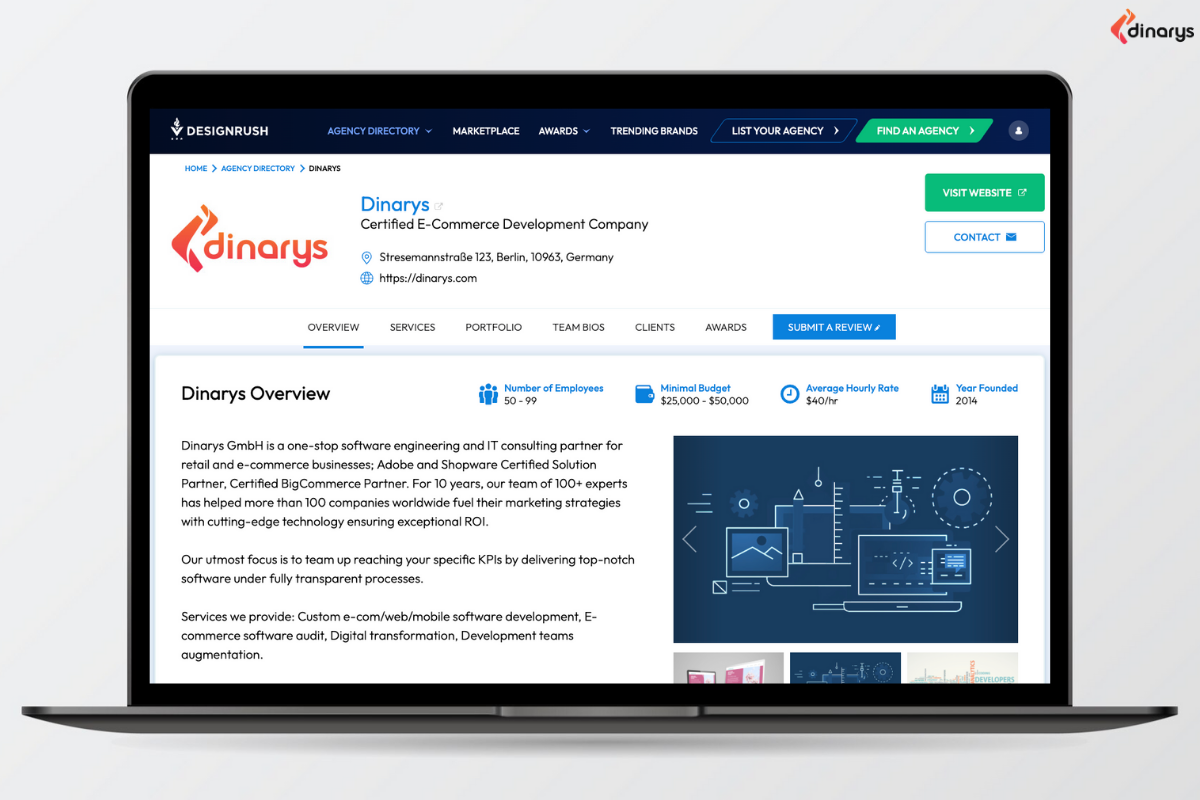
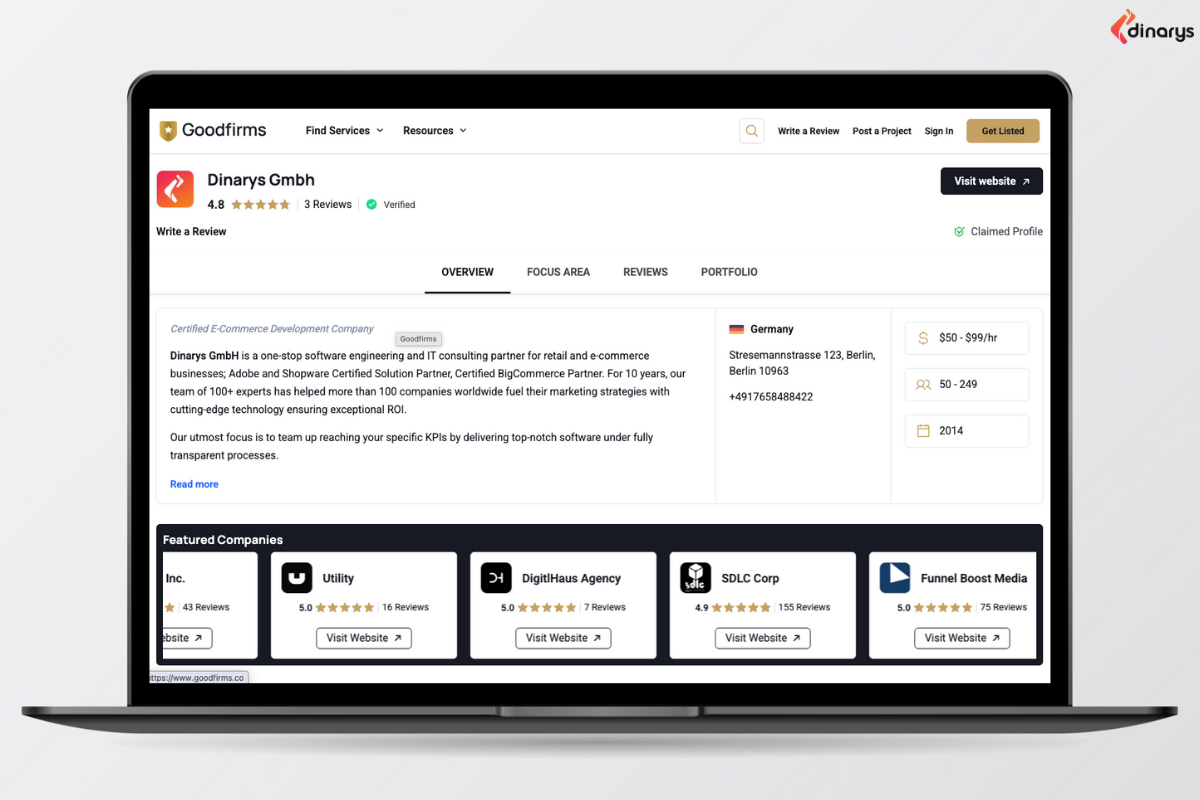
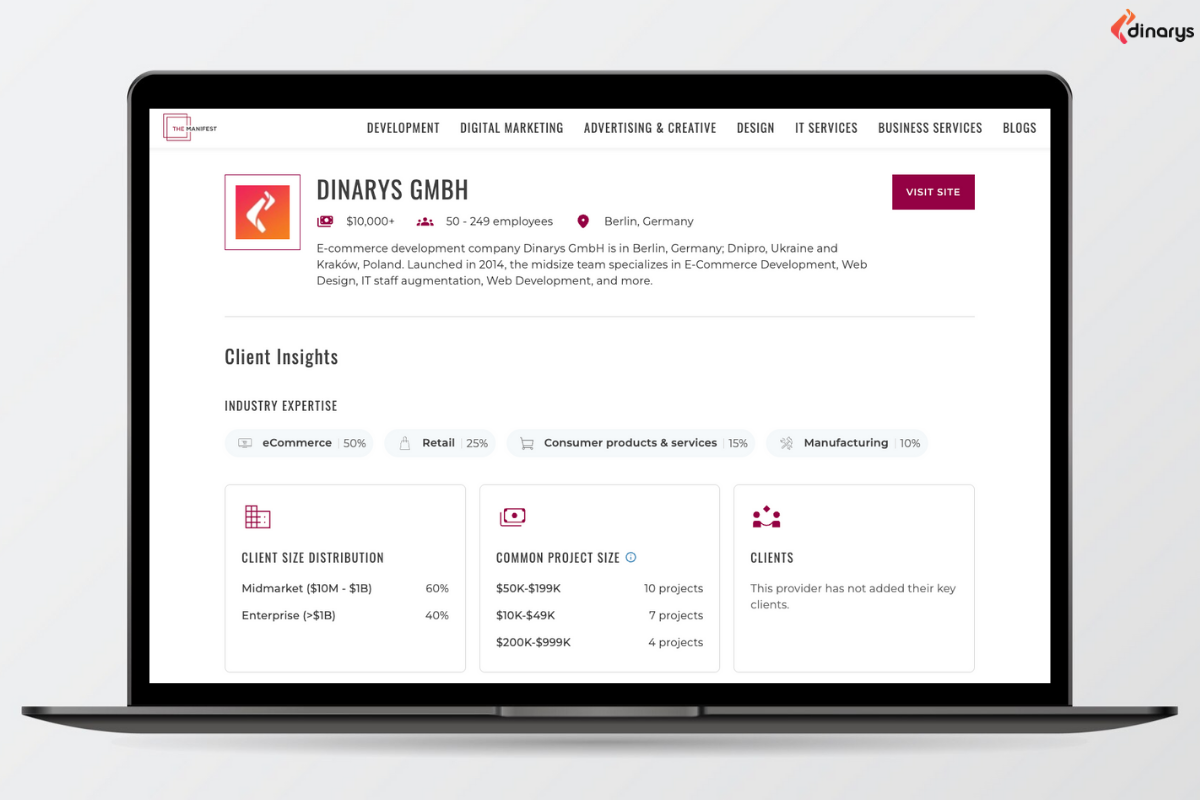
❗ Be cautious when testimonials are the only visible proof of credibility. Mature vendors usually leave a wider trail through their work, content, and presence in the ecosystem. Observing how a company is represented and referenced outside their own website will help you build a more balanced view before moving forward. For ratings and reviews, you can check out platforms such as Clutch, Pangea.ai, DesignRush, GoodFirms, and The Manifest:
#9: Clarity around services and types of projects they don’t take on
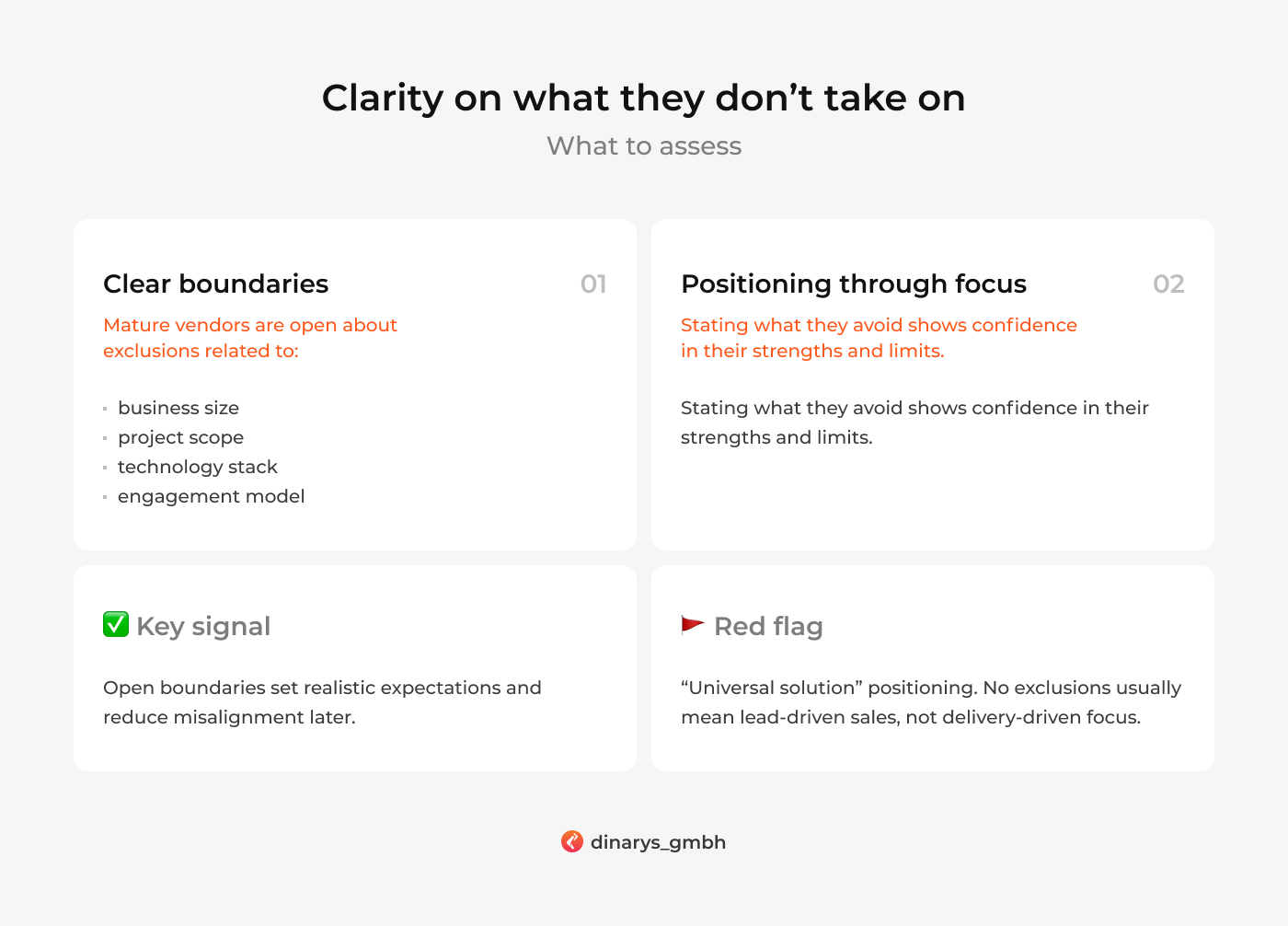
Clear positioning is not only about what a vendor offers but also about what they deliberately avoid. This kind of clarity is a strong indicator of maturity. The best ecommerce website development companies that understand their strengths are open about the types of projects, industries, or situations they are not suited for.
Look for clear boundaries in how services are described. This may include limits related to:
business size
project scope
technology stack
engagement model
When a vendor communicates these boundaries openly, it helps set realistic expectations and reduces the risk of misalignment later in the ecommerce development process.
❗ Be cautious of companies that present themselves as a universal solution. A lack of selectivity may signal that a company prioritizes quantity over quality. Vendors that clearly state what they don’t take on are more likely to prioritize fit and long-term success over short-term opportunities.
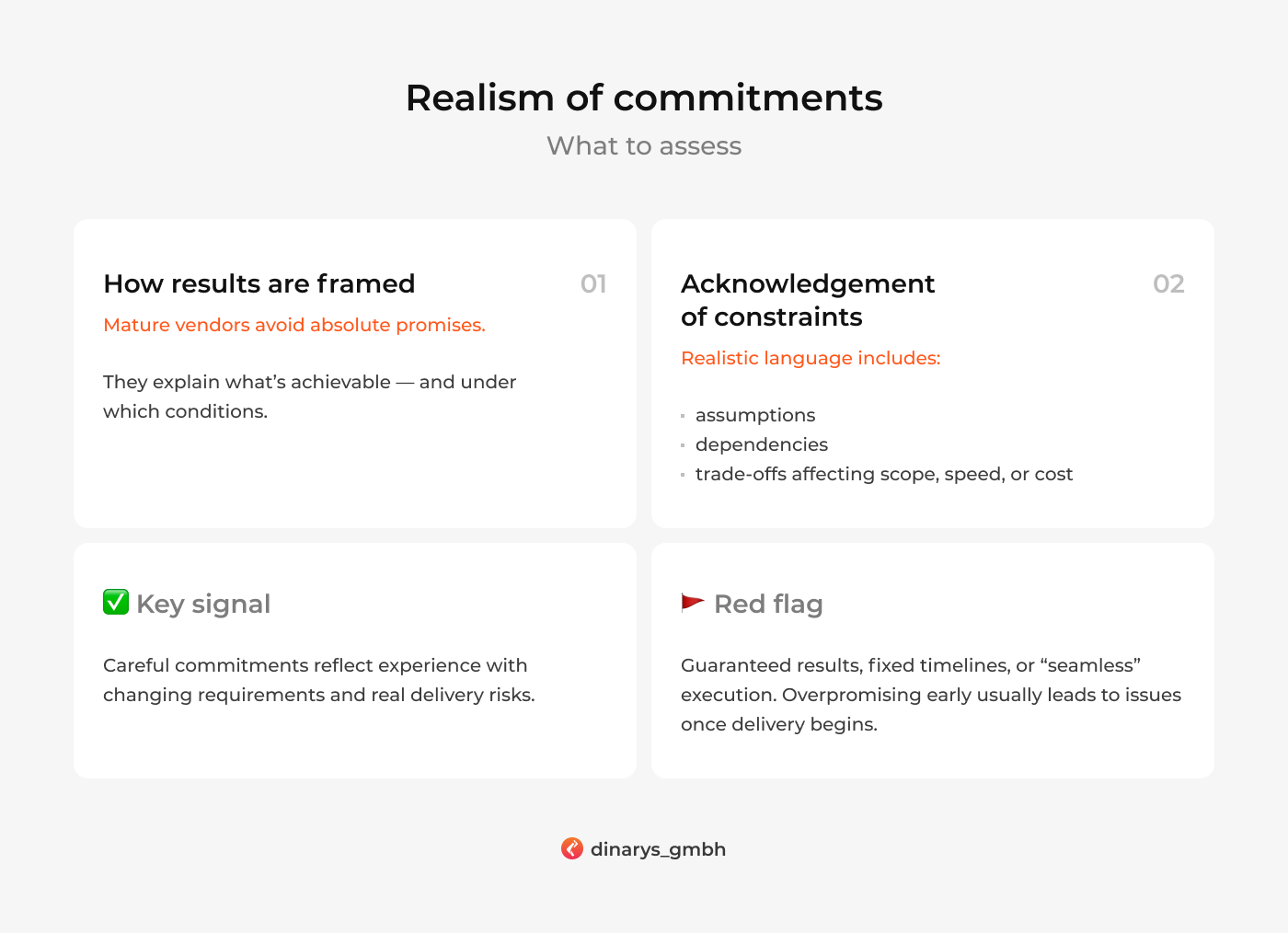
#10: Realistic commitments and avoidance of overpromising
It’s worth paying close attention to how a vendor talks about results, timelines, and outcomes. Top ecommerce development agencies are careful with commitments. Instead of making absolute promises, they explain what is achievable under certain conditions and what factors may influence delivery.
Look for language that reflects a realistic approach. This may include references to:
assumptions
dependencies
trade-offs that affect scope, speed, or cost
Vendors and ecommerce developers with practical experience avoid framing projects as predictable or risk-free, as they understand how often requirements evolve once work begins.
❗ Be cautious of companies that consistently promise fast delivery, guaranteed results, or seamless execution without acknowledging constraints. Overpromising often leads to disappointment. A vendor that sets measured expectations early is likely to handle complexity responsibly once cooperation starts.
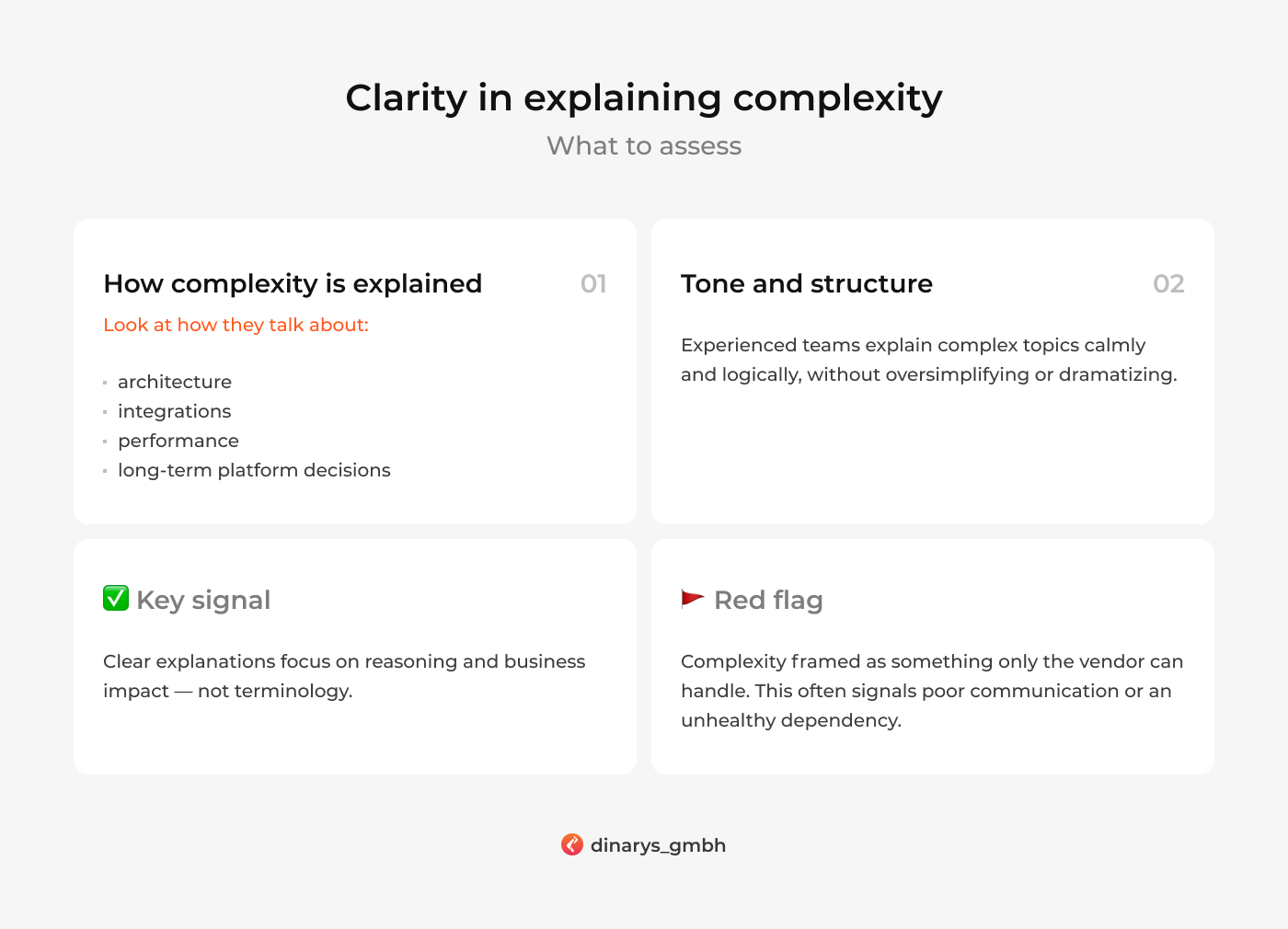
#11: Ability to explain complex topics calmly and clearly
The way a vendor explains complex topics is often a strong indicator of real expertise. This shows up in how they describe:
architecture
integrations
performance
long-term platform decisions
Teams with practical experience tend to explain complexity in a calm, structured way, without oversimplifying or dramatizing the challenges.
Clear explanations usually focus on helping the reader understand the reasoning behind decisions rather than impressing them with terminology. When complex subjects are broken down logically and connected to business impact, it becomes easier to assess whether the vendor understands both technical and operational aspects of ecommerce.
If complexity is presented as something only the vendor can manage, it may indicate poor communication or an unbalanced relationship. At this stage, clarity and composure are strong signs of a partner you can work with effectively over time.
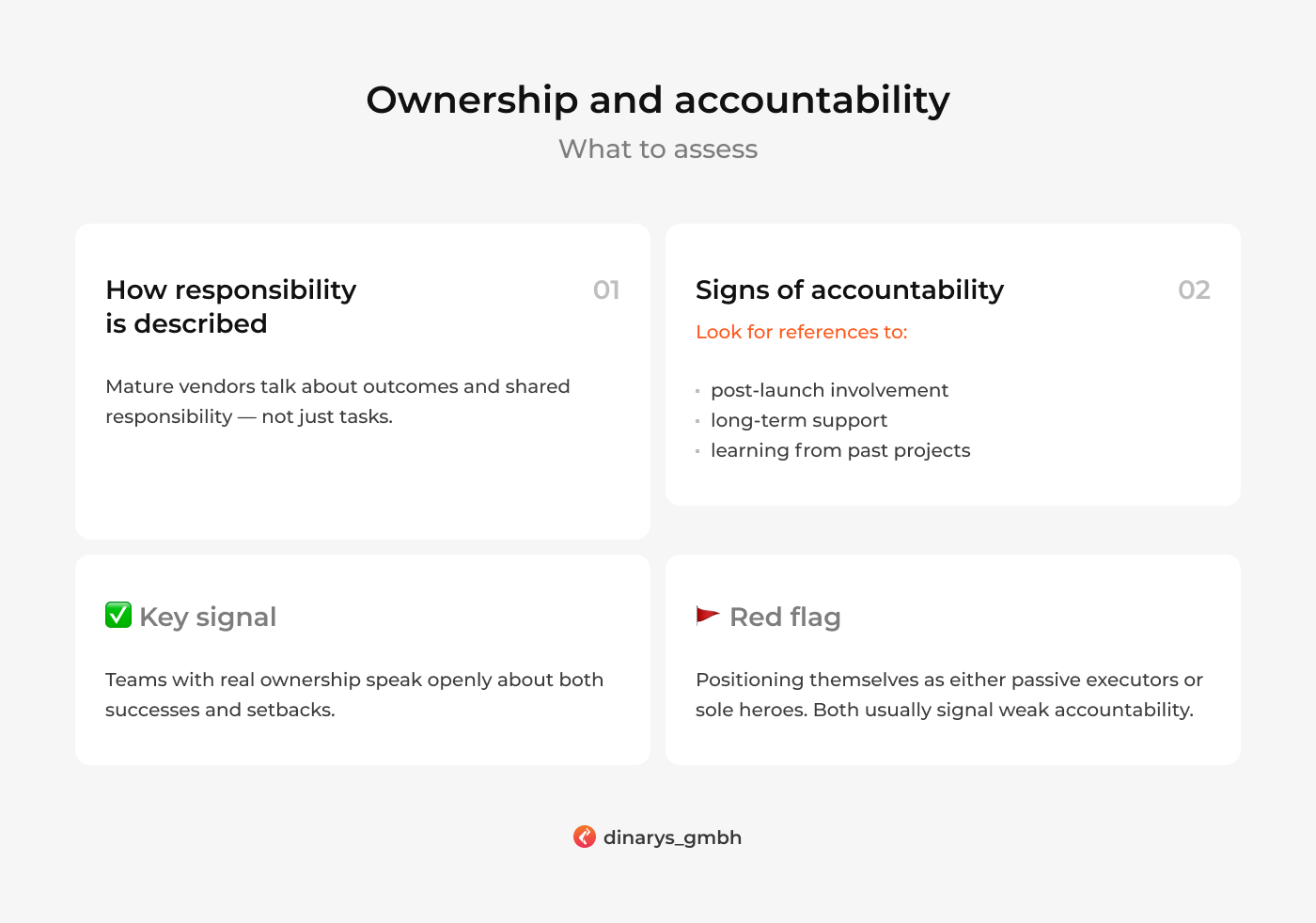
#12: Sense of ownership and accountability in their work
A vendor’s sense of ownership often becomes visible long before formal cooperation begins. It can be seen in how responsibility is described in case studies, service pages, and public communication (social media, speeches on public events, press-releases). Mature ecommerce web development agencies usually describe their work in terms of outcomes and shared responsibility, not just completed tasks.
Look for signs that a vendor takes accountability for decisions and results. This may include references to:
long-term support
post-launch involvement
learning from past projects
Teams with a strong sense of ownership don’t just focus on deliverables. They speak openly about their role in both successes and setbacks. Vendors with less real experience often position themselves either as passive executors with no responsibility or, at the other extreme, as the sole heroes of a project.
#13: Willingness to prioritize fit over volume of clients
A clear sign of maturity is when a vendor is selective about the projects they take on. You often see this in how openly vendors talk about their ideal clients, engagement models, and the types of projects they’re not interested in.
Vendors that prioritize fit over volume tend to value long-term outcomes more than short-term growth. They are more likely to decline projects that fall outside their technical expertise or capacity, even when opportunities are available. This selectivity usually reflects confidence in their delivery model and respect for both their own team and the client’s business.
UNDERSTAND HOW ECOMMERCE DECISIONS AFFECT DAILY OPERATIONS
Dinarys can help you assess how platform choices and integrations influence workflows, costs, and team efficiency.
How to check your shortlisted ecommerce development agencies and minimize risks
Once you have a shortlist, the goal shifts from filtering to validation. At this stage, most vendors will look competent, prepared, and confident. The task is no longer to compare promises but to reduce uncertainty before making a commitment.
A useful approach is to move the conversation away from generic presentations and toward how the vendor thinks and works in real situations. Instead of asking for more marketing materials, focus on how the vendor explains decisions, understands your business objectives, handles ambiguity, and responds to constraints.
There are several practical ways to do this without turning the process into a full procurement exercise:
Ask for context. Pay attention to how vendors explain their past projects. Strong teams naturally describe constraints, trade-offs, and reasoning, not just outcomes.
Discuss realistic scenarios. Bring up situations such as changing priorities, unexpected technical limitations, or integration delays. The way a vendor responds often reveals more than what they share in case studies.
Clarify ownership early. Ask how responsibility is shared during delivery and after launch. Clear, balanced answers usually indicate mature collaboration practices.
Look for consistency across people and materials. Compare what is said in calls with what is written on the website or in proposals. Inconsistencies often signal internal misalignment.
Avoid rushing decisions. Pressure to move fast at this stage is rarely in the client’s interest. Vendors that respect a measured decision process tend to be more reliable partners over time.
Minimizing risk does not mean eliminating all uncertainty. Ecommerce projects are complex by nature, and change is unavoidable. The objective is to choose a vendor that is prepared to work through that complexity in a structured and transparent way.
A thoughtful shortlisting and validation process helps turn vendor selection into a business decision. It also sets the tone for collaboration, making expectations clearer on both sides before work begins.
Top ecommerce web development companies 2026
After evaluating vendors based on research-stage criteria and shortlisting contenders, the next step is to look at specific companies that stand out in the market. This list highlights 13 ecommerce development firms that provide some of the best ecommerce development services and have proven experience, thoughtful approaches, and a solid track record of working with businesses across different industries and at different scales:
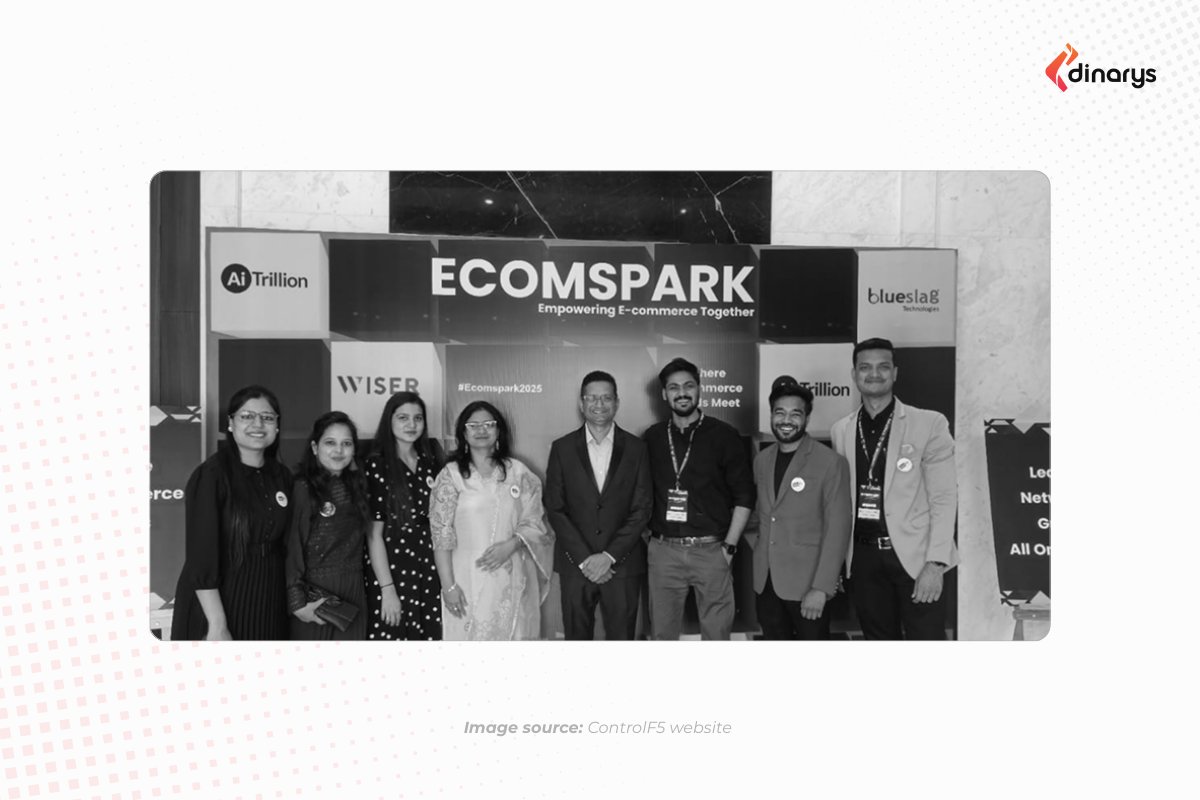
ControlF5
ControlF5 is a digital services company that provides web and ecommerce development as part of their broader website and online presence services. The team supports businesses with building and maintaining online stores using common ecommerce platforms.
Services they provide: Team augmentation, web ecommerce development, mobile ecommerce development, SEO optimization, service integration, migration, content marketing, AI automation
Ecommerce platforms they work with: Shopify, WordPress, WooCommerce, Salesforce, Adobe Commerce, Shopline
Dinarys
Dinarys is an ecommerce software development company that works with B2B and B2C businesses across different markets. The team helps companies build, modernize, and scale ecommerce platforms that support real operational needs.
Company profile
Headquarters: Berlin, Germany
Operating since: 2014
Top clients: Toyota, Accenture, BORN, Panodyssey, Vaimo, Prostor, SanMar Canada
Services they provide: Team augmentation, web ecommerce development, mobile ecommerce development, DevOps (support, maintenance, migration), UI/UX design, consulting, quality assurance, IT audit, service integration, migration, SEO, business automation, support and maintenance
Ecommerce platforms they work with: Magento, Adobe Commerce, Shopware, Pimcore, Shopify, BigCommerce, commercetools, WooCommerce, Emporix, SAP, Salesforce
Unified Infotech is a software development and digital solutions company that works with businesses of varying sizes to build and enhance online commerce platforms. The team supports ecommerce projects through custom development, platform migration, mobile commerce features, and related integrations, helping businesses improve user experience and operational efficiency.
Company profile
Headquarters: New York, USA
Operating since: 2010
Top clients: Citi, Future Group, NBCUniversal, eShipper, Rubber King, BlueSky
Services they provide: Team augmentation, custom ecommerce development, mobile commerce solutions, platform migration, ecommerce optimization and security, integrations, ongoing support and maintenance
Ecommerce platforms they work with: Adobe Commerce, Magento, Shopify, Salesforce Commerce, WooCommerce, Oracle Commerce Cloud, Sitecore, commercetools
Innowise
Innowise is a custom software development company that delivers tailored ecommerce development solutions as part of broader digital and system development projects. The team supports businesses with custom online commerce builds, integrations, and platform-based implementations.
Company profile
Headquarters: Warsaw, Poland
Operating since: 2007
Top clients: LVMH, Nike, Siemens, The Walt Disney Company, Costco, Accenture, Nvidia, Mastercard, Nestlé
Services they provide: Custom ecommerce software development, platform-based development, integrations and APIs, system modernization, QA and testing, support and maintenance
Ecommerce platforms they work with: Shopify, Magento/Adobe Commerce, WooCommerce, BigCommerce, OpenCart, PrestaShop, Salesforce, SAP Commerce
ELEKS is a global software engineering company that works with enterprises on complex online retail and ecommerce systems. Its teams help businesses design, build, and integrate commerce platforms within larger digital and operational environments.
Company profile
Headquarters: Tallinn, Estonia
Operating since: 1991
Top clients: BlackBoard, Al-Mis’hal, SavService, AcceleratedAnalytics, Russmann, DPD
Services they provide: Custom software engineering, ecommerce and retail solutions, consulting, UX and product design, integrations, QA, cloud and data services
Vaimo is a digital commerce agency focused on building and evolving enterprise-level ecommerce platforms. The company supports brands with end-to-end commerce delivery, from platform implementation to long-term optimization and support.
Company profile
Headquarters: Stockholm, Sweden
Operating since: 2008
Top clients: WEG, Diptyque, JDE Peet’s, BAUHAUS, Tarkett, Runnings
Services they provide: End-to-end ecommerce development, commerce consulting, UI/UX design, platform implementation, managed services, analytics and optimization, long-term support, AI
Ecommerce platforms they work with: Adobe Commerce (Magento), Shopify Plus, commercetools
Airnauts is an ecommerce development company specializing in Shopify and Shopify Plus projects. The team helps brands build, migrate, and maintain online stores with a strong focus on platform execution and ongoing support.
Company profile
Headquarters: Warsaw, Poland
Operating since: 2012
Top clients: Sainsbury’s, Clinique, Michael Kors, Samsung, Ford, Chevrolet, Netflix, Estée Lauder
Services they provide: End-to-end ecommerce development (web and mobile), UI/UX design, platform implementation, quality assurance, headless, low-code, analytics and optimization, AI, strategy development, branding
Power Commerce is an ecommerce agency that focuses on Shopify and Shopify Plus development for growing brands. The company supports businesses with store builds, migrations, and performance improvements aimed at sustainable growth.
Stellar Soft is a software development company that provides outsourced ecommerce delivery and team augmentation services. Its work typically focuses on Shopify-based stores, integrations, and ongoing technical support.
Services they provide: Team augmentation, custom ecommerce software development, website development and design, ecommerce consulting, SaaS development, blockchain development
Ecommerce platforms they work with: Shopify, WordPress, WooCommerce, Adobe Commerce
Certified partners: Shopify
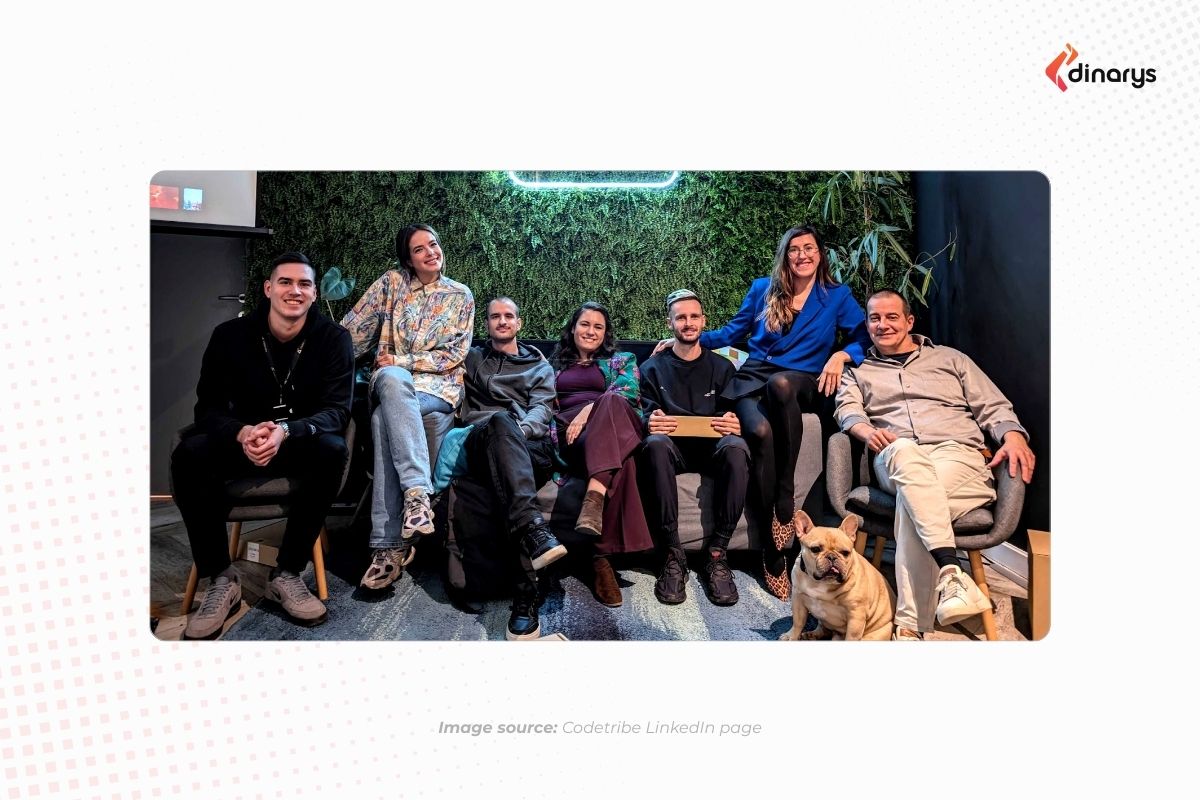
Codetribe
Codetribe is a product engineering company that delivers custom scalable solutions, both digital and commerce-related, for large organizations. The team supports ecommerce initiatives as part of broader product and platform development efforts.
Company profile
Headquarters: Novi Sad, Serbia
Operating since: 2015
Top clients: Warner Bros, BMW, Audi, Siemens, IKEA, UNICEF
Services they provide: Staff augmentation, digital transformation, custom enterprise solutions, AI and machine learning, data science, cloud operations, cybersecurity, customer experience (UX/UI), BPO, automation
Brainvire
Brainvire is a technology services company that provides end-to-end ecommerce development for mid-market and enterprise businesses. They work across platform implementation, integrations, and long-term support for commerce systems.
Company profile
Headquarters: Irving, Texas, USA
Operating since: 2000
Top clients: FOX Sports, Southwest, Nike, Disney, Under Armour, K12, Entrepreneur, Puma, Honda
Services they provide: End-to-end ecommerce development, mobile app development, AI and ML development, DevOps and cloud, digital transformation, digital marketing, consulting
Ecommerce platforms they work with: Adobe Commerce, Magento Open Source, Shopify, WooCommerce, BigCommerce, Odoo ERP, Hyva
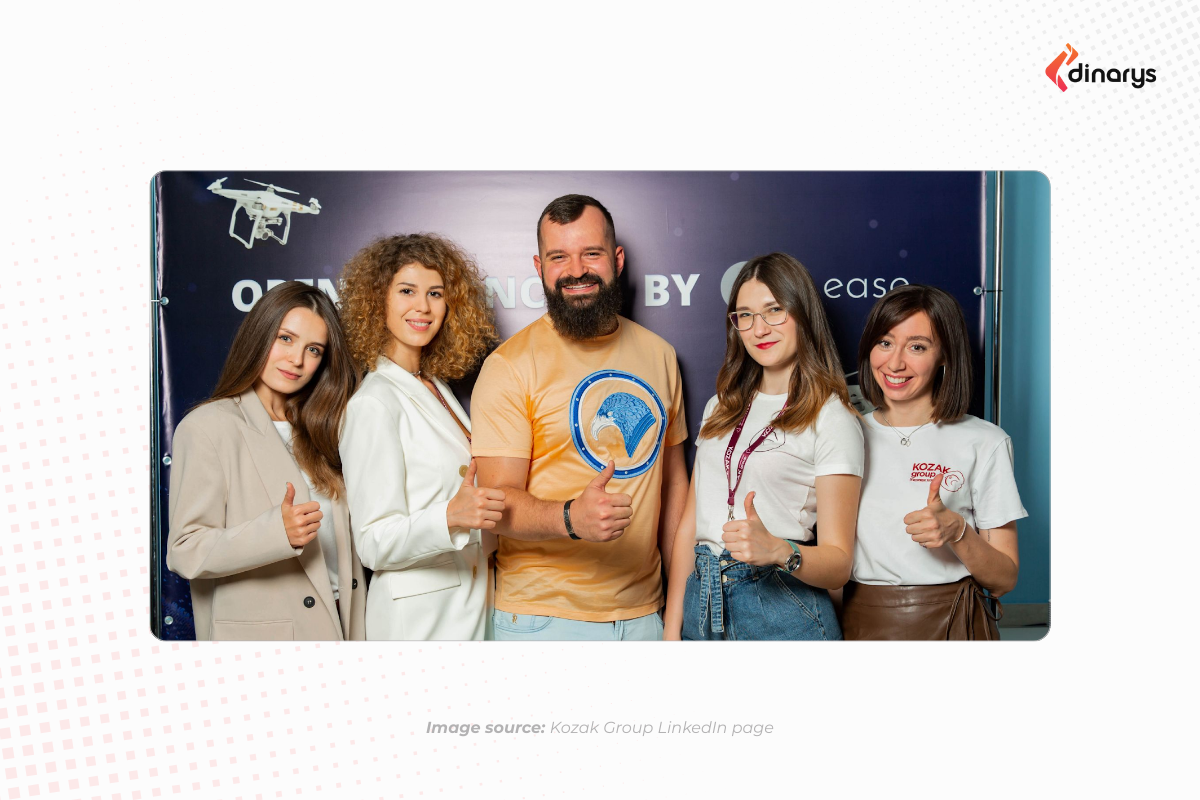
Kozak Group is an ecommerce development company that helps businesses build and improve online commerce platforms. The team focuses on platform-based development, integrations, and performance optimization for growing stores.
Company profile
Headquarters: Kraków, Poland
Operating since: 2015
Top clients: Chaussureelite.fr, Modacasual.es, La Moda Italiana, MoveBoard, TechGear
Services they provide: Team augmentation, end-to-end ecommerce development, platform integration, Magento upgrade, ERP integration, platform migration
Ecommerce platforms they work with: Adobe Commerce, Magento Open Source, Shopify, Hyva, WordPress
Certified partners: Adobe, Magento, Shopify
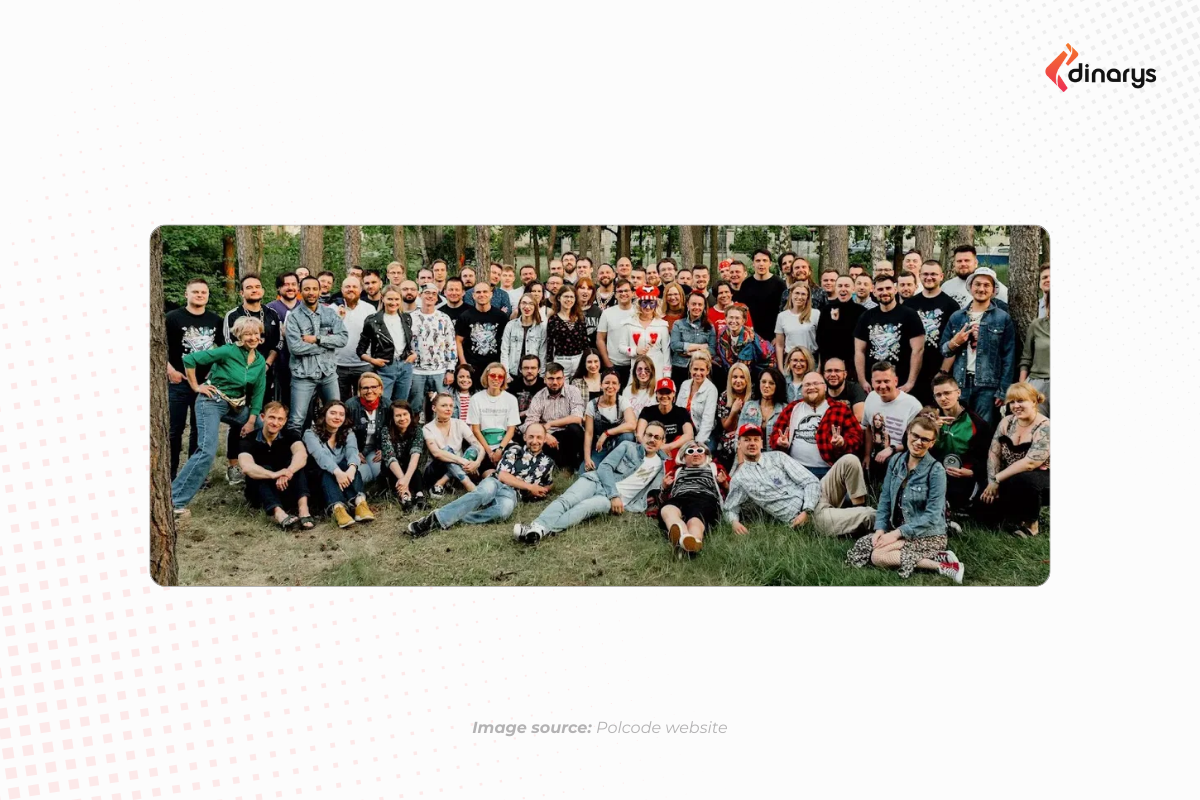
Polcode
Polcode is a software development company with a strong focus on Magento-based ecommerce solutions. The team supports businesses with custom development, integrations, and ongoing platform maintenance.
Company profile
Headquarters: Kraków, Poland
Operating since: 2006
Top clients: AppyBee, Combo Strike, Impak, SiteVibes, EngagementLabs, Puccini
Services they provide: Team augmentation, web development, mobile development, product design, software audit, frontend development, backend development, legacy system modernization
Ecommerce platforms they work with: Magento/Adobe Commerce, Shopify, WooCommerce
Certified partners: Twilio, Adobe
Picking among the top ecommerce development agencies
Choosing an ecommerce development vendor is less about finding the most visible or well-known company and more about finding a partner that aligns with your business needs. The right choice depends on how clearly a vendor understands their role, how they handle complexity, and how responsibly they approach long-term work.
There is no universal “best” ecommerce development company. Each business has its own constraints, pace, and priorities. A thoughtful evaluation process, grounded in realistic expectations, reduces risk and leads to partnerships that support steady growth over short-term results.
MAKE A CONFIDENT ECOMMERCE VENDOR DECISION GROUNDED IN REAL DELIVERY EXPERIENCE
Dinarys has 10+ years of ecommerce experience. We will help you reduce risk and enhance your product with clear processes built on clarity, alignment, and realistic expectations.
The cost of ecommerce web app development (as well as the development of mobile solutions) depends on several factors, including business size, platform choice, project scope, and level of customization required. A basic platform setup with limited integrations will naturally cost less than a solution that involves custom architecture, complex integrations, or multi-store and multi-market support.
Another important factor is how the work is structured. One-time builds, ongoing development, and long-term support models come with very different cost profiles. In practice, businesses that invest time up front in defining requirements and constraints tend to avoid unexpected expenses later. Rather than focusing on a single number, it’s more useful to understand what is included, what assumptions are being made, and how changes will affect the cost over time.
Two trends that continue to shape ecommerce development are the growing use of AI and headless architecture. AI is most often applied in practical areas such as search, personalization, demand forecasting, content support, and customer service automation. Its value depends less on novelty and more on how well it fits existing data and workflows.
Headless architecture is another important emerging trend in ecommerce, particularly for businesses that need flexibility across channels or faster front-end changes. While it offers clear advantages in certain scenarios, it also introduces additional complexity. Not every business needs a headless setup, and evaluating readiness is just as important as understanding the benefits. Trends are useful when they solve real problems.
Yes, understanding a vendor’s approach to custom development and custom solutions is important. Some vendors primarily deliver standard platform setups, while others focus on adapting platforms to fit specific business processes, integrations, or operating models. Knowing where a vendor sits on this spectrum helps you set realistic expectations from the start.
A focus on custom, scalable digital solutions doesn’t mean unnecessary complexity. In many cases, it reflects experience working with businesses that have outgrown default configurations and need tailored logic or system connections. Evaluating this early helps you determine whether a vendor can support your business as it evolves.
You may share this article
Let professionals meet your challenge
Our certified specialists will find the most optimal solution for your business.