Ecommerce development
When a 427-Store Retailer Outgrows Its Platform:
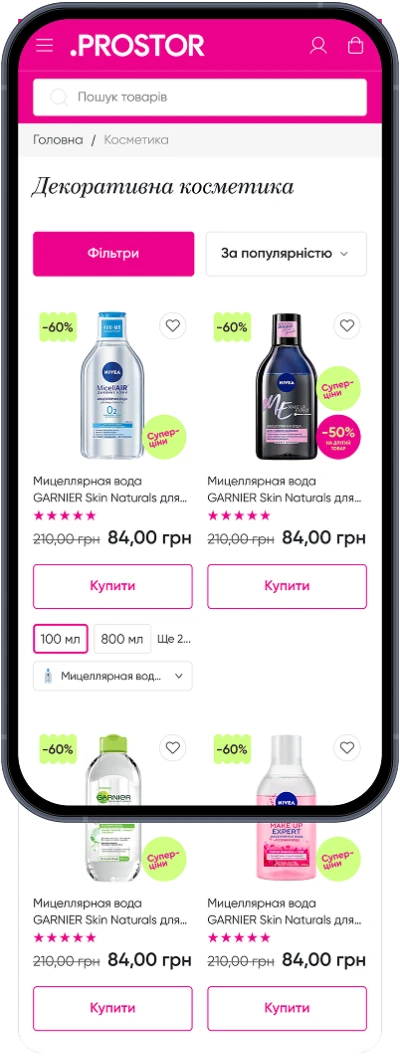
How Prostor Rebuilt for Omnichannel Scale Without Losing a Sale



Dinarys helped a large Ukrainian omnichannel drugstore chain migrate from a legacy platform that was actively blocking growth — restoring scalability, unifying 427 physical locations with their digital storefront, and enabling a loyalty and checkout experience that the previous system could not support.
Relevant for:
-


Retail chains and omnichannel operators facing platform scalability limits
-

Ecommerce teams preparing a Magento 2 migration under active business pressure
-

Companies managing high SKU volumes across multiple store locations
-

Businesses where online and offline loyalty programs are disconnected
-

Ecommerce teams looking to improve conversion
-

Retailers requiring ERP-/CRM-connected ecommerce architecture
Client testimonial


“Dinarys GmbH met our expectations and delivered high-quality work. Our work has significantly boosted online conversions, SEO rankings, brand visibility, UX, and customer engagement. So far, the team has excelled at project management, communicated seamlessly, replied promptly, and been very responsive.”

Nataliia Srednia
CMO at Prostor
About the project in brief
Key challenge
The legacy platform could not scale to match the retailer’s store footprint or support the performance, integrations, and omnichannel capabilities required for continued growth, while migration had to happen without disrupting live sales.
Complexity factors
Live migration across a 50,000+ SKU catalog, inventory, and customer records with near-zero downtime requirement; real-time inventory sync across 427+ physical stores + online storefront; omnichannel pickup integration; custom loyalty/bonus program unifying offline and online loyalty states; ERP/CRM integrations; high-traffic peak periods
Key results
About the client
Prostor operated 427 physical drugstore locations across Ukraine and had a substantial online customer base — but their ecommerce platform had become a ceiling, not a foundation. The system that served the business in its earlier stages could not handle the SKU volume, traffic spikes, or integration demands of an operation at this scale. Growth plans requiring omnichannel capabilities, real-time inventory sync, and a connected loyalty program were stalled by a platform that simply wasn’t built for them.
The business wasn’t in crisis, but it was increasingly constrained. Every quarter of continued operation on the legacy platform was a quarter of conversion, retention, and expansion left on the table. The decision to migrate was not theoretical. It was the only viable path forward.

About the challenges we faced
Four constraints made this migration materially harder than a standard replatforming:
-
Scale of existing data
Migrating 50,000 SKUs with pricing, descriptions, inventory states, and customer records intact while keeping the live storefront operational throughout required custom migration tooling. Off-the-shelf migration utilities were not viable at this volume and data complexity.
-
Physical store dependency

With 427 locations, the platform could not simply go dark during a transition. Real-time inventory sync across all stores had to remain accurate throughout the migration. Any disruption to stock data would immediately affect both online and in-store operations.
-
Peak traffic exposure

Migration could not happen during a controlled low-traffic window — Prostor’s business operated continuously. The new infrastructure had to be ready for high-demand periods before full migration was complete.
-
Fragmented loyalty state
Prostor’s existing bonus program was disconnected from its online store. Unifying these without resetting customer loyalty balances or degrading the experience required custom program development alongside the migration itself, not after it.
What we ruled out — and why
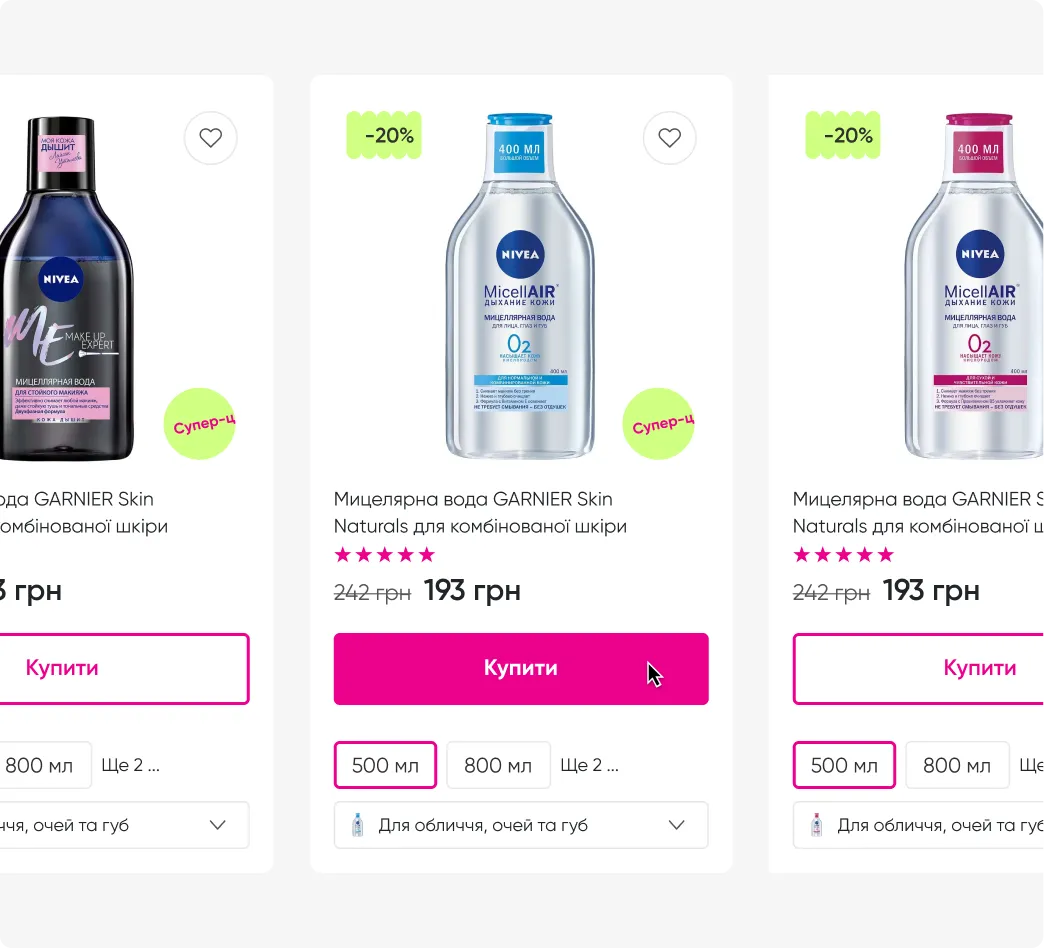
Performance patching and custom extensions on the existing platform
Optimizing the legacy system with targeted fixes and additional modules could have addressed some of the immediate symptoms. But we ruled out this option because the core constraints were architectural: an inability to handle real-time inventory sync across 427 locations, no viable path to Kubernetes-compatible infrastructure, and a data model that couldn’t support a unified loyalty program. Optimization would have bought time without buying capability, and the migration cost would have remained.
Headless frontend layer over the existing backend
Decoupling the frontend would have improved page performance and the user experience without touching the backend. However, we ruled this out because Prostor’s most urgent problems weren’t related to presentation. The platform couldn’t handle peak traffic at scale, couldn’t integrate cleanly with CRM and ERP systems, and couldn’t support omnichannel operations. A new frontend on the same foundation would have treated the visible symptoms while leaving the structural ones untouched.
Phased migration with omnichannel deferred to phase 2
Migrating the core storefront first and treating omnichannel as a future workstream was the lowest-risk option on paper. However, we ruled it out because unifying the loyalty program and pickup module retroactively after the data model and integration architecture were already set would have required substantially more rework than designing for them from the start. The short-term risk reduction would have created a larger long-term cost.
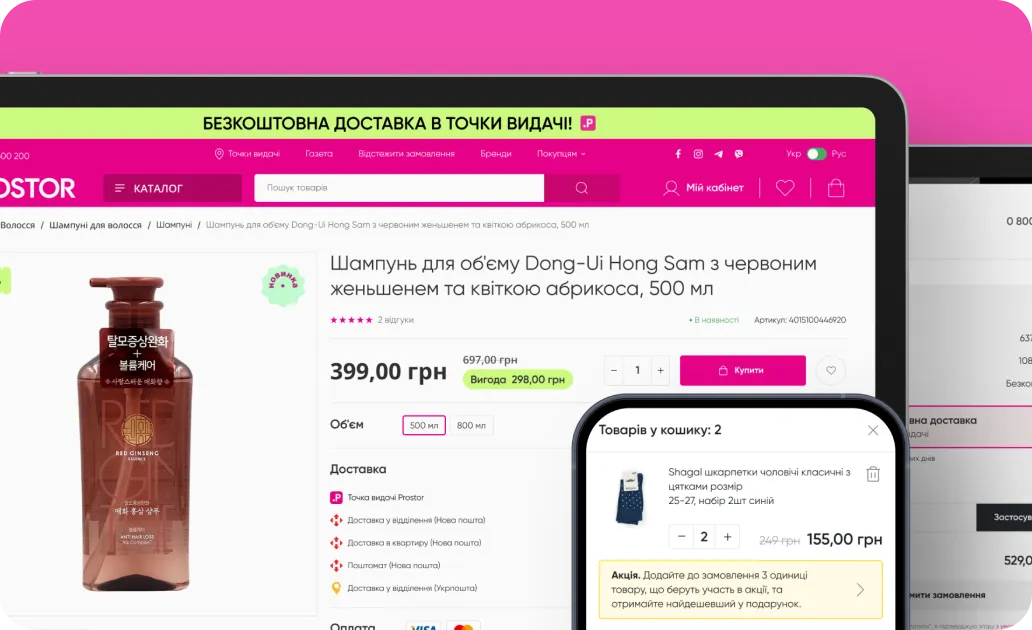
About the solution we delivered
-
Conversion and completed orders

Conversion rates grew 250% and completed orders doubled following the migration. This was not primarily a traffic story — the gains came from removing the friction that the old platform embedded in the purchase flow: a multi-step login process, a checkout process that required account creation, and a card entry form that was repeated for every purchase. Prostor can now run promotions, loyalty incentives, and checkout optimizations on infrastructure that responds to configuration changes — rather than requiring development work for every campaign.
-
Omnichannel capability

After migration, Prostor customers could initiate a transaction online and complete it at any of the 427 physical locations through a unified pickup module. Before migration, online and offline operations were functionally separate systems with separate loyalty states. They are now the same system. This matters operationally, as store staff now see the same inventory state that the customer sees.
-
Scaling without performance degradation
Kubernetes-based infrastructure means Prostor’s platform scales horizontally under peak traffic rather than degrading. The 99% uptime maintained throughout the migration itself — across 50,000 SKUs and full store integration — was a stress test. The platform handled it. That same infrastructure now handles seasonal and promotional spikes without engineering intervention.
-
Boosted SERP visibility

Following the migration, Prostor’s online visibility saw a notable improvement due to SEO-optimized content and technical enhancements. Improved SERP rankings drove higher organic traffic and customer acquisition. Faster page load speeds reduced bounce rates and increased dwell time. And an optimized data structure made Prostor’s product catalog more discoverable across search engines.
-
Extra upselling and cross-selling functionalities

The introduction of advanced marketing tools and personalized promotions enabled Prostor to maximize revenue potential. A custom bonus program encouraged customer loyalty and repeat purchases, while the Visa discount program doubled the conversion rate and facilitated repeat purchases. Upselling and cross-selling functionalities led to higher average order values, and targeted promotions improved engagement and boosted sales.
-
One friction point that required active management

ERP data synchronization in the early sprints produced some inventory state inconsistencies that required manual reconciliation. This issue was identified and resolved during the first month of post-migration operations. It did not affect customers, but it required closer coordination between Dinarys and Prostor’s internal operations team than the original project plan assumed. The resolution involved adjusting sync frequency and adding a validation layer that is now part of the standard integration.
Lessons learned for retailers
This case shows that retailers planning a migration at scale tend to underestimate two costs: data complexity and omnichannel dependency.
The data complexity cost is often treated as a technical line item: migrate the SKUs. But at 50,000 SKUs with associated pricing rules, inventory states, and customer records, the migration itself becomes a systems integration problem. Custom tooling is not optional; it is the delivery mechanism. Teams that attempt this category of migration with generic migration scripts consistently hit data integrity failures mid-project that require rollback and restart.
The omnichannel dependency cost is underestimated even more often. Retailers with physical store networks cannot treat online migration as an isolated digital project. Every decision about inventory sync architecture, loyalty program unification, and pickup module design has operational consequences for physical staff and physical customers. In Prostor’s case, the decision to build the omnichannel pickup module during migration — rather than as a phase 2 — was the right one. Attempting to run parallel loyalty states across the transition period would have created a customer-facing problem with no clean resolution.
A common mistake at this stage is to scope the migration conservatively and treat omnichannel as a future phase. However, the cost of adding omnichannel capabilities after a Magento 2 migration is substantially higher than the cost of designing for them from the start, as the data model and integration architecture are different.
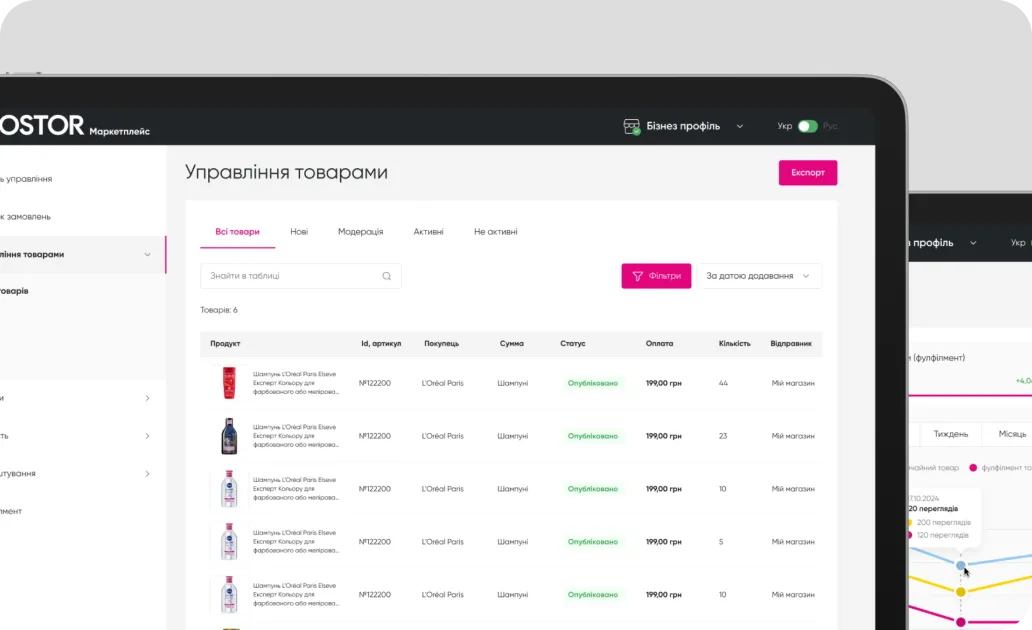
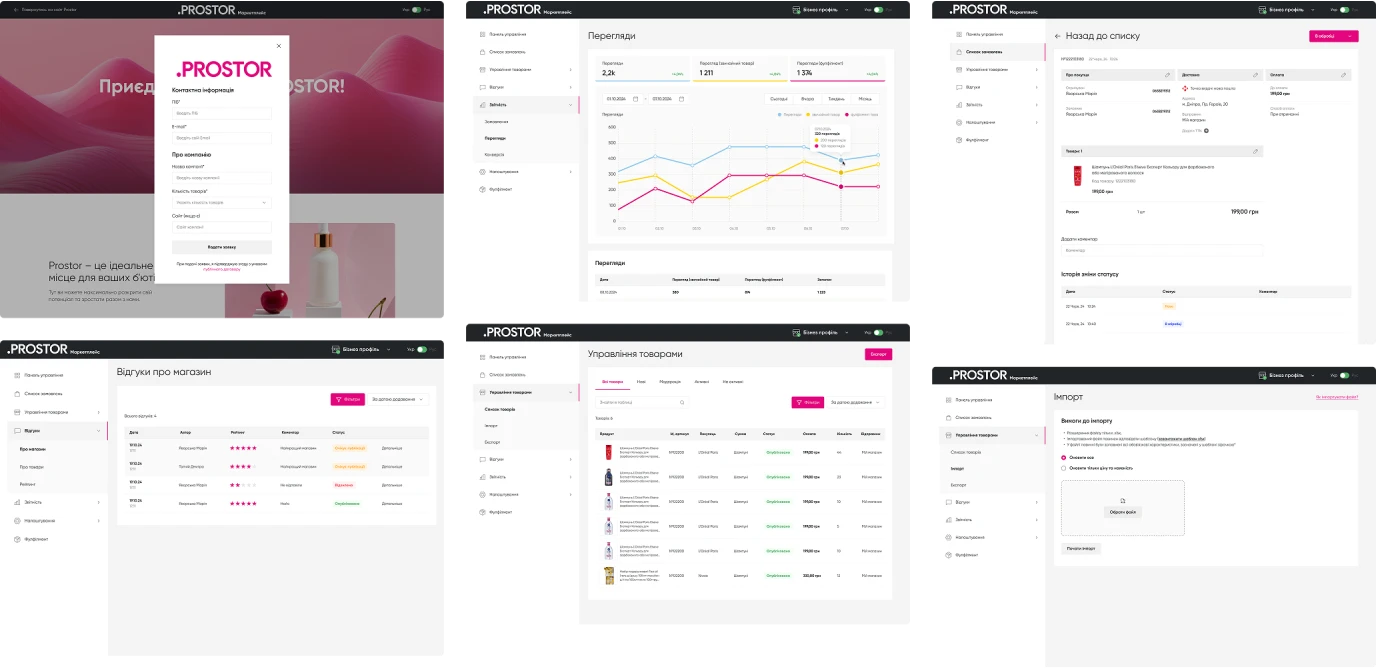

About the results
we achieved with Prostor




Facing a migration at this
scale or dealing with a platform that’s
capping your growth?
Talk to our solution architect
About the capabilities demonstrated
-

Enterprise ecommerce migration
-

Cloud infrastructure & auto-scaling
-
Real-time inventory sync at scale
-
Omnichannel retail enablement
-

Loyalty & rewards program development
-

Checkout optimization & payment flows
-

ERP, CRM & third-party integrations
-
SEO technical optimization
-
Upselling & cross-selling features
-

Discount program integration
Key services behind this engagement
-
 Learn more
Retail software development
We build the features your retail operation actually needs — loyalty programs, omnichannel modules, custom checkout flows, and third-party integrations designed to fit the way your business works.

-
 Learn more
Magento migration
We move established ecommerce operations to Magento 2 without disrupting live sales — handling data integrity, infrastructure setup, and integration continuity across the full transition.
-
 Learn more
Magento speed and performance optimization
We diagnose and resolve the infrastructure, architecture, and configuration issues that cause slowdowns, instability, and conversion loss at scale — including Kubernetes implementation for peak-traffic resilience.
About other relevant case studies

Fast team outstaffing for Untamed
Scaling a Shopify DTC brand’s tech stack without slowing down delivery
-
Staffing a fractional frontend, backend, and DevOps team under the client’s CTO in under three weeks
-
Re-architecting the backend and delivering a React-based subscription dashboard
-
Revamping the Shopify storefront for cleaner code, a better UX, and higher conversion

Integrating B2B, B2C, and ERP on Magento 2
Connecting a large Canadian retailer’s B2C and B2B platforms on a single scalable foundation
-
Migrating the B2C website from Magento 1 to Magento 2 for better scalability and integrations
-
Integrating B2B and B2C platforms with the client’s ERP system for real-time data updates
-
Developing a custom API connector to modernize ERP data exchange formats

Staffing senior Magento talents
Scaling Magento development capacity for a digital consulting firm serving enterprise accounts
-
Sourcing and onboarding pre-vetted senior Magento engineers in under three weeks
-
Embedding developers directly into existing agile delivery teams with full process alignment
-
Managing all HR, legal, and administrative overhead so the client’s team stayed focused on delivery