
MVP Development Services: Launch a Product You Can Test With Real Users
We help startups and product teams choose the core features, build a working MVP and prepare its architecture for the next stage of growth.
Discuss your MVP- 4.9/5 on Clutch
- 431+ projects delivered
- 14 years on the market
Trusted by






Partner of
- Adobe
- Shopware
- BigCommerce
- Shopify Plus
- Emporix
-
4.9/5
Overall review rating by Clutch
-
431+
Successfully delivered projects
-
3.5 yrs+
Avg engagement duration
-
14 yrs
On the market


Our MVP development services
From idea to launched product: we help you decide what to build first, then design, develop and support it.

Product discovery and scope
We study your users, competitors and market, then agree on the core features the first release needs.
Prototype and UX design
Wireframes, user flows and screen mockups show how the product will look and work before development starts.
MVP development and testing
We build the MVP in short sprints, test every release and launch it for real users.
Support and next releases
After launch, we fix issues, collect user feedback and plan the next features with you.
MVP development use cases
An MVP makes sense when you need real user feedback before investing in the full product.
Typical situations where MVP development delivers the most value:
-

A startup testing a new idea
You have a product idea and a limited budget, and need a working version to test with real users first.
-

Preparing for investor meetings
You need a working product, not slides, to show investors and early customers what your solution actually does.
-

An early version that cannot grow
Your first version was built fast, and its architecture or code quality now blocks new features and further growth.
-

A marketplace or platform pilot
You plan a marketplace or SaaS platform and want to launch the core flows before building every feature.
-

A new product inside a company
An established business wants to test a new digital service without disrupting its current systems and teams.
-

An idea without engineers
Founders or product managers have a clear idea but no in-house engineers to design, build and launch it.
Trusted in our clients’ own words
-
5.0

What is most impressive is that they operate as a true strategic partner, not just a vendor.
The impact on our business has been transformative... Their proactive, forward-thinking approach is unique. They are constantly three steps ahead, bringing new ideas for our roadmap and pushing us to innovate in areas like customer journey, operations, and scalability.
Read full review
Tarek Yafi
Co-Founder at Undrgoods
-
5.0
They are truly excellent in all aspects, and it’s a pleasure working with them.
They really care for the business and delivering great outcomes for us - they work work, diligently and strive for quality… Really experienced and right attitude of people: highly-skilled, intelligent, passionate about their work. Internal processes are excellent: well-organised, clear, repeatable.
Read full review
Dr. Petros Demetriades
CTO, Untamed Cat Food Ltd
-
5.0
We especially liked their level of professionalism and attention to detail.
Dinarys effectively addressed all aspects of the project. The team’s ability to adhere to the agreed schedule was exemplary. Dinarys is very flexible and responds quickly to dynamically changing requests. All our expectations were met.
Read full review
Joseph Frank
CEO, Kaizen Technology Solutions
-
5.0
Dinarys GmbH consistently meets our expectations and delivers high-quality work throughout the project.
They consistently prioritized our needs and vision. They were quick to adjust strategies when needed. They prioritized delivering high-quality work rather than rushing to meet quotas. Their team showed deep knowledge and skills in mobile app development.
Read full review
Yann Rigo
CIO, Panodyssey
-
5.0
Their ability to communicate effectively while maintaining a positive attitude made the entire process smooth.
Dinarys brought extensive technical expertise to the table, consistently delivering solutions that met our needs with precision and innovation. One of the most unique aspects of working with Dinarys was the excellent "chemistry" between our team and theirs. This synergy made it easy to tackle challenges and move the project forward with confidence.
Read full review
Aaron Freitag
Managing Director, myfelt GmbH
-
 Read our reviews on Clutch
Compliance and partner status
-
GDPR compliant
See our privacy policy -
HIPAA compliant
See our healthcare work -
Adobe Certified Solution Partner
As stated on our Clutch profile -
Shopware Certified Solution Partner
As stated on our Clutch profile -
Certified BigCommerce Partner
As stated on our Clutch profile
Agentic SDLC
AI-powered MVP development
AI coding agents speed up prototypes, routine code and tests, so you reach user feedback sooner. Our senior engineers review every change and keep the architecture ready to grow.
Agents at every stage, engineers steering
-
Plan
Agents draft specs, user stories and acceptance criteria from your tickets, docs and code. Engineers sharpen them with you.
- Claude Code
- OpenAI Codex
- MCP
-
Audit and estimate
Agents map your codebase, dependencies and risky modules before we quote, so estimates rest on facts.
- Claude Code
- Cursor
-
Build
Coding agents work in your repository with project rules and context. Engineers steer and own the design.
- Claude Code
- Cursor
- GitHub Copilot
- OpenAI Codex
-
Test
Agents write unit and end-to-end tests with every change, so testing stops being the bottleneck.
- Playwright
- PHPUnit
- Pest
-
Review and secure
Every pull request gets an AI review and a security scan. A senior engineer approves before merge.
- CodeRabbit
- Semgrep
- Snyk
-
Ship and operate
Quality gates run in CI on every change. Agents help trace incidents from logs and alerts.
- GitHub Actions
- Sentry
- Langfuse
Agents take the heavy lifting. Senior engineers set direction, review every change and own what ships.
AI platform stack
What we use to build agents and AI features into stores, portals and back-office tools.
- Models
-
- Anthropic Claude
- OpenAI GPT
- Open-weight models
- Agent frameworks
-
- LangGraph
- OpenAI Agents SDK
- Claude Agent SDK
- Model Context Protocol
- Retrieval (RAG)
-
- pgvector
- Qdrant
- Elasticsearch
- OpenSearch
- Enterprise AI cloud
-
- Amazon Bedrock
- Azure OpenAI
- Evals and guardrails
-
- Langfuse
- Promptfoo
- Evals in CI
- In commerce
-
- Semantic search
- Recommendations
- Product content
- Support agents
- Demand forecasting
Engineering stack
The platforms and tools under every project.
- Commerce and PIM
-
- Adobe Commerce (Magento)
- Shopify Plus
- BigCommerce
- Shopware
- Spryker
- Salesforce Commerce Cloud
- commercetools
- Pimcore
- Languages
-
- PHP
- TypeScript
- Python
- Kotlin
- Swift
- Frameworks
-
- Laravel
- Symfony
- Node.js
- React
- Next.js
- Vue
- Data
-
- PostgreSQL
- MySQL
- MongoDB
- Redis
- Elasticsearch
- Kafka
- RabbitMQ
- Cloud and DevOps
-
- AWS
- Google Cloud
- Azure
- Docker
- Kubernetes
- Terraform
- GitHub Actions
- GitLab CI
- Bitbucket Pipelines
- Monitoring
-
- Grafana
- Prometheus
- ELK Stack
- Sentry
Our MVP development process
Four steps from your idea to a launched product, with your feedback at every stage.

1. Initial consultation
You share your product idea and goals. We give feedback and recommend how to approach the MVP.
2. Design and development
We create wireframes and user flows, then build the MVP from the approved prototype in short sprints.
3. Testing and launch
We test each feature, launch the MVP for real users and monitor how the product performs.
4. Support and improvement
We fix issues, collect user feedback and add features based on what users actually do.


What an MVP gives you
Early feedback from real users, lower risk and a clear basis for your next investment decision.
Spend on what matters first
You invest in the core features first and decide on the rest once users have tried the product.
Feedback early and often
Real users show what works and what does not, so your roadmap follows their behavior, not guesses.
Lower risk
You test the idea with a smaller investment and can change direction before the budget is spent.
MVP development case studies
Products we helped take from an early version to a working MVP and beyond.
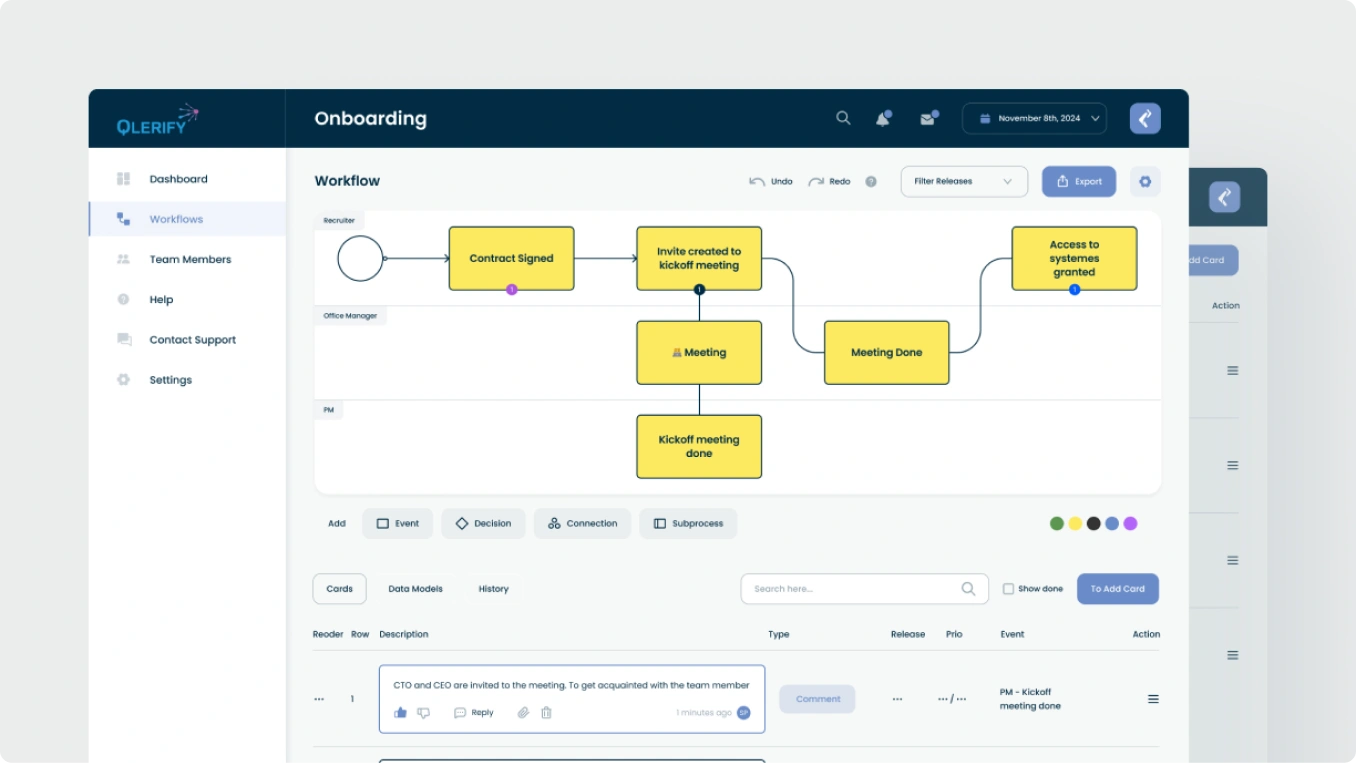
Qlerify: workflow visualization app
Challenge
Qlerify, from Sweden, needed its business workflow visualization web app improved and expanded into an MVP ready for sales.
What we delivered
– Improved architecture and fixed existing bugs
– Backlogging, attachments and requirement tags
– Export to Jira and inbound Jira integration
– Sub-processes within the workflow diagram
Result
The app reached production-ready status, and the client is showing its demo to investors and potential customers.
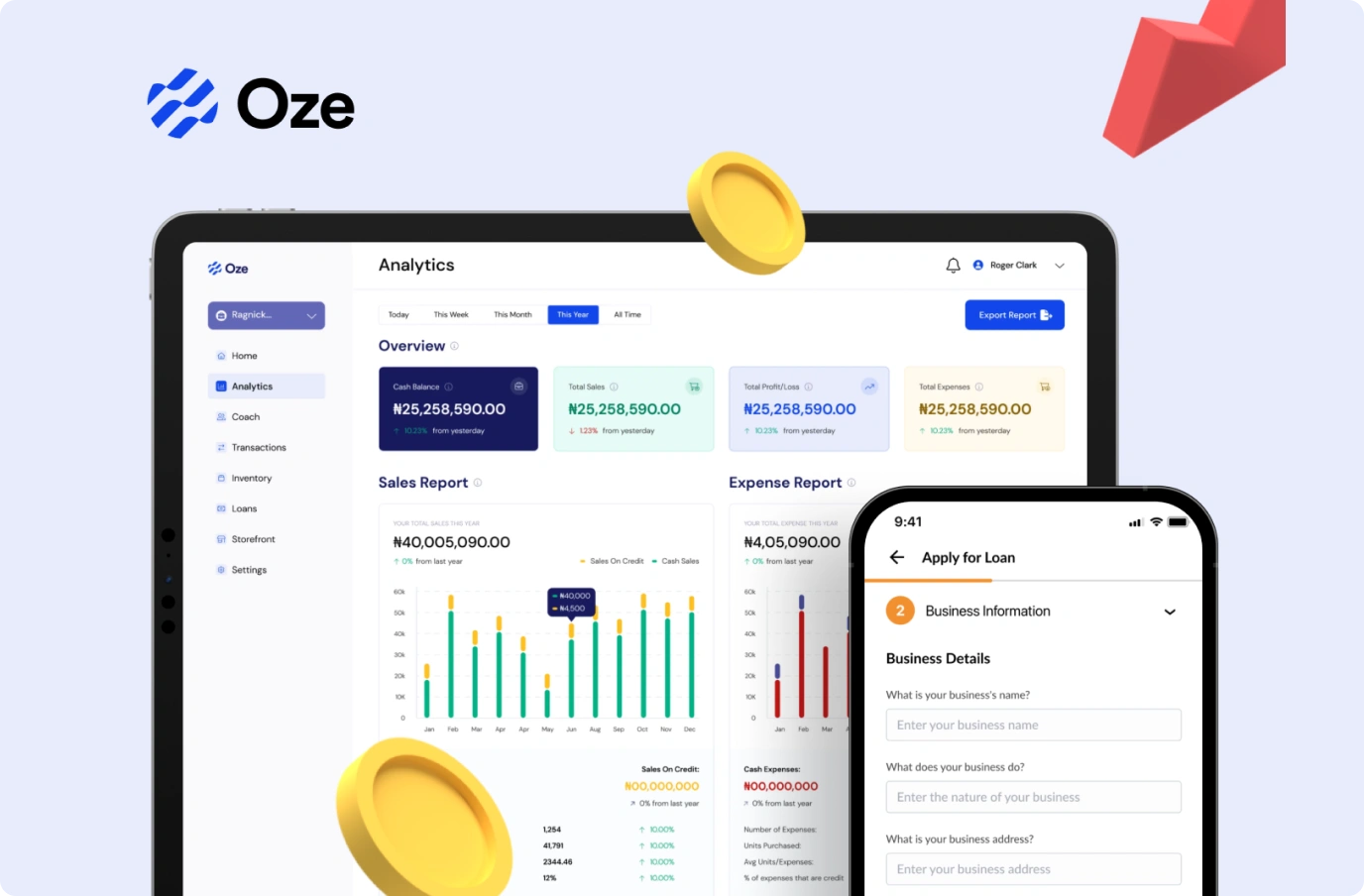
Oze: AI-powered lending platform
Challenge
Oze, a fintech company from Ghana, had an early lending platform whose architecture could not support further product growth.
What we delivered
– Rebuilt architecture, customer and admin portals
– Multi-tenant white-label platform with loan workflows
– AI-assisted document processing and underwriting
– AWS-based cloud infrastructure
Result
The platform supports 30+ loan products in production and cut loan evaluation from days or weeks to minutes.
MedExcess: marketplace that started as an MVP

Challenge
MedExcess, a US marketplace for healthcare supplies, needed a secure platform for verified vendors and buyers, starting with an MVP.
What we delivered
– Basic multivendor marketplace built from scratch
– One-time passwords and tenant verification
– One-step checkout and multi-filtering
– Barcode scanner and product requests in phase 2
Result
After the MVP, the marketplace grew with custom features, and checkout time fell by 21%.
Why companies choose Dinarys
-
01

Delivery governance built into engineering
We bring structure, predictability, and control into software delivery.
Our approach is shaped by PMI-based project management, quality gates, risk management, and a success-first delivery culture.
-
02

Accountable engineering
We do not only take tasks and write code.
We analyze the business and technical context, identify the real bottleneck, challenge weak assumptions when needed, and take responsibility for the technical outcome.
-
03

Senior expertise for CTO-led execution
We support technical leaders with experienced engineers, architecture expertise, and practical roadmap execution.
This helps CTOs and Fractional CTOs stay strategic while having a reliable team to execute.
-
04

Curated teams, not generic outstaffing
Every dedicated team is built around the client’s actual requirements, workflow, culture, risks, and delivery context.
We assess technical skills, soft skills, project fit, culture fit, communication style, and risk factors before proposing engineers.
-
05

Practical AI, from the process
We start from the business process, compare platform features, ordinary automation and AI, and use AI only where it removes real work.
Every AI step gets quality checks and human oversight.
-
06

A partner that has your back
Good delivery depends on trust, honest communication, and people who care about the outcome.
We stay close to the problem, speak openly, involve the right experts, and do not leave clients alone with delivery risk.
Frequently asked questions
A minimum viable product is the first working version of a product with only its core features. It lets you test the idea with real users before investing in the full product.
Keep only the essential features, focus on your core value, build for one target audience and collect user feedback early to guide the next releases.
It shortens the time between an idea and real feedback, tests your product and marketing assumptions early and keeps budget free for what users actually need.
We usually assign a team within one week of starting work with a client, then adjust its size and skills as the project needs change.
Yes. We review the architecture, code and known bugs first, then decide with you what to fix, rebuild or extend, as we did for Qlerify and Oze.
The number of core features, design complexity, integrations, platforms and how quickly you can give feedback. We estimate after a short discovery of your idea and goals.
Discuss your MVP
Tell us about your idea, your users and what the first release must prove. We’ll suggest where to start.