A new hire may be the right long-term answer. It does not explain who will protect critical reports while recruitment and handover remain incomplete.
Hire for sustained internal ownership; add a backup when the primary owner stays; consider managed support when a defined reporting package needs an accountable operator. Check an existing application management service (AMS) first: it may already own the work. None of these labels proves availability, knowledge, or coverage of your reporting deadlines.
Compare all options against the same critical-report transition perimeter: components, business deadlines, knowledge, validation, and escalation. Keep three purchases distinct: ongoing staffing capacity, a finite transfer of control, and recurring support under agreed service terms.
When each SAP BW support option is the better fit
The right model depends on where ownership should sit after onboarding—not just who can supply a CV or quote an hourly rate.
In-house hire: sustained work and internal ownership
A hire is a strong candidate when continuing work justifies the role and you want deep knowledge retained internally. You still provide recruitment, management, business definitions, onboarding, and backup. The hire alone does not cover the period before the person starts or later absences.
Backup expert: continuity alongside a primary owner
A backup fits when the primary owner remains but a second person must be able to handle critical paths. It is a poor answer if the backup has neither an agreed reporting window nor current knowledge. Include permitted checks, documentation, onboarding, and updates after changes; a dormant contact is not a tested backup.
Managed support: a bounded operational responsibility
Managed support fits when a defined package of reports and flows needs assigned responsibility under agreed terms. Resolve included components, hours, actions, and exclusions. The client still supplies business validators, access governance, and upstream source owners.
Dinarys' iSi Group case provides a concrete example of this component: external BW/BI support after an internal expert's departure, with monitoring, incident management, worklogs, post-incident summaries, and knowledge-base development. It is one manufacturer's support engagement—not proof of 24/7 coverage, an SLA, or a staffing level suitable for another landscape.
Existing AMS: do not buy the same coverage twice
First establish whether the apparent gap is missing knowledge, unclear contract language, or an unassigned responsibility. A finite knowledge-transfer effort may be more appropriate than a new supplier. An in-house owner plus a verified external backup is another legitimate combination.
Coverage has five dimensions—not just a service label
A supplier who can inspect a failed job may not own the source that caused it. Office-hours availability may not cover an early plant meeting or a close-period exception. Record these five dimensions in each proposal:
Technical perimeter: named reports, jobs, flows, interfaces, environments, versions, and exclusions.
Time perimeter: time zone, working days, holidays, critical windows, and out-of-window arrangements.
Authority: who investigates, approves changes, executes approved actions, and declares a report usable.
Service measures: acknowledgment, investigation, restoration, and business validation are different events; define them separately.
Knowledge continuity: documentation ownership, backup, absence handling, and updates after changes.
The Head of BI translates reporting needs into that perimeter. Business report owners confirm deadlines and definitions; the CIO or authorized IT sponsor approves the responsibility and budget. No route inherently supplies every SAP skill or a guaranteed recovery time.
Compare the same requirements—not three different sales pitches
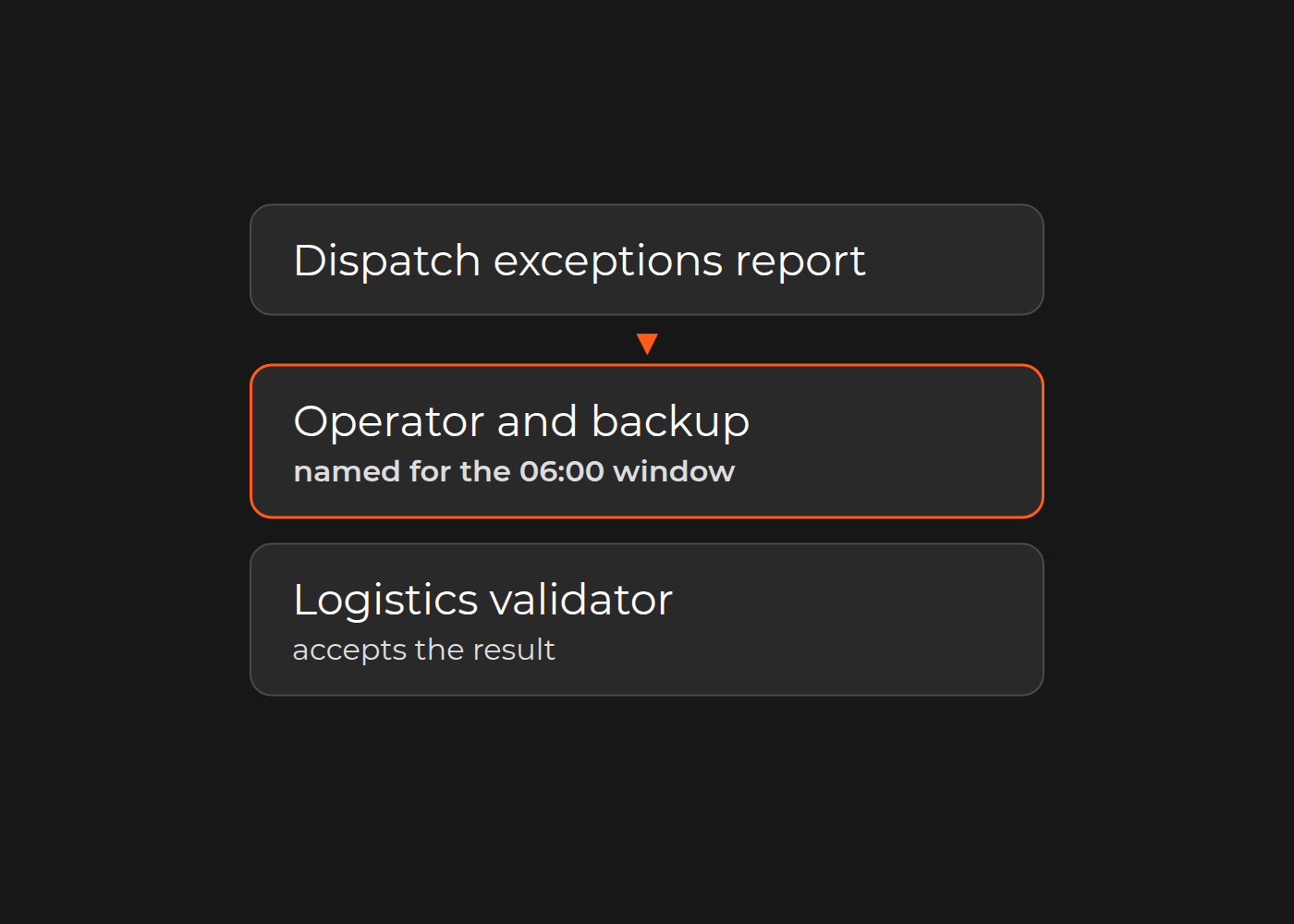
Consider a fictional manufacturer. Dispatch exceptions must be checked before a logistics meeting, and receivables aging supports credit review. Compare these requirements before scoring the options:
Requirement
What distinguishes the options
Evidence needed
Dispatch checks before the meeting
Hire: after onboarding. Backup: agreed window. Managed: service schedule.
Named operator, time zone, logistics validator
Coverage before the hire starts
The hire cannot supply it alone; external options also need onboarding.
Confirmed start boundary and accepted transfer
Source-system outage
Do not assume a BW operator also owns source recovery.
Upstream contact and incident owner
New rebate calculation
Planned capacity for a hire; not implied by backup or routine support.
Approved change scope, estimate, and acceptance
Every route still needs a demonstrated runbook for recurring incidents and a finance owner for receivables definitions and adjustments. These obligations do not disappear when the model changes. A proposal, CV, or access account is not demonstration evidence.
Six questions for a candidate or provider
Ask these questions against one real critical-report path. Answers should identify people and evidence, not merely describe a process.
Who is the operator and backup? A CV or rate card without a person assigned to the reporting window is incomplete.
Which hours and time zone are covered? “Business hours” leaves holidays, absences, and local deadlines unresolved.
What happens if a loading chain fails at 06:00 on a close day? “Raise a ticket” does not identify the investigation owner, escalation, or business communication.
Which reports and flows are included? “Everything in BW” needs a component inventory and exclusions.
Who can investigate, approve, execute, and accept? Assign decision authority, not just role labels.
How will transfer be proven? Documents delivered are not the same as an authorized demonstration and business validation.
Prove the transition on one control report
For the fictional dispatch-exception report, can an alternate authorized operator distinguish an incomplete warehouse input from a reporting issue and obtain logistics' confirmation of the result? If the source is excluded, the exercise must establish upstream escalation too.
Retain three artifacts: the agreed inputs and control-values sheet; the permitted-environment and escalation record; and the business acceptance decision with an assigned gap list. Where recovery cannot safely be demonstrated, record the limit and agree an alternative test with system owners. Do not create a production failure, rerun loads speculatively, or bypass access controls to make onboarding look complete.
Compare ownership cost and the transition's end condition
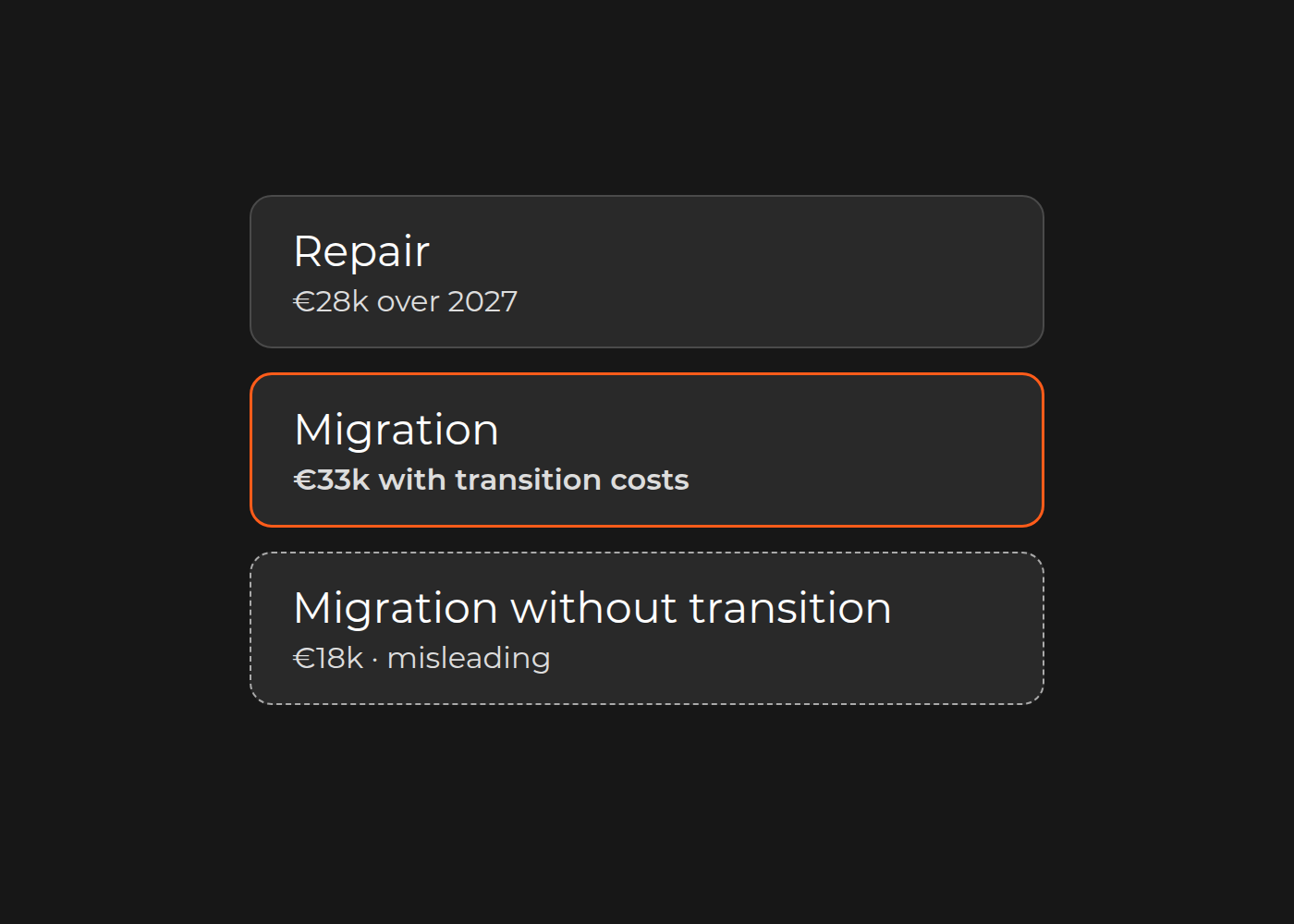
Use the same reporting perimeter and planning horizon to compare recruitment or procurement, onboarding, documentation recovery, paid coverage, internal management, business validation, absence cover, tooling, and exit/handover obligations. Put costs beside uncovered requirements. A low rate does not price an unresolved knowledge gap.
Keep repeat incidents separate from enhancements. Incident records need symptoms, established cause, approved response, business validation, and prevention work. If the cause remains unknown, say so. New calculations, interfaces, and reporting models need an authorized backlog and acceptance criteria.
A finite transition ends when agreed reports have named owners, current operating knowledge, accepted validation evidence, and explicit residual risks. Recurring business-as-usual support is a separate decision.
To discuss the appropriate BW support format with Dinarys, bring a sanitized critical-report inventory, the coverage comparison above, critical reporting windows, SAP/BW versions, current AMS boundaries, and control-report test results or gaps. Those inputs support a discussion of expert fit, onboarding, and scope; availability and service terms still need confirmation.
You may share this article
Let professionals meet your challenge
Our certified specialists will find the most optimal solution for your business.