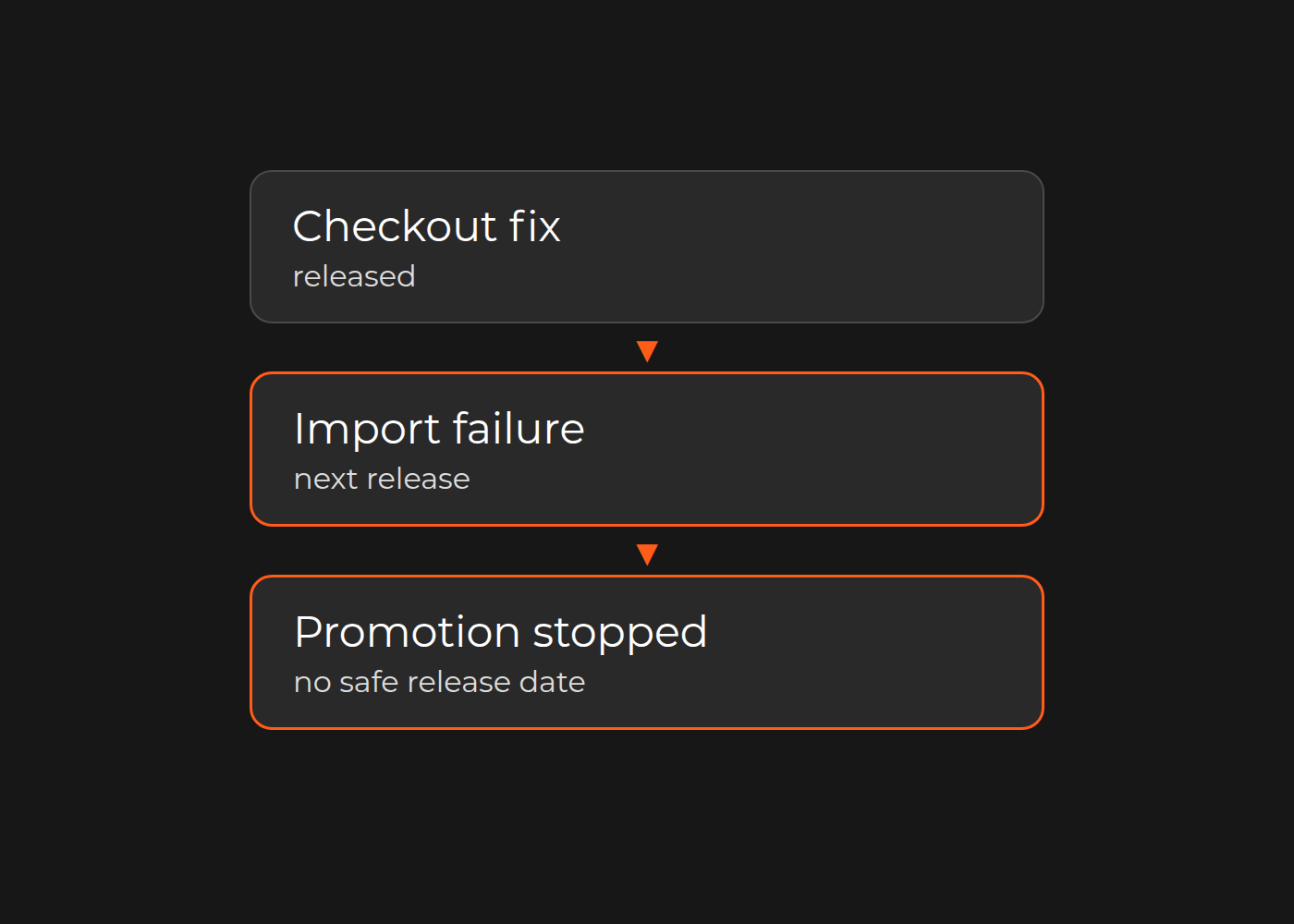
Your store is taking orders, but nobody will commit to a safe date for the next release. A checkout fix is followed by an import failure. The import is repaired, and a promotion stops working. The commercial problem is no longer just downtime: the business cannot reliably change how it sells.
Repeated incidents do not prove that the whole store needs rebuilding. They are a reason to connect one reproducible failure to its dependencies, business impact, and release history. That separates a local defect from a wider recovery problem—and gives your ecommerce lead, technical reviewer, and funding sponsor something concrete to decide.
Look first at four possibilities: the “same” failure is really several different failures; the fix was tested only on the changed component; the release cannot be reproduced or safely reversed; or no regression check catches the next break. The checks below distinguish these possibilities; they are not a claim that one failure caused the next.
First, establish what actually broke
“Checkout failed again” might describe a rejected payment, an order that was paid but not recorded, or an order that never reached fulfillment. Those are different incidents. Capture the cart conditions, payment state, order identifier, timestamp, and destination-system state before grouping them together.
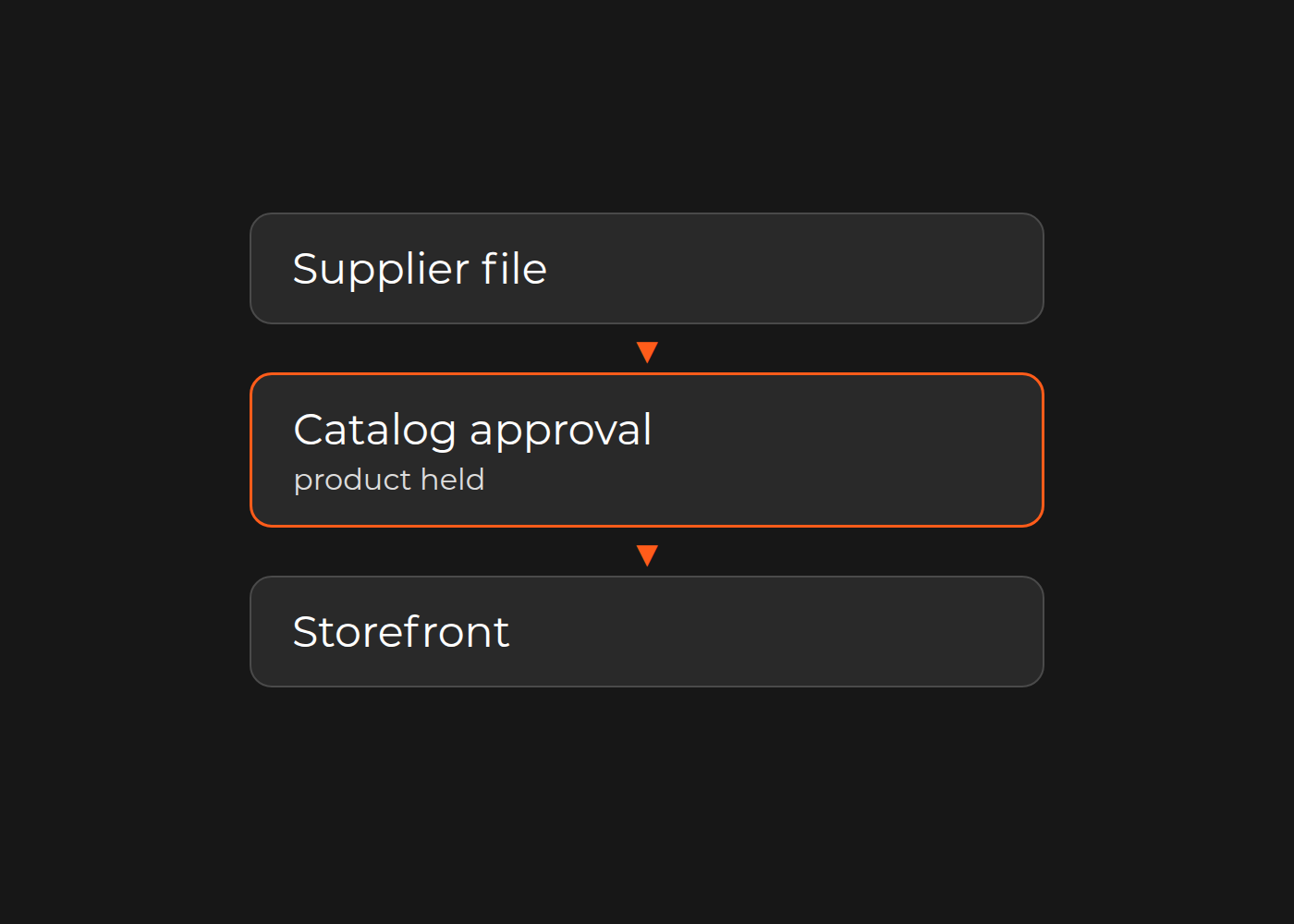
Likewise, “the import is broken” might mean a file was rejected, accepted records were incomplete, or correct data never reached search. A successful import job is not proof that the product is ready to sell.
Check each relevant boundary. A green payment response alone does not prove a complete order.
Check where the fix connects to other systems
A price rule can interact with delivery eligibility. A loyalty lookup can depend on another service. An import can change attributes used by navigation. Testing the changed component alone cannot establish that the complete business flow works.
For a failing checkout, trace the order across the relevant systems. For an import, follow a known product from the source file through validation, storefront display, and search. Test the observed failure conditions, not just the easiest successful path.
When an import fix also changes search or navigation
Start with an expected result that a merchandiser can verify: “This product should appear for this query, in this category, with this filter selected.” Then compare the source attributes, stored product data, index state, and applicable rules.
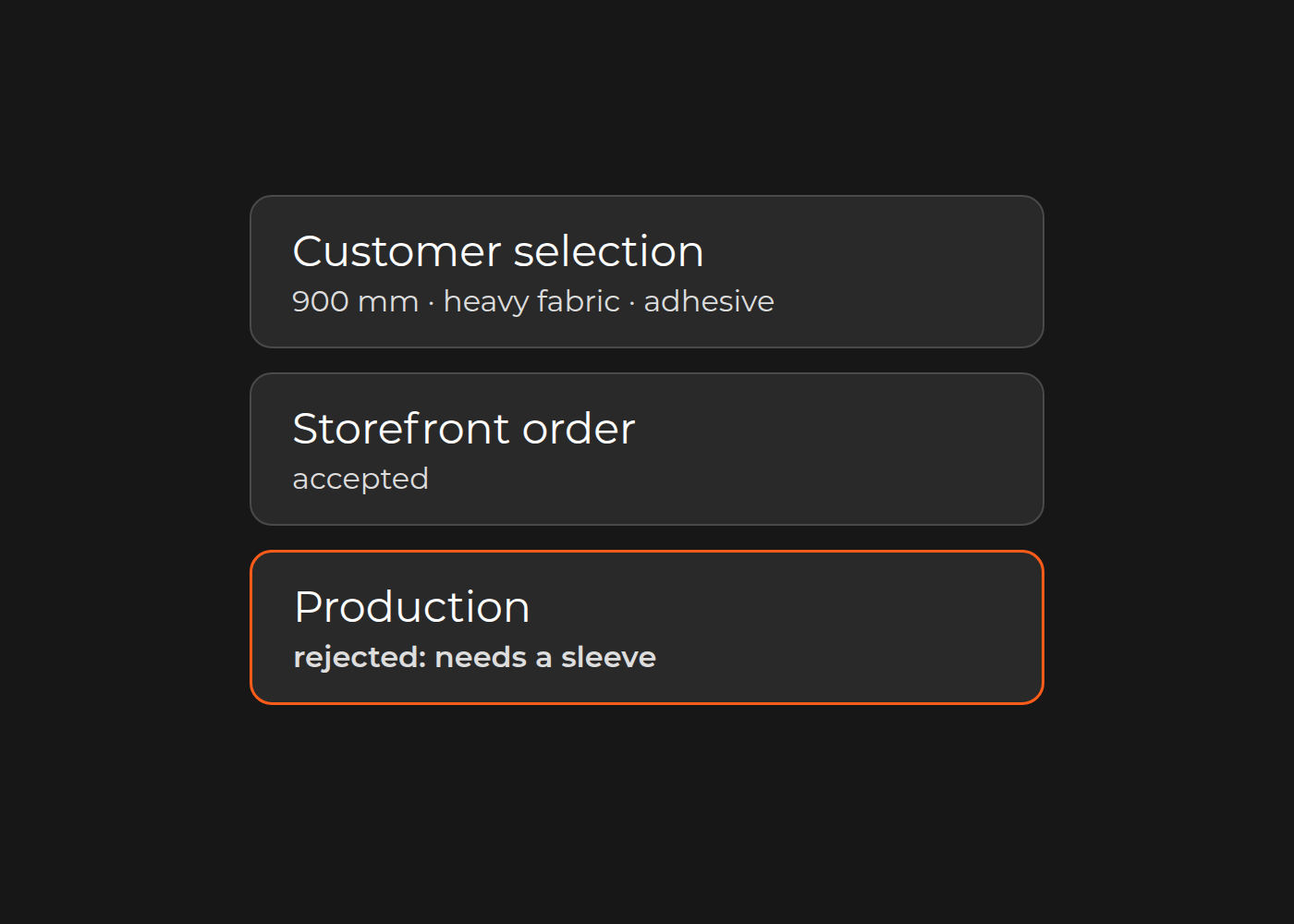
Do not immediately replace the search engine. A missing attribute, stale index, contradictory category rule, or presentation defect needs a different remedy. Keep an agreed set of queries and filter combinations as acceptance examples; “search looks better” is not a testable finish line.
For example, preserve the query “desk tray,” category “Desk accessories,” selected material filter and expected SKU alongside the source value, indexed value, applicable rule and observed result. Fill in actual values from the test; this is a record template, not a reported search result.
Connect the failure to a reproducible release
If nobody can identify what was deployed, which configuration changed, or who controls the deployment account, the team cannot confidently connect a failure to a change. A missing rollback plan is another warning: reversing application code may not undo changed data or an external transaction.
These are recovery signals, not proof that the current vendor is incapable. An incumbent with the access, knowledge, and capacity to fix the problem may still be the lowest-risk option.
Make the next recurrence detectable
A fixed flow needs a regression test that can detect its return. Check whether staging represents the relevant production configuration, representative sanitized data and third-party responses, including failures. Without those checks, a later change can break the flow without being noticed before release. Ask the team to demonstrate the fixed scenario and neighboring regression cases before the next deployment.
Keep an incident ledger tied to business decisions
Build a shared map before asking for a recovery budget. The ecommerce or operations lead records consequences. The technical owner adds reproduction evidence and dependencies. The sponsor decides which risk warrants funding. A technical reviewer who can reproduce the failure is more useful here than a title.
Use one row per observed failure, with links to controlled internal records rather than customer data in a shared document.
Whether the loyalty promotion can be released; count affected attempts and reconciliation work before estimating impact
Supplier import omits a required attribute
Catalog owner and developer trace one product using the source-file version, mapping, rejections and job log
Which assortment can become ready for the selected channel
A filter hides eligible products
Merchandiser defines expected queries/products; technical owner compares attributes, index state and rules
Whether navigation changes can be accepted; revenue effect remains unmeasured
Template examples, not Dinarys client incidents. Replace each row with your own evidence.
For each incident, add first and latest occurrence, attempted fixes, release identifiers, current workaround, confirmed consequences and the person authorized to accept the repair. Mark uncertain causes and losses as unknown. An empty field is more useful than a confident guess. Before closing an incident, require a regression test on the fixed flow, a release owner and a recovery procedure.
Count affected attempts without inventing lost sales
Consider a fictional retailer, not a client case. During one promotion, its records show 12 checkout attempts with the same timeout signature. Reconciliation finds that four associated purchases eventually completed, five attempts conclusively stopped before order creation, and three outcomes remain unresolved. Support spent 90 minutes investigating.
The usable baseline is 12 affected attempts, five confirmed failed attempts, three unresolved outcomes, and 90 minutes of work. It is not 12 lost sales. Multiplying all 12 by average order value would treat retries and uncertain outcomes as lost purchases. Even five failed attempts do not establish that those shoppers would otherwise have bought.
The technical owner reproduces the timeout in a test environment. The next question is whether the order flow behaves correctly when the loyalty service recovers: can a shopper retry without creating inconsistent order or payment states? Until that is tested, “increase the timeout” is a proposed intervention, not an accepted repair.
An import defect blocking a committed launch could change the priority. Use actual exposure and dependencies, not a universal severity score.
Fictional teaching inputs. Completed, failed and unknown outcomes are distinct; attempts are not lost sales.
Pick one failure to reproduce first
Review the ledger and release history with your ecommerce lead, technical reviewer and funding sponsor. Select one business-critical failure with a clear expected outcome and an authorized way to reproduce it safely.
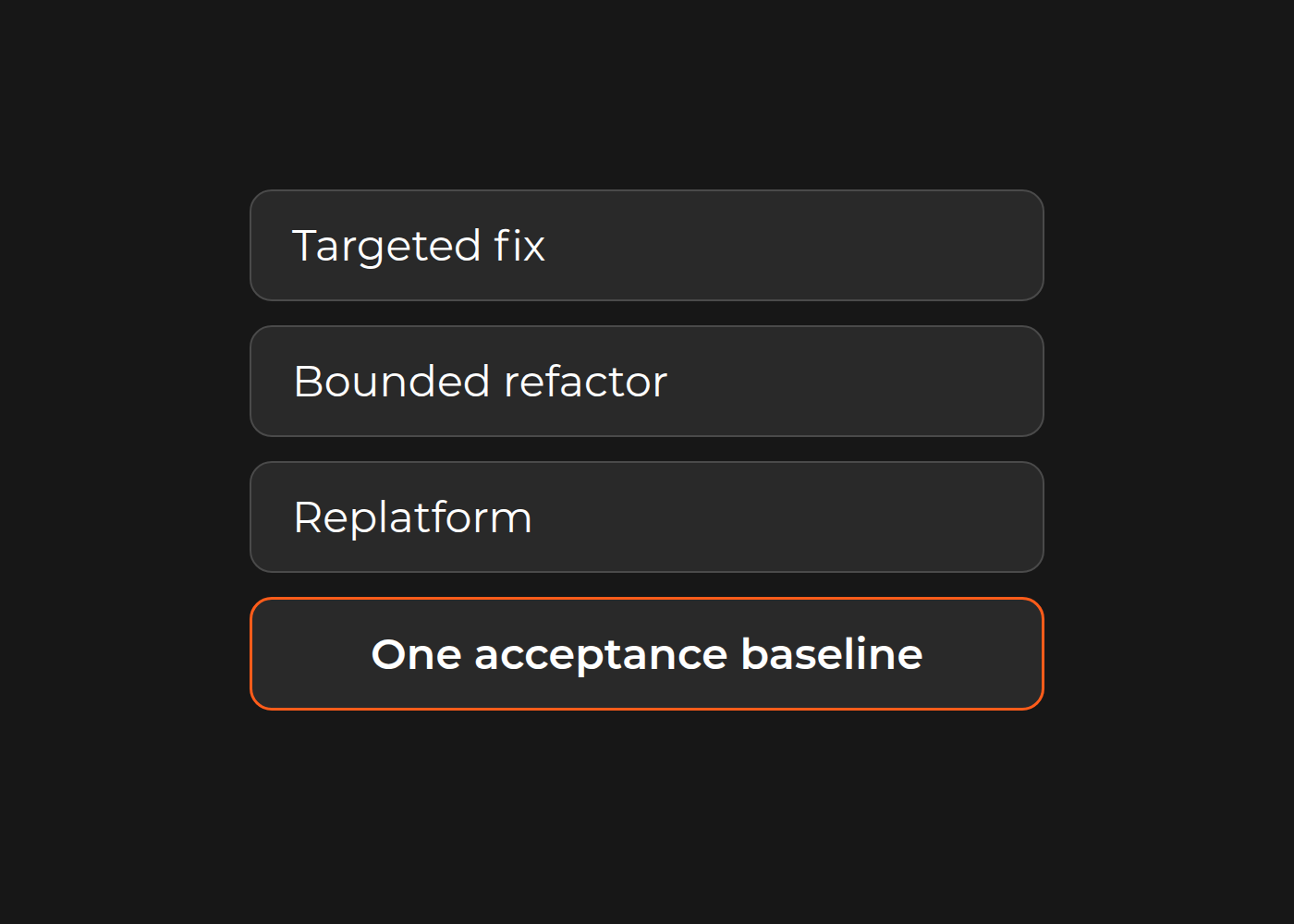
If the cause is localized, a supported fix may be enough. If the evidence exposes wider dependencies or missing release ownership, define a bounded recovery around that flow. Then compare fixing, refactoring, or replatforming against the same requirements—not three unrelated sales proposals.
Need an outside team to reproduce the failure? The Dinarys Rescue Team page describes a bounded recovery engagement, or contact us to discuss your own incident ledger.
You may share this article
Let professionals meet your challenge
Our certified specialists will find the most optimal solution for your business.