Content
E-Commerce
Nov 17, 2026
Designing B2B Self-Service Around Contract Prices and Approval Rules
Time to read: 6 minutes

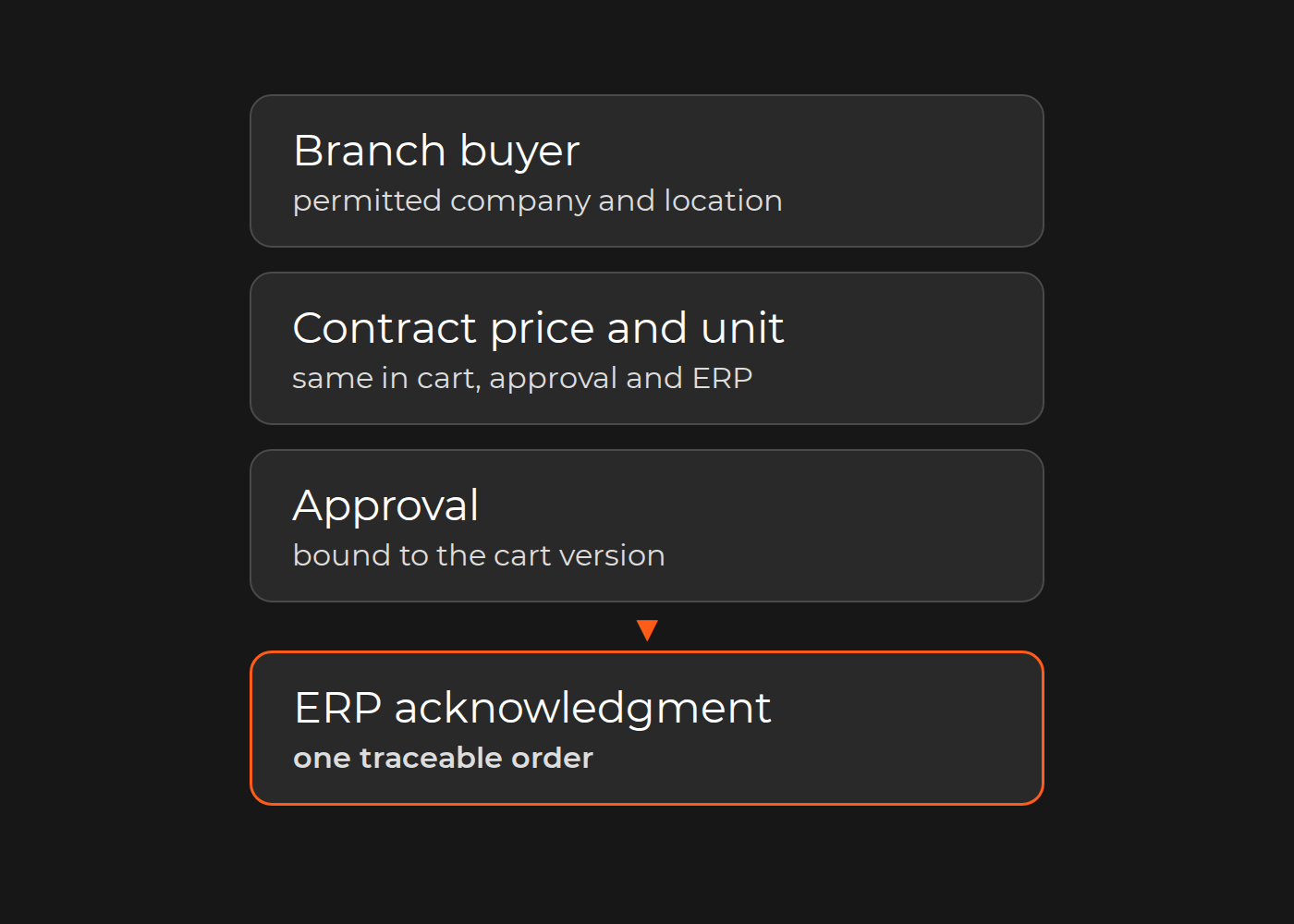
Design B2B self-service around the order the customer is authorized to place: the right company and branch, authoritative contract terms, an approved cart version and a traceable ERP acknowledgment. Then choose the least complex implementation that preserves those conditions.
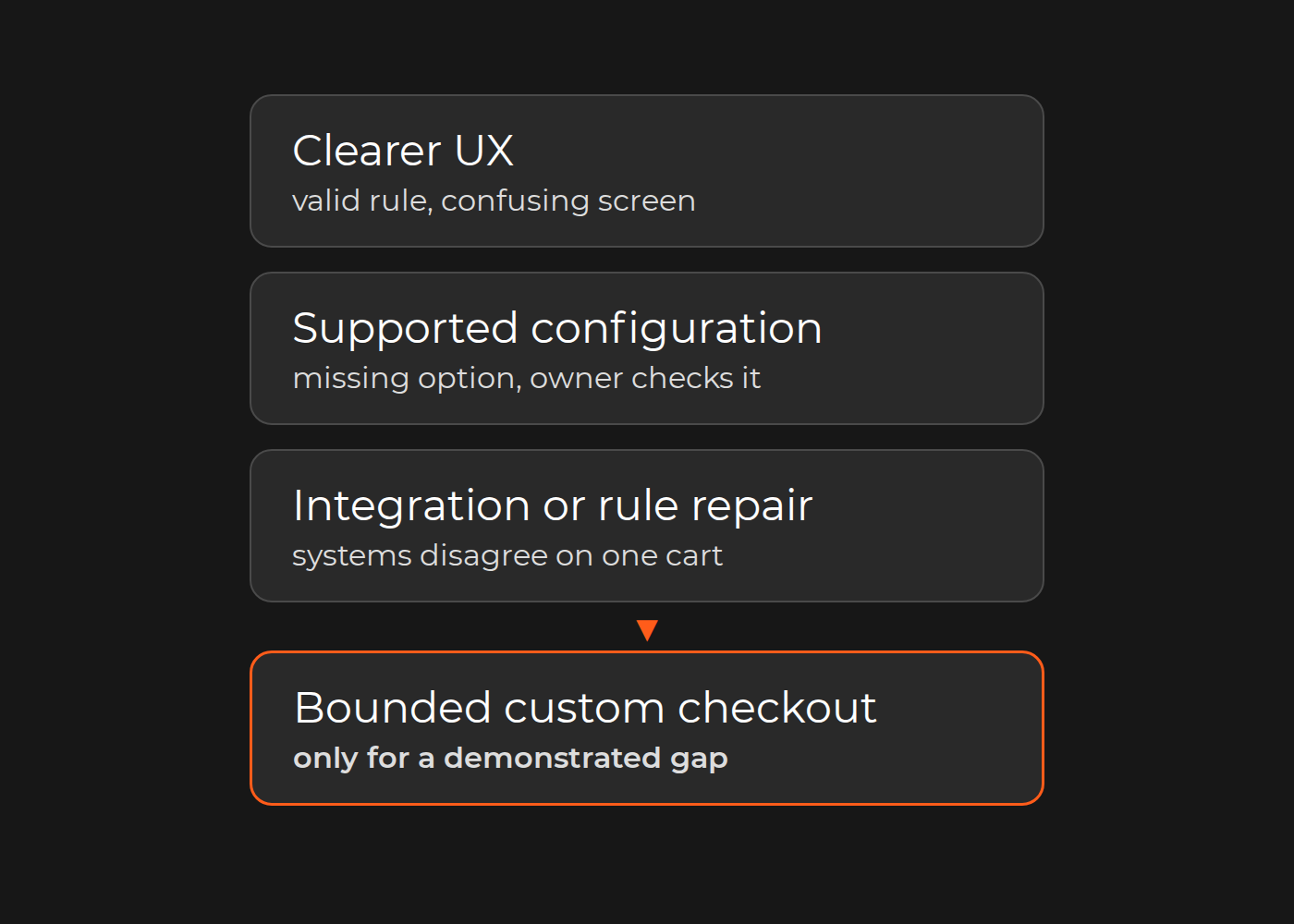
A B2B module or a custom customer portal? Start with the platform's B2B features and retain them if they pass your purchasing scenarios. Add an extension or ERP integration for a bounded data or workflow gap. Consider custom work only for a necessary rule that supported options cannot cover. A feature called “company accounts” does not establish that your customer's purchasing process fits it.
For commercial and ecommerce leaders at distributors and manufacturers, B2B self-service pricing and approvals need ERP, finance, security and customer purchasing owners—not just a screen list.
Write the purchasing scenario and name its authorities
Start with one task: “A West branch buyer repeats a case-based order, gets the required approval and receives a traceable order reference.” Identify who defines:
- Customer master: company, branch, buyer, approver and ERP customer IDs.
- Commercial terms: price source, agreement validity, currency, unit, tax treatment and substitutions.
- Purchasing policy: approval authority, delegation and changes requiring reapproval.
- Finance policy: payment terms, credit holds, release and unavailable-status fallback.
- Order state: what acknowledgment means and who resolves uncertain submissions.
An unowned rule is a design gap. Commercial/ecommerce should champion the buying task, IT/security should validate implementation risk, and the authorized budget owner should approve scope and ongoing cost. Do not replace missing purchasing or finance decisions with portal-side assumptions.
Test five requirements before choosing the route
Ask each candidate to demonstrate these scenarios in the actual edition, configuration and proposed integrations. Track them in a simple fit-gap table like the one below. Add one result column for each route you test—native configuration, extension or integration, custom work—and record supported, supported with configuration, integration required or unresolved, with a pointer to the evidence. These are fit checks, not an automatic platform-selection algorithm.
| Requirement | Test scenario | Expected evidence | Accepting owner |
|---|---|---|---|
| Company access | A buyer orders for a permitted branch; a request for another company is denied | Access decision and ERP customer mapping | Customer master and security |
| Contract terms | A case-unit order at the current contract price | Matching SKU, unit, currency, total and validity | Commercial and ERP |
| Approval | The price changes after approval | Reapproval or valid-quote behavior, as the owner's policy defines | Purchasing |
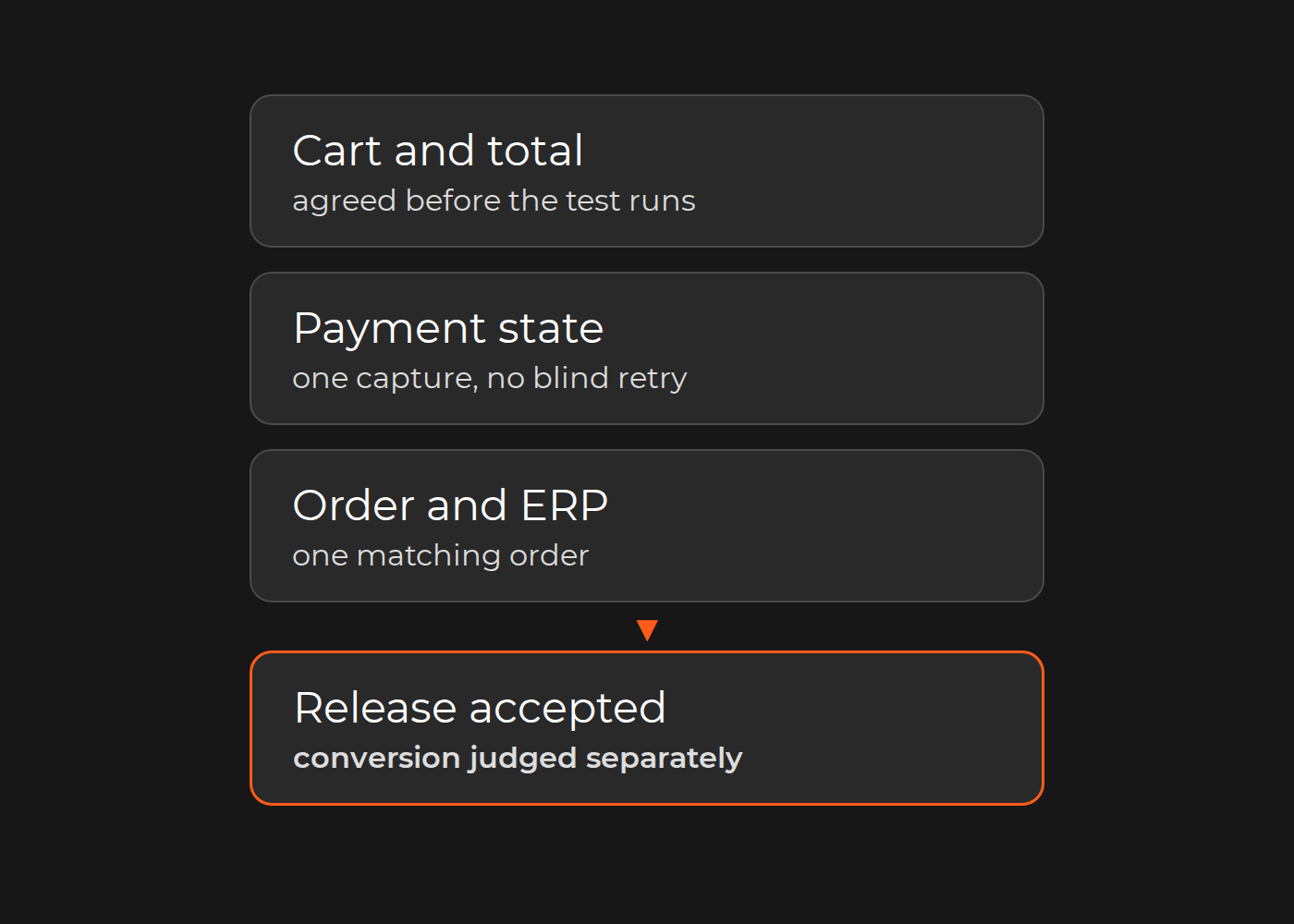
| Submission | A timeout after the ERP accepted the order | One linked ERP outcome or an owned exception | Integration |
| Documents and credit | Invoice access and unavailable credit status | Another company's invoice is denied; finance-approved fallback for credit status | Finance and security |
Can the account model represent the buying organization?
Test permitted company/location access and denied cross-company requests. If native roles represent the required hierarchy safely, keep them. Where ERP identities differ, inspect mapping before concluding that the entire portal needs rebuilding. Security and customer-master owners should review allowed and denied cases.
Does the approved order preserve contract price and unit?
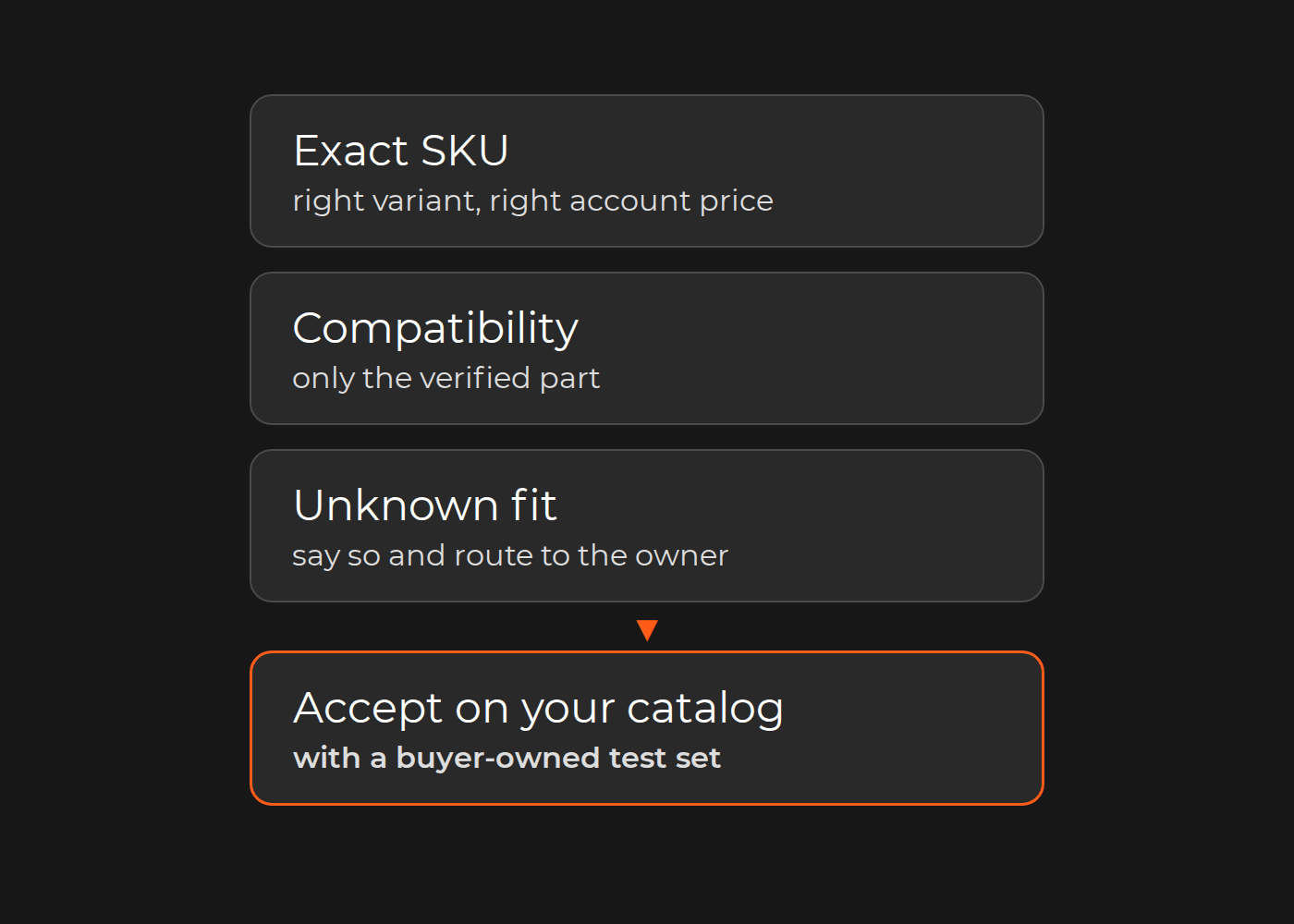
Compare the authoritative agreement with catalog, cart, approval snapshot and ERP: SKU, unit, quantity, currency, amount and validity must agree. Define how long retrieved prices/availability remain usable and what happens when refresh fails. Integration may be sufficient when authoritative terms are the missing ingredient. Reorder must recheck current products and packs, not silently replay an obsolete SKU or old price.
Does approval survive a changed cart correctly?
Demonstrate thresholds, approver removal, delegation and changed-cart behavior against the customer's policy. If a supported workflow covers these decisions, custom approval code adds responsibility without closing a gap. Document unsupported delegation or reapproval behavior before selecting another route. Preserve the policy version and approval history so a reviewer can reconstruct the decision.
Does the ERP acknowledge the same order?
Do not mark integration “covered” merely because an API exists. Request identifier mapping, authorized sample payloads, failure behavior and downstream acknowledgment. An uncertain submission must retain the original attempt and an investigation owner—not invite duplicate entry.
Do documents and credit follow the owning policies?
Check permitted invoices and source-state explanations with document/security owners. For a credit hold, finance defines hold/release conditions and the response to stale or unavailable credit status. The portal must follow that fallback, not invent a credit decision. A custom interface does not replace the ERP's commercial authority.
Resolve the approval policy before implementing the price change
Suppose a fictional buyer prepares ten cases at $40 per case. Their company's illustrative policy requires approval above $350. The approver reviews the $400 snapshot; before submission, the price source reports $42 per case, making the current total $420.
The arithmetic is not the design decision. Purchasing decides whether the change invalidates approval; commercial establishes which agreement applies; finance determines relevant totals and terms. The portal must not silently substitute a new total into an old authorization.
If policy requires reapproval after repricing, the $420 version returns to the approver. If the commercial agreement preserves a still-valid $400 quote, test that the quote version reaches ERP. These are alternative illustrative policies, not a recommended threshold or deployable approval algorithm. Security owners must still validate delegation, audit retention and bypass resistance.
Select the route from demonstrated gaps
Native B2B configuration fits when roles, catalogs, reorder, terms and approvals pass the scenarios. It still needs onboarding and downstream testing. It loses fit when a necessary rule cannot be represented in the supported configuration—not merely when a feature has an unfamiliar name.
A supported extension plus ERP integration can close a bounded data or workflow gap while retaining a suitable buyer experience. Assign upgrade responsibility and failures between vendors explicitly. It loses fit if essential behavior depends on unsupported modifications or no one owns the combined flow.
A custom portal or substantial customization becomes a candidate when a necessary rule remains unsupported. Include access controls, operational tooling, maintenance and future change in the decision. It is poor value when native capabilities already pass the same tests.
Dinarys' SanMar ERP integration case starts from an ERP whose APIs could not exchange catalog and order data in real time. Dinarys built a custom API connector translating legacy ERP data for Magento B2B/B2C sites, and the development and business-analysis teams documented B2B capabilities and operations. It supports the integration-and-documentation route; the case does not describe approval or credit rules.
Dinarys sells B2B portal development and integration, so we have a commercial interest in custom work. Your fit-gap should still favor configuration when it satisfies the purchasing task.
Agree the pilot evidence before selecting the build
If you do not yet know why buyers bypass the portal, first tally a sample of emailed orders to find the request each one hands to the account manager. Otherwise, select one business unit, one ERP boundary and willing buying accounts. Have each owner accept the relevant evidence:
- Commercial/catalog: ordinary reorder and obsolete-SKU handling recheck current terms and products.
- Purchasing/commercial: changed prices and removed approvers follow approved change, delegation and fallback rules.
- Security/documents: allowed and denied cases establish the access boundary.
- ERP/integration: uncertain submission has a traceable outcome or owned exception, without unexplained duplication.
- Finance/ERP: credit hold, release and unavailable status follow finance policy.
Measure correct task completion and manual interventions, not just logins. A successful demo does not cover every company hierarchy. Bring the resulting fit-gap to Dinarys with sanitized account-role examples, price/unit definitions, pilot scenarios and domain owners. A platform recommendation and estimate should follow evidence of the unresolved scope—not precede it.


Let professionals meet your challenge
Our certified specialists will find the most optimal solution for your business.