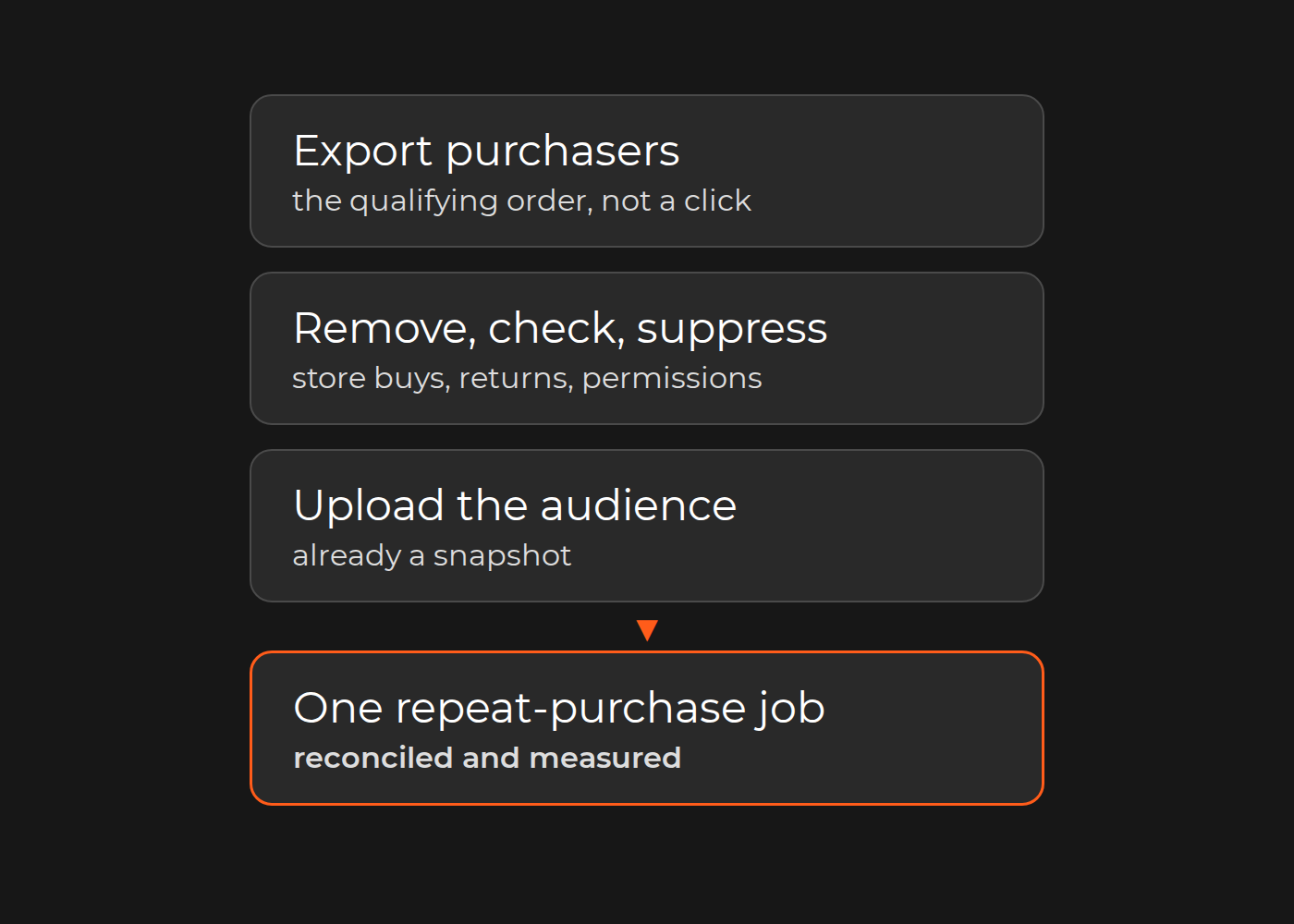
Your team launches more retention campaigns to win repeat purchases, but cannot tell which messages bring customers back and which only discount purchases that would have happened anyway. Meanwhile, someone exports a list, removes recent buyers by hand, checks returns elsewhere, and uploads the audience again.
Two problems obscure the answer. Attribution can still credit the campaign with those purchases, and conflicting customer data across online, store, returns, and CRM records can make the audience wrong before the message is sent. A reconciled record establishes eligibility and outcomes; a credible comparison estimates what the message added.
For CMOs and lifecycle leads at established brands, retailers, and distributors, the first decision is which repeat-purchase scenario deserves a trustworthy data and measurement path—not which AI model or campaign calendar to buy. First confirm that repeat buying matters to the business and that someone owns a specific missed opportunity.
Follow one manually built audience
Trace the work from export to upload. This illustrative replenishment workflow is not a client record or a recommended cadence.
Export completed purchasers. A checkout event may not be the qualifying purchase. The commerce/data owner checks the order ID, customer link, status, and units.
Remove recent buyers. A customer may have repurchased in-store. The identity owner checks for a permitted, verified link to the online record; an absent link cannot safely be guessed.
Check returns elsewhere. A return or refund can change purchase history and contribution. Reconcile the order line and customer while keeping physical receipt and financial action distinct.
Check subscriptions. A renewal, pause, or cancellation may make replenishment contact inappropriate. Subscription and marketing owners define exclusions rather than stacking a second journey over the first.
Apply current contact restrictions. An old opt-in may no longer reflect permission for that purpose/channel. Privacy and CRM owners approve the authoritative state and suppression rules.
Check previous exposure. Another campaign, offer, or holdout may apply. Retain exposure history to prevent conflicting contacts and support measurement.
Upload and recheck. The list remains a snapshot. Specify which changes require reevaluation before contact, who handles unresolved records, and who can pause the journey.
Do not merge records just because people share an address, device, or similar email. Keep ambiguous matches unresolved under the approved identity policy. Migration or retry must not silently restore an unsubscribe.
Worked example: the late return that changes the audience
Fictional customer C-84 has a completed purchase. A return occurs before a draft replenishment audience is built, but its event reaches CRM afterward. The earlier snapshot tells an incomplete story.
Retain occurrence time and arrival/processing time, plus source, event ID, order line, and schema version. When the late return arrives, reevaluate the draft under the agreed rules and current contact restrictions. Record the authorized contact or suppression decision. A corrected record cannot undo an already-sent message; keep that exposure in the measurement history.
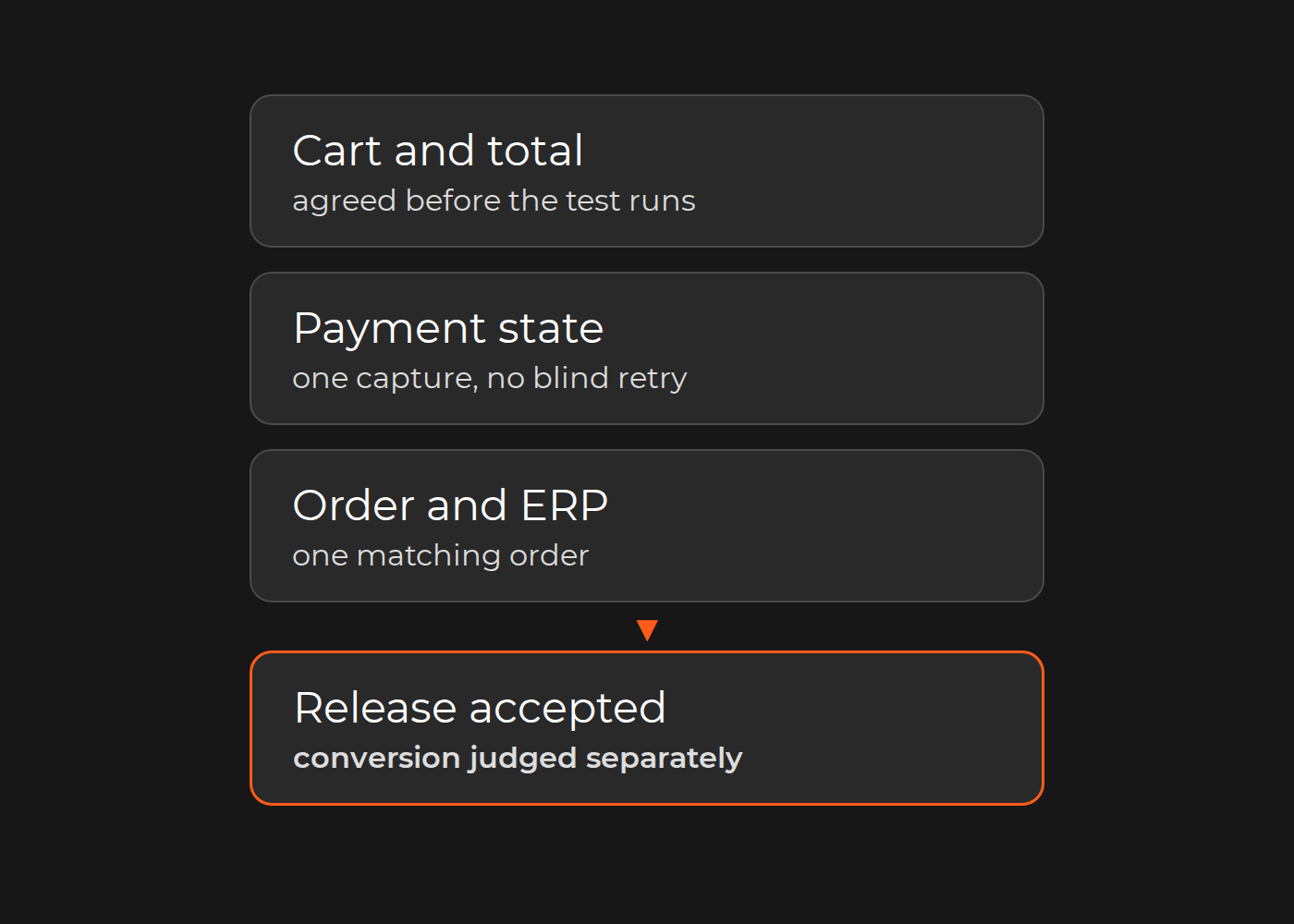
Test duplicate events, retries, identity collisions, late purchases/refunds, and changed permissions before expansion. Monitor rejected and unresolved events, not just successful import counts.
Build a purchase–return–contact map you can actually use
For a permitted sample, record these fields for each disputed audience entry:
Question
Evidence to retain
Decision owner
Which customer?
Verified IDs, unresolved match
Identity/data
Which purchase qualifies?
Order/line, status, unit, time
Commerce + lifecycle
Has the history changed?
Return/refund/renewal event and both times
Source owner
May we contact now?
Current restriction, purpose/channel, rule version
CRM + privacy
What already happened?
Audience assignment, offer, send and holdout history
Lifecycle + analytics
The output is a decision with evidence: eligible, excluded, or unresolved. For C-84, “return arrived after draft; reevaluate before send” is useful. “CRM sync complete” does not answer the audience question.
Why the dashboard cannot settle the business result
A platform assigns revenue using its attribution rules. That does not tell you how many purchases the message caused. Customers already about to buy may appear in the attributed total.
Estimate incremental value through a credible comparable control group, with the method agreed before results are known. Track repeat purchases and contribution after returns, discounts, fulfillment/contact costs, and relevant program costs. Keep acquisition payback and customer lifetime-value assumptions visible rather than turning one attributed sale into a lifetime result.
The CMO owns the journey hypothesis. Analytics defines the comparison; finance accepts the cost basis and conclusion. IT/data validates the event path. The authorized executive approves a larger investment only when the expected value and limits justify it.
Choose one repeat-purchase job before expanding the stack
Pick a scenario consistent with how customers buy: replenishment of a consumable, a second purchase after a completed first order, or support for an existing subscription. A durable, rarely replaced product should not inherit a consumable’s cadence.
Write the trigger, eligible population, exclusions, contact policy, baseline, and accountable marketing owner. A lifecycle specialist decides the journey and message. Keep this distinct from designing a points or rewards program: customer-data readiness is not itself a loyalty strategy.
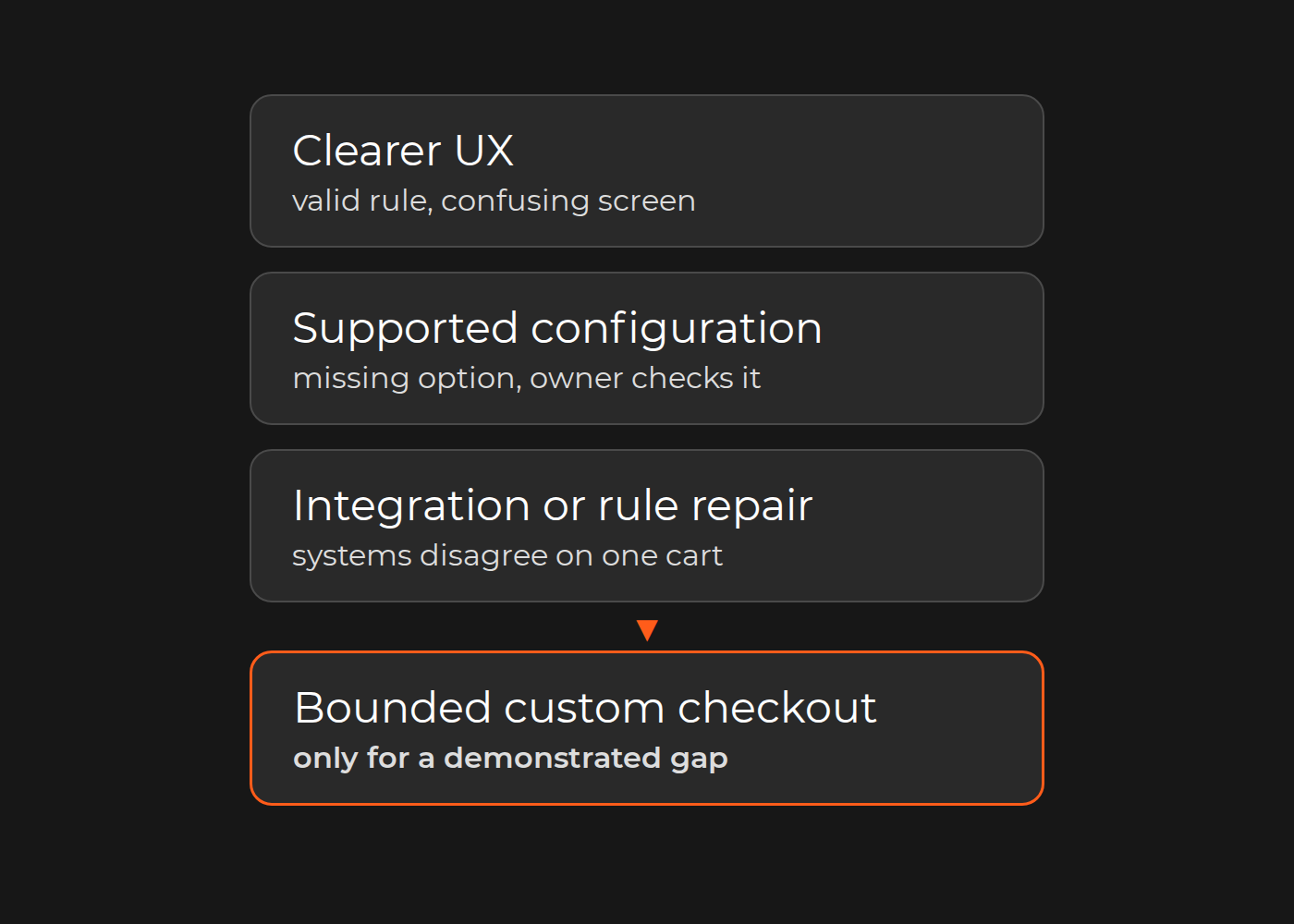
Use existing journeys and supported connectors first if they handle identity, events, suppression, and measurement. A segment correction may be sufficient. Coordinated engineering becomes relevant when a confirmed need spans commerce, POS/ERP, returns, CRM, and analytics.
Match the engineering scope to relevant evidence
The closest published evidence for conflicting customer state is the Prostor case: for an omnichannel drugstore chain, Dinarys built a custom loyalty/bonus program unifying offline and online loyalty states—one loyalty balance across online and in-store—alongside ERP/CRM integrations. That is integration evidence for keeping one loyalty state consistent across store and online, not a retention-uplift result or a recommendation to start with a loyalty program.
The Untamed case describes a new system for customers to manage their subscriptions, including migration of existing customers to the new environment. The SanMar ERP case describes a custom API connector for a legacy ERP data format, integrating the client’s B2B and B2C websites with its existing ERP for real-time product and order data exchange. None of these is evidence of a full CRM/CDP rollout, lifecycle strategy, or measured incremental retention uplift.
For a cross-system event gap, Dinarys’ ERP integration services are the nearest service route. Bring your lifecycle specialist as well as the engineering owner; neither discipline replaces the other.
To discuss one retention journey’s integration gaps, bring a sanitized purchase–return–contact map, current systems, verified ID rules, contact restrictions, and one repeat-purchase hypothesis. Start with a process you can explain, pause, and measure—not a promise that more automation will create more repeat sales.
You may share this article
Let professionals meet your challenge
Our certified specialists will find the most optimal solution for your business.