Can your delivery promise survive a split shipment, pickup change or return? It needs an approved rule, an authoritative record and an owner for each exception. Before offering the promise, test shortages, splits, pickup changes, repeated carrier events, returns and refunds.
E-commerce delivery moves an online order from seller to customer, including the information and decisions that make the movement possible. For a retail chain or B2B distributor, choosing a solution involves stock, reservations, warehouse handoffs, charges, tracking and recovery—not just a courier.
One order can have several fulfillment paths
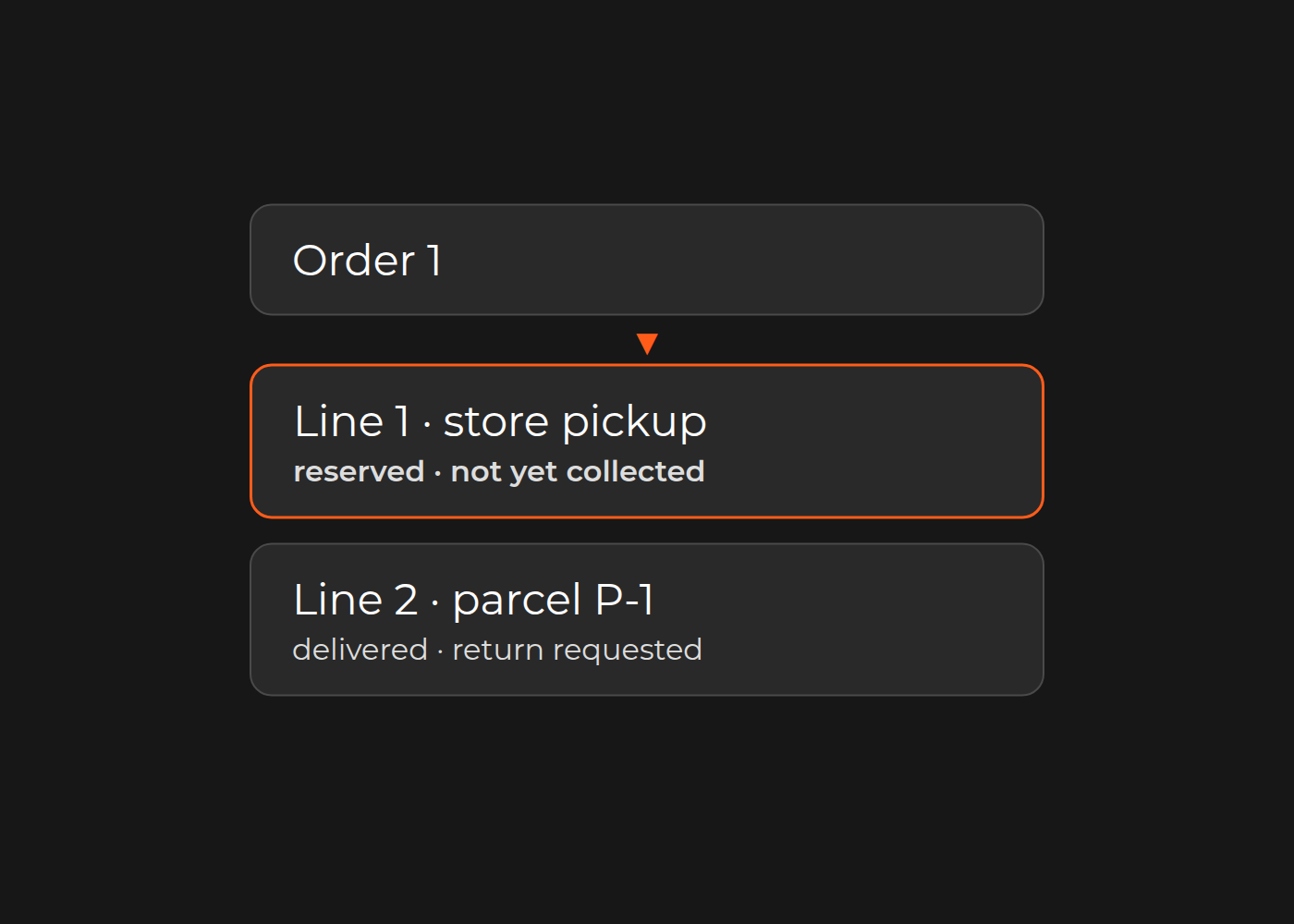
In this fictional example, Order 1 contains an item reserved at a pickup store and another shipping from a warehouse as parcel P-1. The customer later requests a pickup-location change and a return of the delivered parcel item. Each line needs its own state and traceable relationship to the order.
Parcel delivery cannot complete the uncollected pickup item. A return request for line 2 must not reverse line 1 or create a refund for the whole order. Customer messages must make partial completion and outstanding actions understandable.
Six delivery exceptions to test
These checks distinguish rules, data and execution problems; several causes can coexist. Rehearse them in a sandbox against an approved policy rather than changing live reservations to find out what happens.
Exception and owner
Question to resolve
Test and evidence
Item missing — store operations
Wrong stock or failed reservation/pick?
Shortage trace; approved alternatives only
Pickup plus parcel — ecommerce/operations
Are states and charges separate?
Complete one part; other stays incomplete
Pickup change — reservation owner
Who coordinates both locations?
Success and failed-change reservation history
Carrier replay — integration owner
Which shipment does it concern?
Replay affects intended parcel once
Partial return — returns owner
Which line and quantity are eligible?
Partial/repeated requests respect limits
Refund — finance/payment owner
Does approval match payment and ledger?
Replay does not issue another refund
When a promise has already failed at checkout or pickup, trace a storefront promise failure through reservation, preparation and handover before choosing a fix.
One possible pickup-change policy confirms the new reservation before releasing the old one. It needs agreed failure and recovery behavior; it is not a universal reservation algorithm. A faster connector cannot correct an inaccurate warehouse count, and a new policy cannot create unavailable stock.
Compare delivery price and service promises separately
Compare cost to serve with contribution margin, not an assumed conversion gain. Free shipping is a funded subsidy for eligible orders; mixed offers need clear precedence.
Flat rate: one charge for selected orders. Test heavy/oversized goods, remote destinations and splits.
Table-based rate: approved factors such as destination, weight or order value determine price. Test overlaps, thresholds and stale tables.
Carrier-calculated rate: contracted quotes feed the journey. Test missing dimensions, timeouts, surcharges and quoted-versus-final charges.
Build the cost model from transport, packaging, handling, attempts, service fees, returns and applicable cross-border charges. Then decide who funds discounts or free delivery. Check current contracts for the goods and route; legal and customs questions stay with qualified advisers.
Speed is a separate promise. Standard, expedited, next-day, same-day and pickup need cutoffs, capacity limits and failure rules. Offer only combinations locations and partners can support. For B2B, confirm delivery appointments, address restrictions and receiving hours.
Select carriers using the same sample orders
DHL Express, USPS, UPS, FedEx, regional providers and specialists are candidates, not a universal ranking. Ask each about the same origins, destinations, parcel profiles and pickup needs:
Which routes and goods are supported?
What is included in the quote, and what changes the final charge?
Which tracking, attempt and exception events are supplied?
How do labels, cancellations, returns and claims work?
Who handles API outages, missed collections and escalation?
Availability, restrictions, API access and commitments depend on service, account, route and goods. More carriers add routing and fallback maintenance; they are not automatically a better solution.
Publish the shipment status you actually know
Map warehouse, carrier, OMS and storefront states. “Label created” is not “carrier collected,” and a last-mile event for one parcel is not completion of the whole order.
For each status, retain source, event time, receipt time, expected next event and exception owner. Delayed or out-of-order events must not silently overwrite a newer valid state. Show a stale estimate as pending information, not a renewed delivery promise.
Share only authorized shipment/customer information. Track missing events, exception age and repeat inquiries before claiming that tracking reduced support work. Visibility helps explain a delay; it does not guarantee delivery.
Connect returns to operations and finance
A return request, merchandise receipt, inspection, stock disposition, refund approval and payment confirmation are distinct records. Their sequence follows the approved policy and applicable obligations—not a universal diagram.
Business/legal owners approve eligibility. Operations receives and inspects goods and determines disposition. Finance approves refund/reconciliation rules, and payment owners verify the actual refund transaction. Link returned quantity, original order line, authorized refund and accounting/payment records so support can explain partial returns.
Receipt alone does not establish sellable condition. A classifier’s suggestion is not authority to refund. Expose unresolved cases, prevent returns beyond the eligible quantity and prevent repeated processing from applying another business effect. Controlled manual handling can remain appropriate for low volume or unusual exceptions when it has an owner, audit trail and response capacity.
Existing tools, a new OMS or custom integration?
An OMS coordinates order states and routing; a WMS supports warehouse execution. Check existing coverage before replacing either.
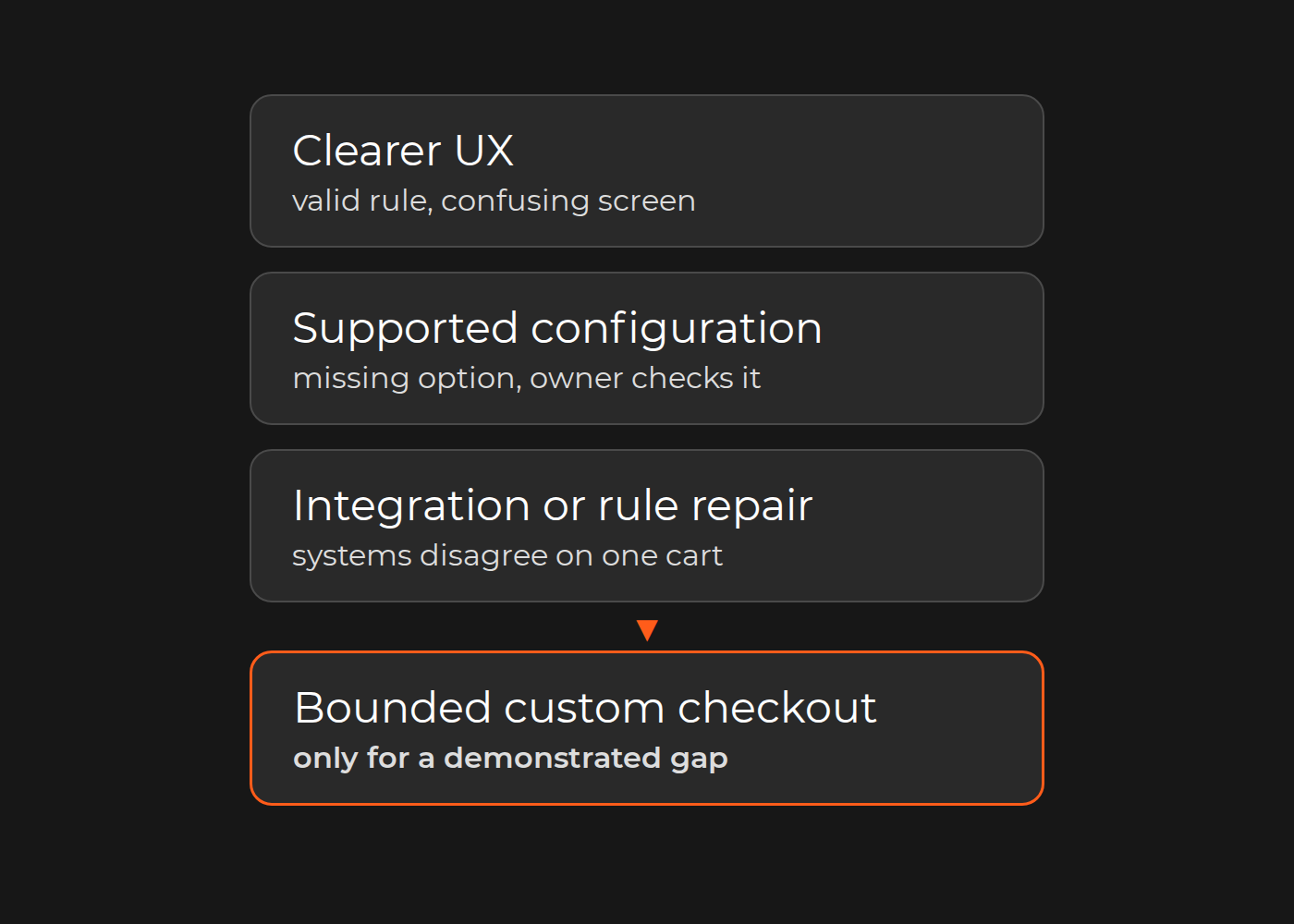
Start with commerce/carrier configuration for an isolated setting problem. Test current OMS/WMS or returns modules against the real workflow before adding another product. Consider a new OMS when routing genuinely exceeds current capabilities, including migration, ownership and adoption costs. Use custom integration for a verified ERP/POS or lifecycle gap, with maintenance, monitoring and recovery—not because one status label is wrong. To compare OMS and integration ownership for one fulfillment model, start with who may write each hold.
The Prostor case provides relevant adjacent evidence. Dinarys’ Magento 2 work included pickup, inventory synchronization, unified loyalty, ERP/CRM integrations and a custom ERP API layer. The case also reports early inventory inconsistencies requiring manual reconciliation, then changes to sync frequency and validation.
Those are concrete retail integration components, not proof of a full OMS rollout, returns/refund orchestration or guaranteed delivery performance. They support evaluating the system boundary while your own fulfillment rules and exceptions still need testing.
Accept one fulfillment model before a wider rollout
The ecommerce lead approves the customer promise. Operations owns reservation, picking, handoff and exceptions; IT owns interfaces, status mapping and recovery; finance owns refund reconciliation. The sponsor approves costs and scope, while an authorized release owner decides go/no-go.
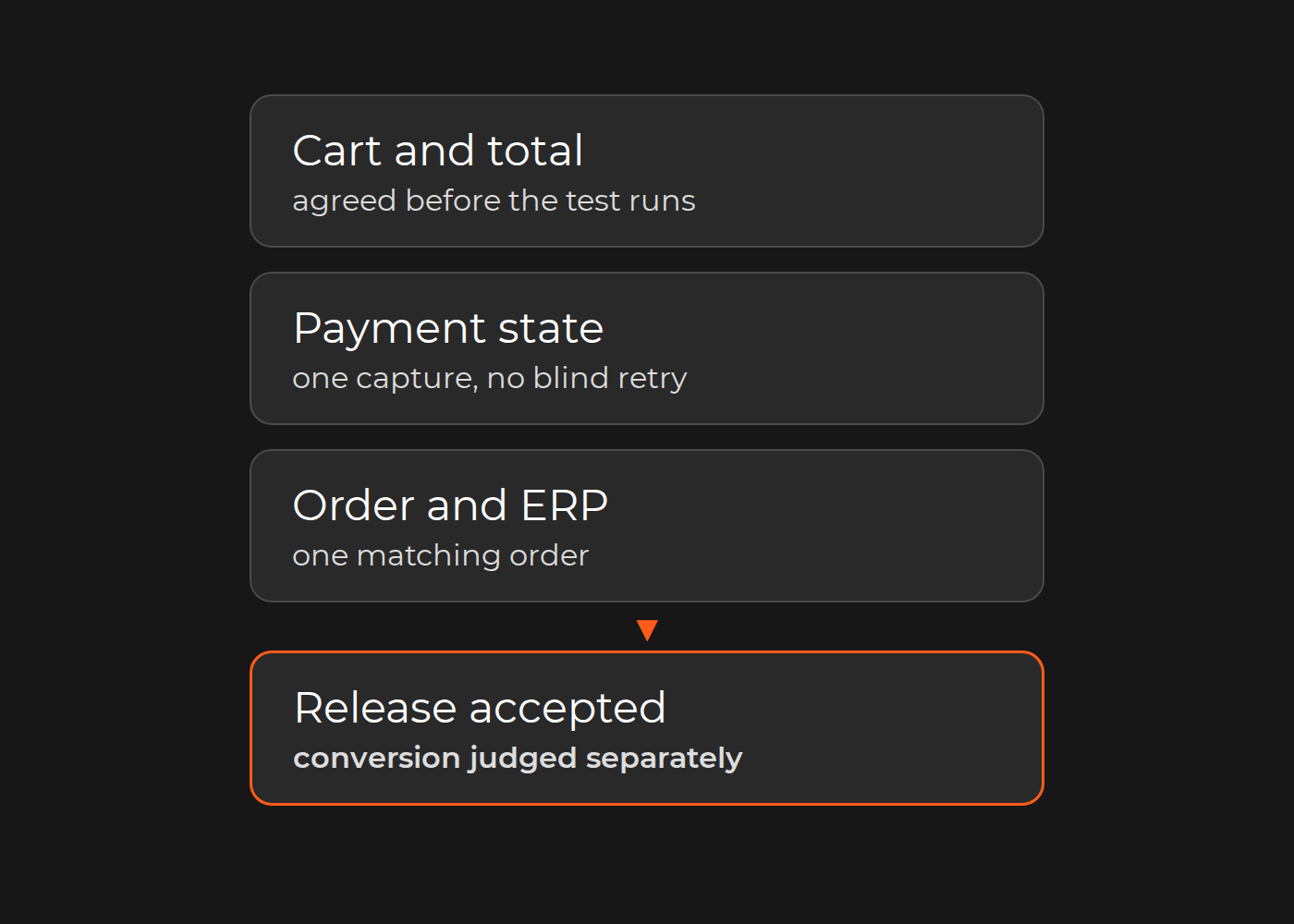
For representative locations and one fulfillment model, rehearse a normal order, unavailable stock, a partial completion, cancellation after reservation, pickup-location change, carrier replay, partial return and repeated refund notification. Agree expected stock, money, status and customer-message outcomes before execution.
For each test record source IDs, rule version, expected/observed result, evidence reference, owner and unresolved exception. Operations should accept the runbook, alerts and recovery route, not merely the API response. Ecommerce testing services can help scope that evidence package. Expand only after reviewing what the first model demonstrates.
Check your fulfillment exceptions
Trace recent split shipments, failed pickups, cancellations and returns: source status, rule, owner and customer message. Use the six checks to decide whether the gap is policy, data, execution, configuration or integration.
If it crosses systems, contact Dinarys with one anonymized exception flow, order-line/shipment relationships, location IDs, relevant events and the operations/IT owners. Include reservation and refund rules plus current system names. Start with one model and its exceptions—not an unsupported stock promise, delivery date or network-wide OMS commitment.
FAQ
E-commerce delivery is a term that means all the services, which are needed for transferring the goods, that have been ordered through the Internet from a vendor to the customer’s delivery location. Vendors who aren't able to organize the delivery of their products in the right way, take a risk of losing even the most loyal buyers. E-commerce delivery may be economical, fast, and reasonable in case you choose a reliable and suitable partner. Using e-commerce delivery software helps to improve the quality of customer services, provides delivery profitability as well as provides same-day deliveries.
Providing the right delivery service is one of the essential things when you think about running an e-commerce business. Today customer's needs have changed dramatically and most of them expect delivery service to be fast and reliable. It happens that customers plan their day around the delivery, so an important point is to provide a time slot for delivery. If you control the delivery process well, the customers always get the parcel on time. As a result, it ensures customers are pleased with their experience and therefore will return to your shop again.
Launching any business from scratch and watching it grow is pleasant. However, creating a business takes much more than just selecting the name of the brand, writing product listings, and starting to sell goods online. If you think about starting an e-commerce delivery business you should find a niche, define your target audience, create a website, build a mobile app, establish a strong delivery network, obtain licenses and then market your website. A crucial point to remember is that even the most prospective business ideas can flop in case you don't attract enough traffic to your website.