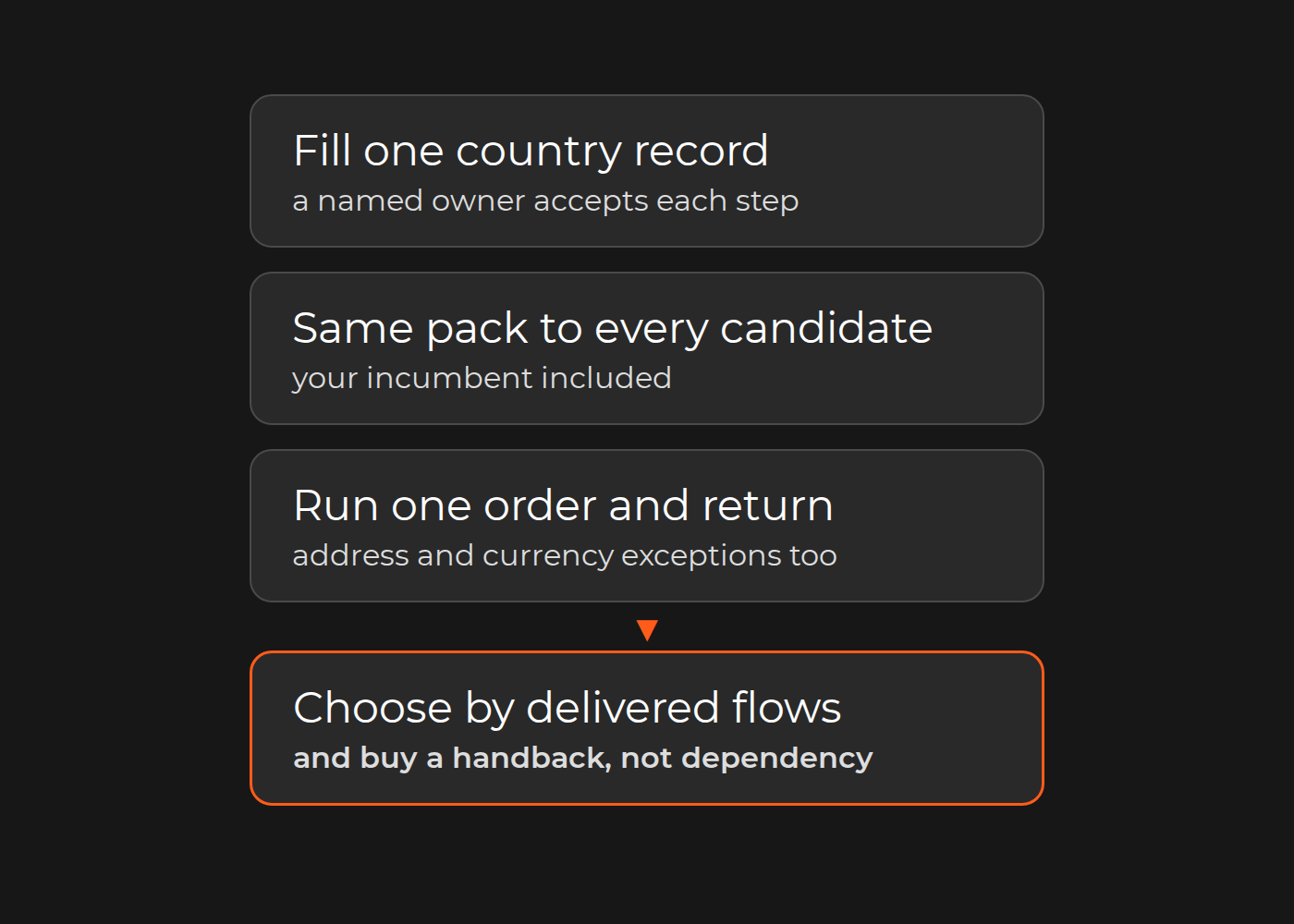
Before a translated storefront is ready to launch in a new country, one real local order has to work end to end. The approved local catalog and price, with its tax treatment, appear in the right language and currency; a local payment method succeeds or fails cleanly; the parcel reaches a local address through a named fulfilment route; a refusal or return follows the local return rule; and finance can reconcile the money. Each of those steps needs a named owner who accepts it for that country.
So choose an international ecommerce development partner by that flow, not by the list of countries on its website. Give every candidate, including your incumbent, the same filled country record and ask it to demonstrate one paid local order, one refusal or return and the reconciliation, including an address exception and a currency exception. Native market configuration may be sufficient; migration is not the default scope.
Dinarys publishes this guide and is one of the partners you may compare. The criteria below apply to us too; this is not an independent supplier ranking. Ask every candidate what you will control at the end—administrator and repository access where applicable, documentation, mappings and runbooks—and which parts remain licensed or operated by others. Access and usage rights must be agreed, not inferred from a promise to “hand over the website.”
What has to work before launch: a filled country record
A translated store fails in a new market when nobody owns the step after the translation: the price list that carries the right tax, the payment method local buyers expect, the carrier route, the return rule and the reconciliation. Write those down as one record per country before you speak to suppliers. The entries below are illustrative for a fictional “Country B”; they are not a client project or tax advice.
Field
Illustrative entry
Owner who accepts it
Evidence before launch
Country and language
Country B; local-language storefront, emails and invoices
Ecommerce lead
Native-language review of storefront, transactional emails and order documents
Currency
Prices shown and charged in the local currency
Finance
Order, payment and refund carry the same currency and amount
Catalog version
Country B assortment v3, restricted items removed
Product data owner
Live catalog matches the approved version
Price and tax owner
Local price list set by finance using the advisor-approved tax rule
Finance with a qualified tax advisor
Order total and tax lines match the approved rule
Payment method
Card plus one local method
Ecommerce with the payment provider
Successful, declined and cancelled attempts recorded with provider references
Fulfilment route
Local carrier from a named warehouse
Operations
Shipment created and tracked; delivery or refusal recorded
Return rule
The approved local return window and conditions
Customer service with finance
Return received, inspected and refunded once
Local acceptance owner
Country manager
Country manager
Signed result per row, with open issues and owners listed
Two limits apply before you treat the record as approved. If your demand research ran in English—for example, prompts or searches in regional English—it does not establish demand in the native language. And it does not show that local tax handling is compliant; legal and tax requirements come from you and qualified advisors. Market selection and product-market fit are not implementation deliverables.
Illustrative: the translated storefront covers only the first box. Each handoff needs an owner who accepts it before launch.
The ecommerce or growth lead owns the launch promise. Operations and finance accept execution and money-state evidence; IT can veto an unsafe interface or access arrangement. The authorized sponsor approves investment and residual risk. Candidate selection should bring those views together, not leave the ecommerce lead signing for every system.
Language, currency and local prices on one catalog
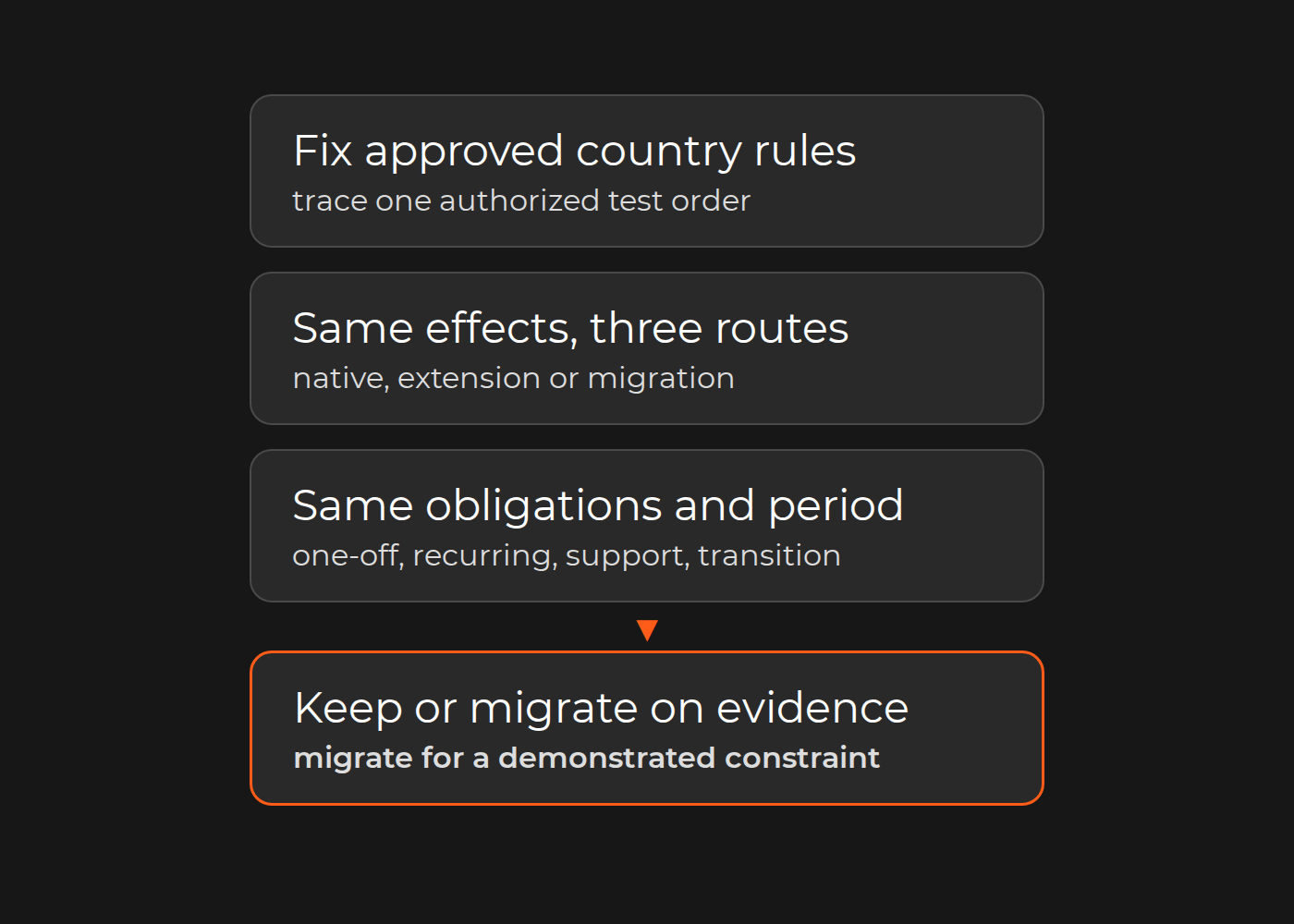
None needed if the record above passes
Existing ecommerce team
The platform cannot run the required local payment, tax or return flow
Separate store per country
Different payment methods, assortment or stock per market
Manual price and catalog copying between stores
Country teams plus a central catalog owner
Nobody owns synchronizing catalog and stock across stores
Migrate the platform
The current platform cannot support the operating flow at an acceptable cost
Extensions or an integration layer on the current platform
New platform owner; teams retrained
Migration chosen before native configuration was tested
The Undrgoods case documents the second and third options together: a WooCommerce-to-Shopify migration into three regional stores (UAE, Saudi Arabia and Kuwait) with regional payment methods, custom bundle handling with automatic inventory adjustments when bundle components change, and inventory synchronization configured across the three stores. The case page reports six weeks to migrate and set up a new store; that is the page's figure for that project, not an estimate for yours. Three stores in one region also do not show that every market there shares the same rules.
Send the same country acceptance pack to every candidate
Send each candidate the filled country record, the option you think fits, and your current platform, back office, integrations and any bundle, configurator or production-document function that must stay usable. Ask each partner to identify what it retains/configures, extends or replaces; its interface boundary and external dependencies; its acceptance evidence; and what your receiving team will operate. If only language, currency and standard native configuration are needed, a larger engineering engagement may be unnecessary.
The country record says what must work; this pack asks what each vendor must show and who receives it. Business owners agree relevant scenarios and release criteria; the candidate shows how it will implement, demonstrate and hand them over.
Pack section
Candidate must show
Receiving owner
Approved rules
Versioned country offer and advisor-supplied requirements; included/excluded scope
Ecommerce and qualified rule owners
Systems/interfaces
Actual versions/plans, provider eligibility, source authority, handoff records and named contacts
IT with delivery lead
Normal/failed payment
Controlled success, decline and cancellation evidence; order/provider refs; separate settlement reconciliation
Finance/ecommerce
Bundle and stock
Parent/component mapping, quantities, reserve/release, cancellation and warehouse instruction
Operations/inventory
Dispatch and partial return
Service/destination, tracking, receipt, inspection and allocation; kept items unchanged
Operations/service
Refund and support
Refund request and reference, provider status, how an unresolved state is handled, and the customer-facing procedure
Finance/service
Back office/custom functions
Order, currency and payment references that match across systems; for configurators, the customer's selections, the output version and the production receipt
Back office/production with IT
Data, URLs and analytics
Reconciliation, retained/changed URLs, redirects/indexing/links and missing/duplicate event checks
IT/ecommerce/analytics
Release/recovery/handback
Open issues, approved workarounds, in-flight transaction treatment, runbooks and team walkthrough
Authorized release owner and receiving teams
For each criterion, record country/rule version; scenario and required effect; environment, authorized data and side effects; delivery and receiving owners; dated configuration and evidence links; actual result; unresolved difference and owner; decision; and recheck evidence/accepting owner. Keep documented, observed in an authorized check and unknown separate. A help page or demonstration does not prove your configured process passed.
Run one local order and return before launch
This is the test from the opening, written as rows a candidate must demonstrate. The sample below is proposed acceptance guidance, not a test Dinarys has run for a client.
Starting state
Action
Expected result
Adverse result to check
Evidence
Pass/fail owner
Approved catalog and local prices live in the agreed environment
Pay for an order to a local address with the local method
Price, tax lines and currency match the record; the warehouse receives the instruction
A declined or cancelled payment releases no order and holds no stock
Order ID, provider reference, warehouse instruction
Finance and operations
Address in a local format the checkout may not expect
Enter it at checkout
Address is accepted, or held with a visible reason the customer can fix
Order ships with an address the carrier cannot use
Order record and carrier label
Operations
Customer's card issued in another currency
Pay and later refund
Charge equals the displayed local amount; refund goes back in the same currency
Charged or refunded amount differs from the order
Order versus provider record
Finance
Delivered order is refused or returned within the local rule
Process the refusal or return
Item received and inspected; one refund issued; stock corrected
Duplicate refund, or stock not restored
Return record and refund reference
Customer service and finance
End of the test day
Reconcile orders, payments, refunds and settlement
Storefront, provider and back office agree
An unmatched item has no owner
Reconciliation sheet
Finance
Agree permissions before execution. Use controlled data and suitable provider-supported test facilities. Live purchases, payments, refunds and shipments require separate explicit authorization. Test facilities may not prove every account or physical-fulfillment condition; identify remaining checks rather than declaring the whole launch accepted.
Run a cross-party refund drill before signing
Hypothetical acceptance scenario—not a client incident or a test performed by Dinarys: a refund request fails at the provider, but the status never reaches the back office, which remains pending. The commerce partner says the payment vendor owns the connector; the vendor says its responsibility ends at the status endpoint. Support cannot tell the customer whether another attempt is safe.
One lead coordinates the interface owners; finance establishes the outcome before recovery.
“The connector belongs to another vendor” is a dependency explanation, not a resolution plan. Ask each candidate to walk through five things:
Linked evidence: order, refund reference, provider status, status-message/polling record, receiving state and versions. Missing logs alone do not locate the fault.
One coordination owner: a delivery lead drives closure, with named owners on both sides of the connector and a provider contact—not a task assigned to “both teams.”
Business authority: finance establishes the authoritative payment outcome and permitted recovery; support agrees the customer message. Physical-return status remains a separate operation. An uncertain outcome is not permission to issue another refund.
Correction and recheck: locate the verified gap, correct it and reconcile the receiving record. Check failed, pending and completed outcomes without duplicated money movements; replay/live actions need authorization.
Receiving-team acceptance: finance, operations and service owners accept their effects and explain the procedure. The authorized release owner accepts any remaining workaround within explicit limits.
A partner cannot control every provider, but it can make escalation, evidence and responsibilities explicit before signing. Compare that response, not just the confidence of the demo.
Choose a partner by the operating flows it has delivered
A platform logo does not demonstrate regional payment integration, component bundles, a return process, manufacturing output or handover. Ask which interface the candidate built, what reached the receiving system, who accepted it and where your requirement differs. Request only information it is entitled to share—not another client's confidential records.
Dinarys's public pages show what component-level proof looks like. Read the Undrgoods case above against the “Normal/failed payment” and “Bundle and stock” rows of the pack: which payment methods were connected per store, and what happens to stock when a component changes? The myfelt case describes a multilingual Magento-to-Shopify migration and a PDF generator for personalised orders sent to production units. It is a public example for the “Back office/custom functions” row, where the question is which order revision and output the production team actually receives.
The public pages do not describe returns, refunds or handover. Ask every candidate, Dinarys included, for its own evidence on those rows. A case page is also not a client-reference commitment; if reference access matters, ask what the supplier is authorized to arrange.
When you do get a reference call, use a short reference-check brief:
Who owned currencies and price lists in the comparable launch: the client, the partner or a third party?
Who owned product data and translations, and which catalog version went live?
Which payment methods did the partner connect itself, and which came ready-made from the provider?
Who designed and ran returns and refunds after launch?
Which results are delivered scope (built, configured, migrated) and which are business uplift the client reported? Treat uplift as context, not as a promise for your launch.
Build the estimate and milestones from countries and dependencies
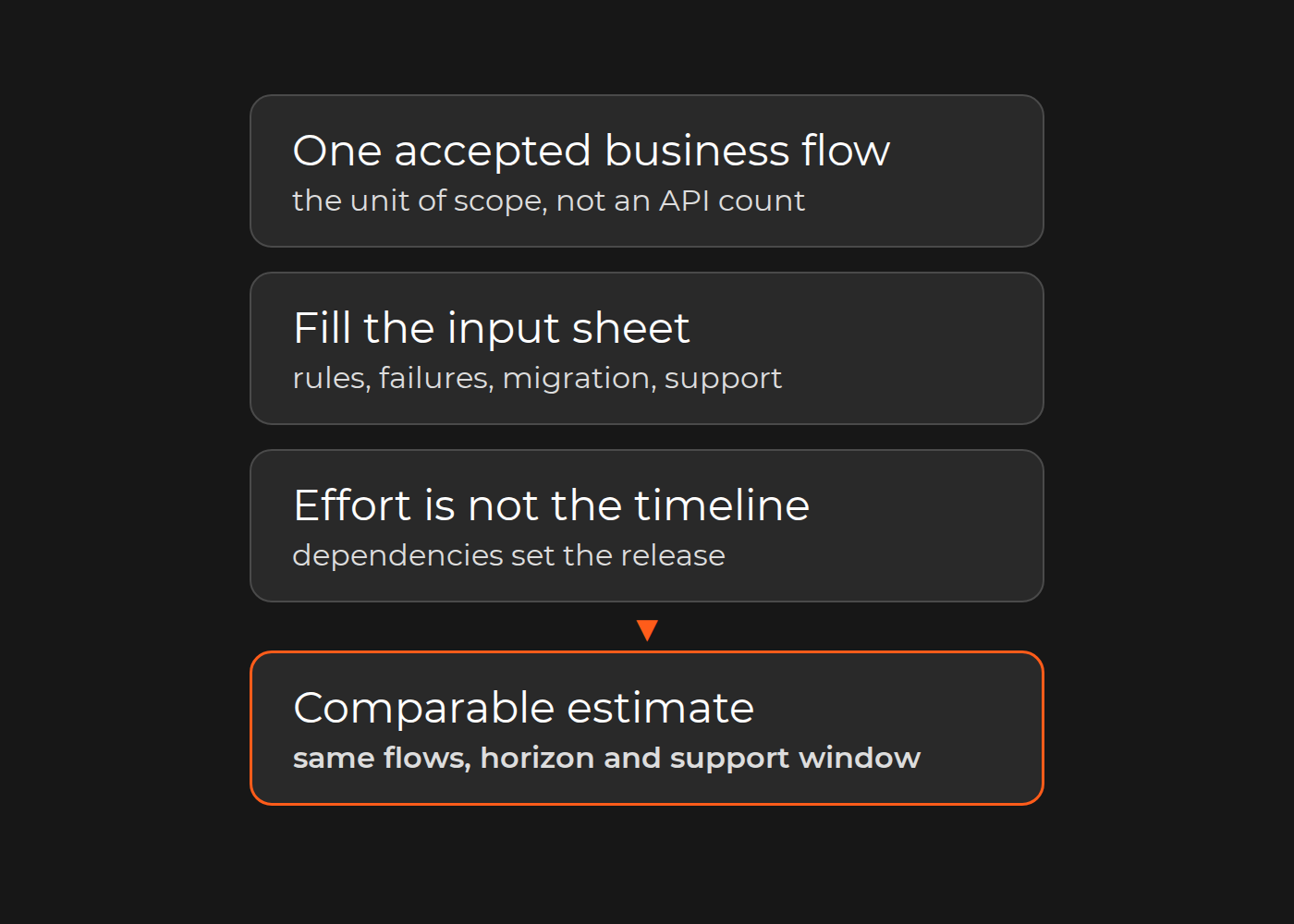
Estimate from the operating dependencies, not from page counts. A usable scope worksheet lists, per market: the catalogs and price lists; tax and payment integrations; local support language and hours; warehouse and carrier routes; and who owns each after launch. Mark unknown prices, effort or results as unavailable, not zero.
Ask for milestones that demonstrate a country outcome, not a percentage of pages completed: agreed scope and reusable assets; the critical gap resolved under agreed conditions; the first-country flow ready for acceptance with defects visible; then operational handback and a release decision. Existing authorized code, mappings, data and evidence should be reviewed for reuse, not automatically discarded.
Clarify what can be estimated now and which uncertainty needs a specific check. Agree fixed-scope exclusions or a transparent change process, the distinction between defect correction and a new requirement, warranty/support boundaries and who pays for rework. These are proposed milestone types, not dates or a universal method; dependencies, access, people and backlog determine the sequence.
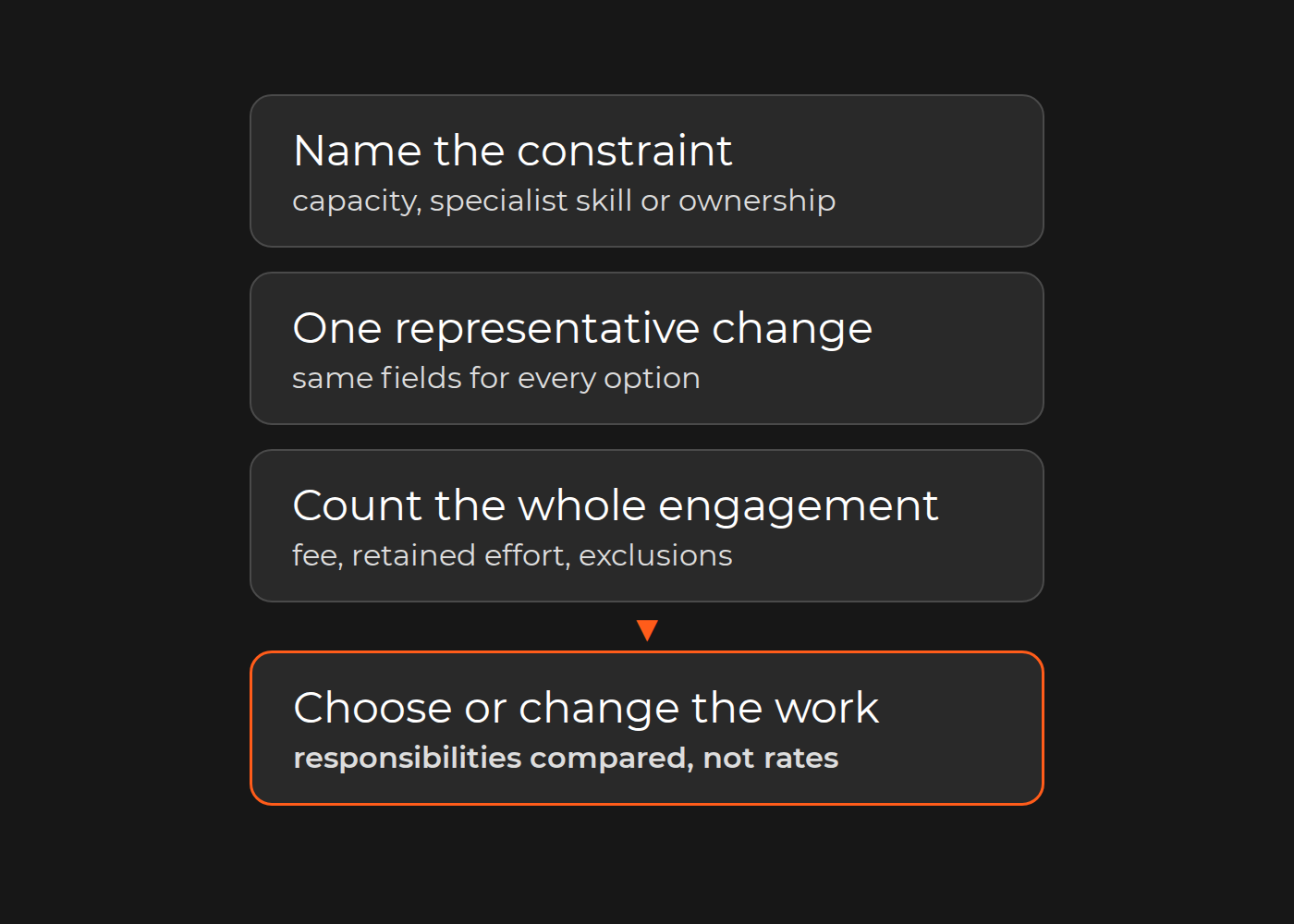
Finance compares retained and new platforms/apps, payment arrangements, custom code, interfaces, support, training and manual reconciliation, keeping quotes, estimates and unknowns separate. A case study does not establish support coverage or response commitments.
Buy a handback, not permanent dependency
Agree administrative/repository access where applicable, usage rights, configuration, specifications, mappings, runbooks, deployment/recovery instructions and open limitations. Identify contract holders, recurring fees, portability, replacement constraints and access removal. Transfer access through approved secure processes, not a document containing shared passwords.
Have receiving teams walk through a routine order, an exception, a partial return and a pending/failed refund. For a configurator or production PDF, they should find the correct order revision and output. Record what staff can change themselves and what needs engineering or a provider. If release stops, name who pauses the affected flow and reconciles open orders, reservations and pending money movements; code rollback alone does not do that.
Plan the next country after the first
For a multi-region business, the first country remains the acceptance boundary. Ask each candidate for a rollout map that lists later countries, their owners, provider and operational differences, and dependencies. After the first acceptance, decide what can be reused and what needs new checks; automatic expansion is not part of what you are buying.
Quick answers before you shortlist
Should the partner who built my current store be excluded?
No. Give your incumbent the same acceptance pack as everyone else. The right supplier may be your current team or a specialist closing one integration gap.
Do I have to migrate platforms to launch in another country?
Not by default. Native market configuration may be sufficient, so ask each candidate to show where the current platform falls short before it proposes migration.
Can a public case study replace a client reference?
No. Ask each candidate for its own evidence on returns, refunds and handover, and what it is authorized to arrange as a reference.
Answers that should stop selection
Pause if a proposal assumes identical checkout/provider eligibility everywhere, leaves a critical interface unowned, ends acceptance at the storefront success screen, substitutes “documentation provided” for rights and operating practice, or prescribes migration before checking native coverage. A missing detail can be clarified. Unwillingness to make a mandatory boundary explicit is a reason not to sign that scope. You do not need invented scores or weighted vendor rankings.
Give Dinarys the same pack.Discuss your first-country scope with your filled country record, current systems, critical custom functions, the local order-and-return test, and rollout dependencies. Ask us to name the implementation boundary, evidence, handback and commercial exclusions just as you would any other candidate.
You may share this article
Lassen Sie Profis Ihre Herausforderung meistern
Unsere zertifizierten Spezialisten finden die optimale Lösung für Ihr Unternehmen.